
Niacinamide Serum After Retinol for Oily Skin
Niacinamide acts as a buffer for retinol, stabilizing the skin barrier. For reactive oily skin, apply 2 to 3 nights weekly in a simple 3-step routine.
Shop Essential Boost Serum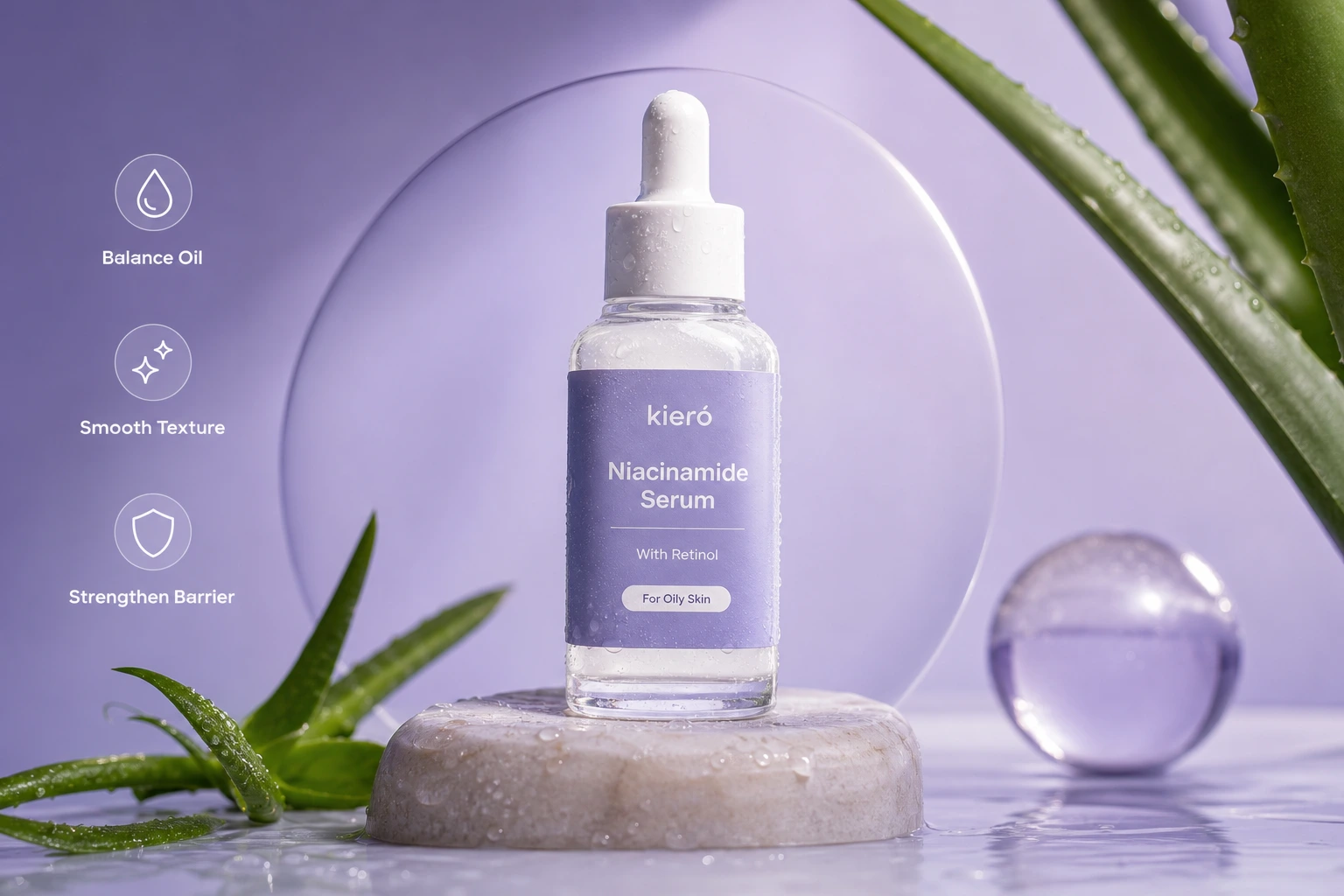
TL;DR: Niacinamide acts as a critical buffer that strengthens the skin barrier to counteract dryness and irritation from retinol use (Drmtlgy, 2025). Layering a niacinamide serum after retinol locks in hydration and soothes immediate redness for reactive oily skin types. Kiero is a K-Beauty skincare brand for oily and acne-prone skin that helps them use actives with less irritation in humid weather.
What happens when oily skin mixes retinol and niacinamide?
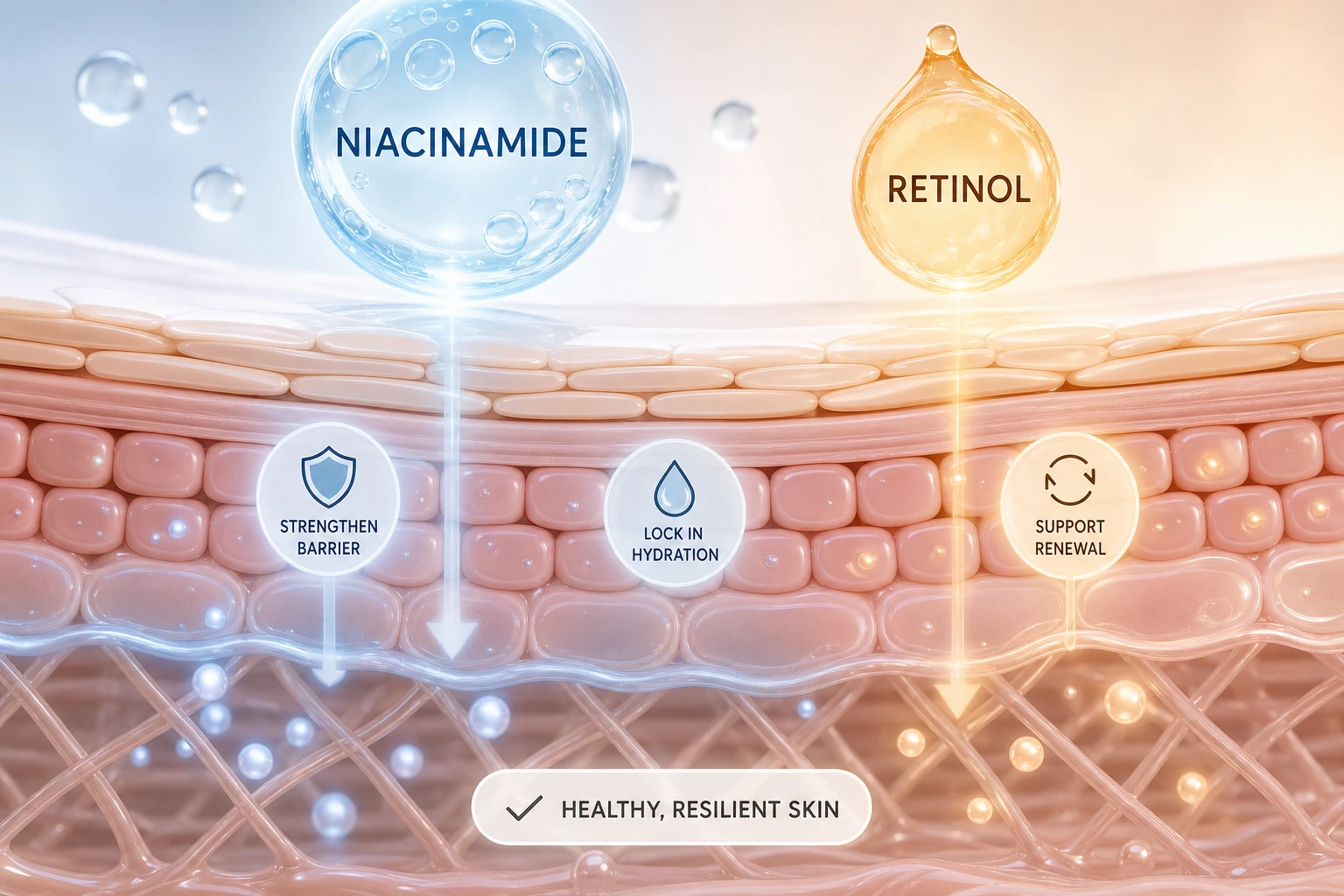
Retinol stimulates collagen production and increases cell turnover, while niacinamide controls sebum production and reduces surface inflammation.
Retinol (Vitamin A) operates at deeper skin layers to accelerate the shedding of dead skin cells, making it a highly documented method for clearing pores and addressing structural aging (Biomolecules, 2023). However, this rapid cellular turnover frequently triggers flaking, redness, and severe barrier disruption, particularly for individuals with existing acne or reactive skin profiles.
Niacinamide (Vitamin B3) operates as a water-soluble vitamin primarily at the surface level, where it improves moisture retention and reinforces barrier function. By combining these two active ingredients, oily skin types receive a specific dual benefit: retinol prevents pores from clogging by speeding up the shedding cycle, while niacinamide regulates lipid production and mitigates the resulting surface inflammation. The interaction between the two ingredients creates a more tolerable environment for the skin to process Vitamin A without excessive cellular stress.
Why apply a niacinamide serum after retinol?
Applying a niacinamide serum after retinol locks in hydration and soothes immediate redness for skin undergoing the retinization adjustment period.
Dermatological guides generally recommend applying a niacinamide serum before retinol to prime the skin (Drmtlgy, 2025). However, when treating highly reactive or oily skin types, applying a niacinamide-rich serum after retinol serves a specific recovery function. This sequencing method ensures the intense renewal process initiated by Vitamin A does not compromise the skin's moisture barrier.
The follow-up layer helps soothe the skin immediately post-application. The "sandwiching" or after-treatment strategy specifically addresses the dryness associated with retinoids. Waiting 5 to 10 minutes after cleansing before starting the retinol step allows the skin's pH to balance, further reducing the probability of irritation (Drmtlgy, 2025). This brief pause, followed by the active ingredient, and immediately buffered by niacinamide, prevents the skin from entering a state of hyper-reactivity.
How does niacinamide buffer retinol irritation?
Niacinamide functions as a structural buffer by strengthening the skin barrier to counteract the specific dryness and peeling caused by retinoids.
Retinoids are active molecules that directly influence skin structure formation (Postepy dermatologii i alergologii, 2019). Because retinol forces the skin to shed cellular layers faster than its standard 28-day cycle, the epidermal barrier often weakens, leading to high rates of trans-epidermal water loss (TEWL).
Niacinamide directly addresses this mechanism by stimulating the natural synthesis of ceramides—the lipids that bind skin cells together and trap water inside the tissue. This buffering capacity means users with oily, acne-prone profiles can maintain their pore-clearing retinol routines without enduring weeks of severe redness and peeling. By reinforcing the structural integrity of the epidermis, niacinamide ensures the skin remains hydrated and calm, even as the deeper layers undergo rapid regeneration triggered by the Vitamin A compound.
What is the optimal sequence for reactive skin?
A routine of cleansing, applying retinol, treating with niacinamide, and sealing with a barrier cream stabilizes the skin's cellular renewal.
During the retinization phase, simplifying the overall skincare regimen minimizes cumulative irritation. Drmtlgy emphasizes a stripped-down, methodical approach when introducing these actives to oily skin (Drmtlgy, 2025).
| Routine Step | Action | Purpose |
|---|---|---|
| 1. Cleanse | Wash with a gentle, non-stripping cleanser | Removes excess sebum without damaging the barrier |
| 2. Active | Apply low-strength retinol | Stimulates cell turnover and clears pores |
| 3. Treat | Apply a niacinamide serum | Soothes redness, regulates oil, and buffers the active |
| 4. Seal | Apply a ceramide barrier cream | Prevents water loss and locks in the previous layers |
This specific sequence prioritizes barrier health over aggressive exfoliation. Following this exact 4-step framework 2 to 3 nights weekly prevents the compounding inflammation that forces many individuals to abandon their retinoid treatments prematurely.
How does the Essential Boost Serum fit this routine?
The Essential Boost Serum delivers niacinamide, panthenol, and prickly pear to unifiy skin tone and strengthen the barrier following retinol.
For individuals requiring post-retinol recovery, the Essential Boost Serum functions as the targeted treatment layer. Priced at 239 MXN, this lightweight formula incorporates panthenol and niacinamide, establishing it as an effective buffer against retinoid-induced flaking. The serum hydrates deeply, improves firmness, and helps unify tone, leaving the skin soft and radiant after each use.
Applying a small amount over the face and neck provides necessary antioxidant protection and supports skin renewal. Because the formulation avoids heavy oils, it targets the hydration needs of oily and acne-prone skin without contributing to congestion. For readers seeking highly concentrated formulas, learning about Essential Boost Serum: sérum de niacinamida de alta concentración provides additional technical specifications.
- Key Ingredients: Niacinamide, Prickly Pear, Peptides, Panthenol
- Price: 239 MXN
- Use Case: Step 3 (Treat) in the evening retinoid routine

Essential Boost Serum
Sérum ligero con higo chumbo, péptidos, niacinamida y pantenol.

Why is sealing with a barrier cream necessary?
A dedicated barrier cream featuring ceramides and squalane prevents the trans-epidermal water loss triggered by overnight retinol absorption.
The final step in any retinization routine requires sealing the preceding water-based actives with a thicker lipid layer. The Moisturizing Barrier Cream fulfills this mechanical requirement by supplying blue agave, ceramides, and squalane to retain hydration for lasting comfort.
Priced at 259 MXN, the formula revitalizes dull skin and provides softness without leaving a heavy, greasy sensation. Strengthening the skin barrier prevents moisture loss, a persistent side effect of consistent retinol use. Applying this cream evenly over the face and neck physically traps the benefits of both the retinol and the niacinamide serum in the epidermis. Those deciding between distinct sealants often look at comparisons like ceramide moisturizer vs centella cream for barrier repair to match the formula to their specific acne triggers.
- Key Ingredients: Blue Agave, Ceramides, Squalane
- Price: 259 MXN
- Use Case: Step 4 (Seal) in the evening retinoid routine
How often should you use retinol with niacinamide?
Drmtlgy (2025) recommends starting a retinol regimen 1 to 2 nights per week and gradually increasing frequency as skin tolerance improves.
Regulating the application frequency strictly determines the success rate of mixing these active ingredients. While niacinamide can safely be used twice daily to maintain barrier health, retinol requires a deliberately slow, phased introduction. Users should apply the active Vitamin A step only 1 or 2 nights a week initially (Drmtlgy, 2025).
During the off-nights, continuing the niacinamide treatment step helps the skin repair itself faster and clear micro-inflammation. Because retinol fundamentally alters the skin's top layer and increases ultraviolet sensitivity, applying a broad-spectrum SPF 30+ every morning functions as a non-negotiable requirement to protect the skin and sustain structural results. For a broader context on determining ingredient compatibility during these cycles, refer to documentation on serum active ingredients and safe mixtures.
What ingredients should you avoid layering with retinol?
Applying strong exfoliating acids like AHAs or BHAs in the same routine as retinol significantly increases the risk of severe barrier damage.
Combining multiple resurfacing active ingredients quickly overwhelms the skin's protective lipid layer. While niacinamide functions as a safe, stabilizing companion for Vitamin A, exfoliating acids (Alpha Hydroxy Acids and Beta Hydroxy Acids) operate through chemical mechanisms that multiply the peeling effect of retinoids.
Applying these chemical exfoliants simultaneously leads to severe dryness, increased visible redness, and heavily compromised barrier integrity (Drmtlgy, 2025). If an acne management routine requires both exfoliants and retinol, users must separate them by time—applying acids strictly during the morning routine or alternating nights entirely, while keeping retinol designated for evening use alongside a soothing niacinamide serum. Properly managing potential side effects requires an understanding of how to handle serum reactions including niacinamide bumps.
FAQ
Can I use niacinamide after retinol every night?
Yes, you can apply a niacinamide serum after retinol every night you use it, as niacinamide physically mitigates the irritation caused by Vitamin A. However, beginners must restrict the actual retinol application to 1 to 2 nights per week to prevent severe redness (Drmtlgy, 2025).
Does niacinamide cancel out retinol effectiveness?
Niacinamide does not reduce or neutralize the cellular effectiveness of retinol. It specifically strengthens the moisture barrier and regulates sebum output, allowing retinol to stimulate cell turnover without triggering secondary side effects like extreme peeling or burning sensations.
How long should I wait between applying retinol and niacinamide?
Waiting 5 to 10 minutes between layers gives the first active product time to absorb fully and allows the skin's surface pH to balance. This precise waiting period significantly reduces the likelihood of stinging or hyper-reactivity in sensitive, acne-prone skin types.
What is the best niacinamide serum for oily acne skin?
The Essential Boost Serum combines niacinamide, prickly pear, peptides, and panthenol to hydrate deeply and unify skin tone. At 239 MXN, this particular formulation strengthens the epidermal barrier without leaving a heavy, occlusive residue that clogs pores.
Can I mix niacinamide and retinol with snail mucin?
Yes, adding specific hydrating layers supports barrier repair during the aggressive retinization process. When comparing secondary hydrators to layer with Vitamin A, users frequently evaluate niacinamide serum vs snail mucin for oily acne skin to determine which ingredient best addresses their specific textural concerns.