
Serum Reactions Explained: Niacinamide Bumps, Snail Mucin, and Vitamin C
Distinguishing between normal serum absorption and skin irritation is critical for barrier health. Niacinamide bumps are usually irritation, not purging, especially at 10% concentrations. One-third of children allergic to dust mites exhibit sensitivity to snails.

What is a normal serum reaction versus skin irritation?
A normal serum reaction involves mild, temporary skin changes that subside quickly, whereas skin irritation causes persistent redness and breakouts.
When introducing new active ingredients into your routine, the skin requires a brief acclimation period. A slight tingling sensation that dissipates within minutes or a temporary flush is often a physiological response to the active compounds interacting with the epidermis. However, prolonged stinging, the sudden appearance of closed comedones (tiny bumps), or intense itching are not signs of a product "working." Instead, they are definitive markers of a compromised skin barrier or an allergic response.
Kiero analysis shows that many users mistakenly push through genuine irritation, believing their skin simply needs to get used to the product. This approach often leads to chronic inflammation. If you are exploring gentle Korean skincare for sensitive skin in humid weather, it is vital to listen to these warning signs. Stop using the product immediately if the redness persists for days or if the skin feels hot to the touch long after application.
Niacinamide: Bumps, Flushing, and Timelines
Why does niacinamide cause tiny bumps on the face?
Niacinamide causes tiny bumps due to an inflammatory response to product additives or high concentrations, rather than an actual skin purge.
A widespread myth in the skincare community is that niacinamide causes skin to "purge"—a process where underlying congestion is brought to the surface. However, unlike retinoids or alpha-hydroxy acids (AHAs), niacinamide does not significantly accelerate cellular turnover. Therefore, it is physically unlikely to cause true purging. The initial breakouts or tiny bumps users frequently report are typically inflammatory responses. This happens when the skin is irritated by a concentration that is too high, or when the formulation contains specific additives, preservatives, or texture enhancers that disagree with the user's skin profile (Seoul Ceuticals, 2026). When evaluating whether you need a complex 10-step Korean skincare routine, remember that adding more serums increases the likelihood of ingredient conflicts.
What percentage of niacinamide is best for sensitive skin?
The most effective niacinamide percentage for improving the skin barrier without causing irritation is between two and five percent.
More is not always better when it comes to active skincare ingredients. While many modern formulations boast double-digit percentages to capture consumer attention, clinical consensus points to a much lower optimal range. Concentrations between 2% and 5% are highly effective for improving the skin barrier, reducing trans-epidermal water loss, and calming overall redness. Conversely, pushing the strength too high creates unnecessary risks. High concentrations of niacinamide, specifically 10%, are associated with a significantly increased risk of skin irritation, resulting in redness, dryness, and the aforementioned tiny bumps. Kiero recommends sticking to the scientifically backed 2-5% window, especially if you are already managing the complexities of ceramides vs hyaluronic acid for skin barrier repair.
Looking for a gentle niacinamide option?
Explore Essential Boost SerumWhat causes the temporary niacin flush after applying serum?
The niacin flush is a temporary redness caused by rapid vasodilation when the HCA2 receptor is activated by the active ingredients.
Even at appropriate concentrations, some users experience a sudden, warm redness across their face and neck shortly after applying niacinamide. This phenomenon, known as the "niacin flush," can be alarming but is fundamentally different from an allergic reaction or chemical burn. The mechanism behind this flush is deeply rooted in the skin's vascular system. As of 2024, the redness is driven by rapid vasodilation. This vascular expansion occurs when the HCA2 receptor in the skin is activated, which subsequently leads to the localized release of specific prostaglandins, namely PGD2 and PGE2 (Archives of Biochemistry and Biophysics, 2024). While the intense warmth and pink hue can look intimidating, this physiological reaction is generally harmless. In most cases, the flush typically resolves entirely within one to two hours without requiring medical intervention.
How long does it take for niacinamide to work?
Visible improvements in skin tone, clarity, and texture from niacinamide generally require four to six weeks of consistent daily application.
In an era of overnight peel pads and instant-blurring primers, setting realistic expectations for active serums is essential. Niacinamide works fundamentally by strengthening the lipid barrier, regulating sebum production over time, and gradually inhibiting the transfer of melanosomes (pigment-carrying cells) to the skin's surface. None of these biological processes occur overnight. Users expecting instant miracles will likely be disappointed. Clinical timelines confirm that visible improvements in skin clarity generally require four to six weeks of consistent daily application (Clinikally, 2026).
Snail Mucin: The Dust Mite Allergy Connection
Why does snail mucin trigger sudden skin allergies?
Snail mucin triggers skin allergies in some users due to cross-reactivity with house dust mites, causing sudden redness and severe irritation.
Snail mucin has dominated the hydrating skincare market for years, celebrated for its unique texture and profound healing properties. However, a specific subset of the population faces a hidden risk when using these formulas: a pre-existing environmental allergy. A significant and often surprising cross-reactivity exists between common house dust mites and terrestrial snails. Because both organisms share similar structural proteins, the immune system can easily confuse them. In fact, one-third of children allergic to dust mites exhibit sensitivity to snails, even if they have never ingested them or used them topically before (Ree & Antonicelli, 2026). If you have a known dust mite allergy and experience sudden itching, hives, or swelling upon applying snail mucin, this cross-reactive allergen response is the culprit.
How does immunotherapy affect snail mucin reactions?
Mite-specific immunotherapy increases the risk of severe reactions to snail-derived proteins.
For individuals actively managing their allergies through medical treatments, the risk of a severe topical reaction to snail mucin actually escalates rather than decreases. Immunotherapy involves exposing the body to controlled amounts of allergens to build tolerance, but this process can inadvertently prime the immune system to overreact to structurally similar proteins. Those undergoing mite-specific immunotherapy (SIT) may be at a notably higher risk when using snail mucin. SIT can serve as a direct risk factor for inducing or worsening severe reactions to snail-derived proteins due to these inhalant-food cross-reactive allergens. Kiero strongly advises that anyone currently receiving allergy shots for dust mites perform a thorough patch test on their inner arm before applying any snail mucin product to their face.
Vitamin C: When Antioxidants Go Bad
What happens when Vitamin C serum turns orange?
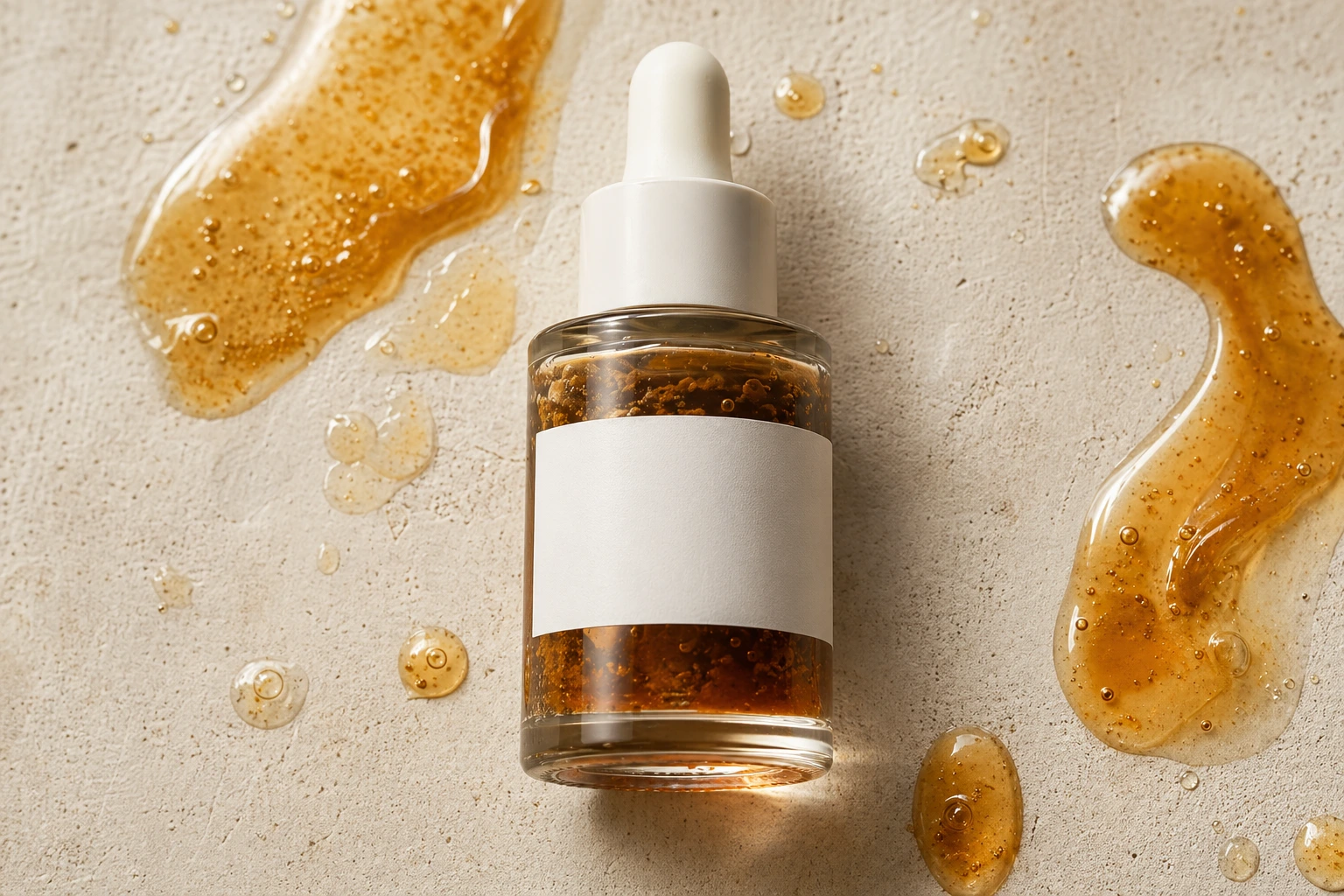
When Vitamin C serum turns orange, it has oxidized and transitioned from a beneficial antioxidant into a skin-damaging pro-oxidant.
L-ascorbic acid, the most potent and common form of topical Vitamin C, is notoriously unstable. It degrades rapidly when exposed to light, heat, or oxygen. Using a fresh Vitamin C serum protects the skin from free radicals and UV damage, but using a degraded serum actively works against your skin health goals. You can easily identify an oxidized serum by its physical characteristics. A compromised formula will display a "rusty" brown or dark yellow hue, emit a distinct metallic odor, and leave a persistent orange residue on the skin (DrLOUIE, 2026). Once oxidized, the molecule fundamentally changes. Instead of neutralizing free radicals, it becomes a pro-oxidant, actively causing oxidative stress, inflammation, and cellular damage. If your serum has turned dark orange or brown, it must be discarded immediately.
Why is my Vitamin C serum staining my skin like fake tan?
Degraded Vitamin C stains the skin orange due to the formation of erythrulose, which is the exact same chemical ingredient used in self-tanners.
Many users notice that as their Vitamin C serum ages, their face begins to look slightly tanned, or their palms and fingertips develop stubborn orange stains that will not wash off with standard cleansers. This is not a harmless tint from the liquid itself; it is a chemical reaction occurring directly on your skin. The orange staining seen with degraded Vitamin C is due to the formation of erythrulose. This compound is the identical active ingredient utilized in many commercial self-tanners, explaining precisely why it leaves a lingering, difficult-to-remove tint on the skin (Phyto-C, 2026). If you are already struggling to figure out why dark spots get darker every summer, applying an oxidized serum that deposits self-tanner ingredients over your hyperpigmentation will only exacerbate the uneven skin tone you are trying to correct.
Normal Expected Changes vs. Warning Signs
Distinguishing between a harmless temporary reaction and a severe warning sign is essential for maintaining a healthy and resilient skin barrier. Refer to this structural overview of the most common active ingredients.
| Ingredient | Normal & Safe Reaction | Warning Sign (Stop Use) | Root Cause of Warning Sign |
|---|---|---|---|
| Niacinamide (2-5%) | Mild tingling fading in minutes; minor flush lasting 1-2 hours | Tiny clustered bumps, persistent redness, excessive dryness | Irritation from 10%+ concentration or incompatible formulation additives |
| Snail Mucin | Viscous, slightly sticky initial texture that absorbs completely | Sudden hives, intense itching, swelling of the application area | Cross-reactive allergy to dust mites (exacerbated by immunotherapy) |
| Vitamin C (L-Ascorbic Acid) | Clear to very pale yellow tint; subtle hot dog/metallic scent when fresh | Dark orange/brown color, self-tanner skin staining, strong metallic smell | Oxidation leading to pro-oxidant shift and erythrulose formation |
Frequently Asked Questions
What does niacinamide purging look like?
Niacinamide does not cause cellular purging. If you experience tiny bumps or closed comedones shortly after using a new niacinamide serum, you are experiencing contact irritation or clogged pores from the formula's texture enhancers, not a "purge." Discontinue use, especially if the product is a high-strength 10% formula.
Can I use oxidized Vitamin C if it still smells fine?
No. Scent alone is not a reliable indicator. If the serum has shifted from clear or pale champagne to a dark yellow, rusty brown, or vivid orange, it has oxidized. Using it will introduce pro-oxidants to your skin, accelerating oxidative stress and triggering inflammation.
How can I test for a snail mucin allergy?
If you have a known allergy to house dust mites, perform a patch test on your inner forearm or the side of your neck. Apply a small amount of the snail mucin and wait 24 to 48 hours. If you experience redness, hives, or swelling, do not apply it to your face.
Does 10% niacinamide work faster than 5%?
Clinical research does not support the idea that 10% works faster. While higher concentrations exist on the market, 2% to 5% remains the optimal, highly effective range for barrier repair and brightening. Utilizing 10% simply significantly increases your risk of developing irritation and redness.
Find Your Ideal Routine
Take our free skin barrier quiz to find targeted barrier repair solutions optimized for your skin type, without the guesswork or irritation.
Read the Serum Mixing Guide