
Ceramides vs Hyaluronic Acid for Skin Barrier Repair
Learn why skin feels tight after moisturizing, how occlusives work, and Kiero's lightweight barrier repair plan using ceramides and hyaluronic acid.
TL;DR
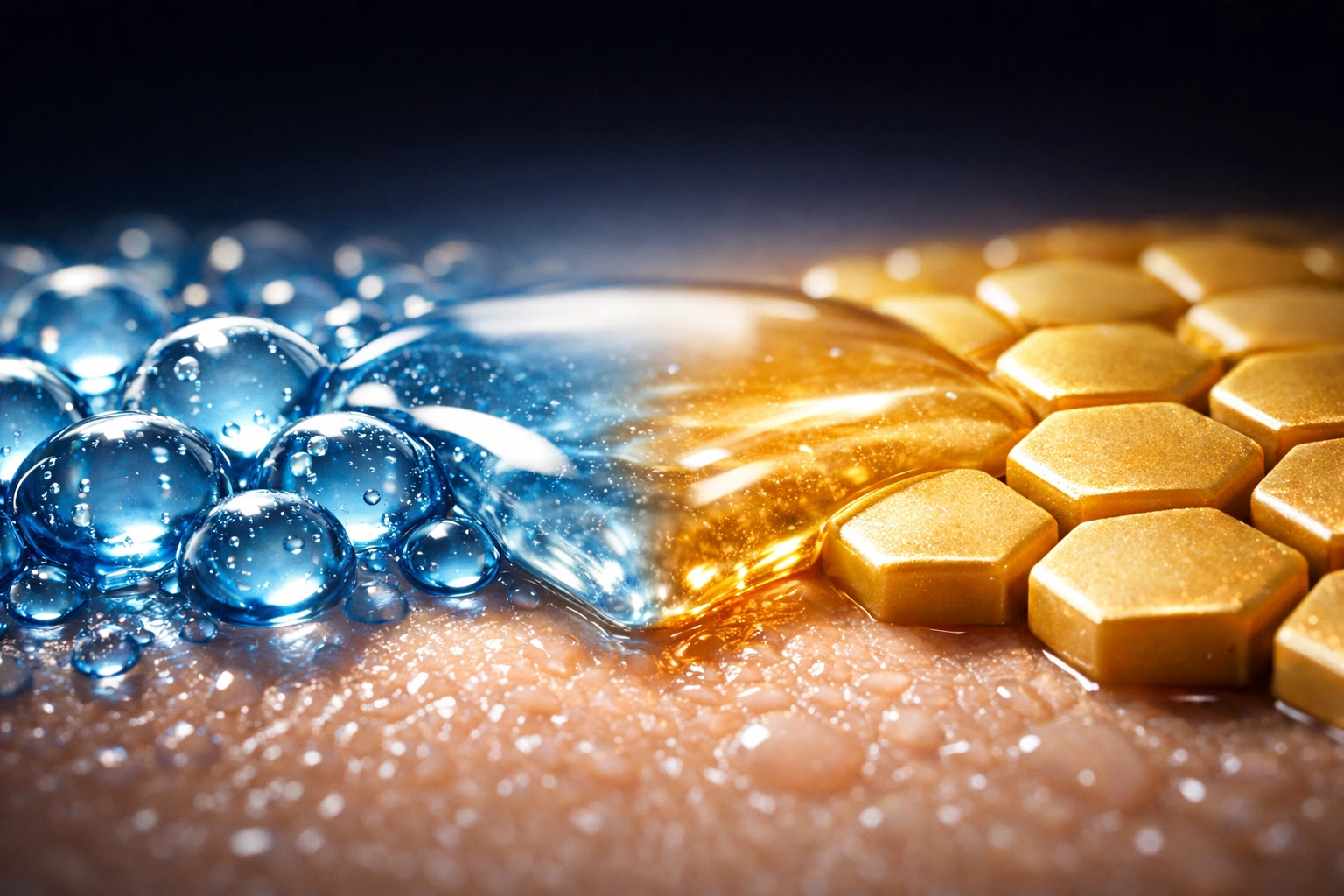
Ceramides and hyaluronic acid serve completely different but highly complementary functions in skin barrier repair. While hyaluronic acid acts as a powerful humectant that can bind up to 6 liters of water per gram, ceramides serve as essential occlusives that can more than double skin hydration levels within 12 hours. Kiero recommends combining both ingredients alongside panthenol in a "Golden Triangle" strategy to prevent reverse absorption, stop stinging, and accelerate permanent barrier restoration.
What is the difference between ceramides and hyaluronic acid?
Ceramides are lipid-based occlusives that trap moisture inside the skin, while hyaluronic acid is a water-binding humectant that draws moisture in.
When dealing with a compromised, stinging, or persistently dry face, understanding the functional difference between these two ingredients is the critical first step to recovery. The stratum corneum—your skin’s outermost layer—relies on a delicate balance of water content and lipid structure to defend against environmental stressors.
Hyaluronic acid operates in the water phase. It is naturally present in the human body, acting as a structural component of the extracellular matrix that keeps tissues lubricated and voluminous. In skincare, its primary job is to attract water molecules to the surface of the epidermis, providing immediate relief from tightness and an instant plumping effect.
Ceramides, on the other hand, operate in the lipid phase. They are physiological fats that make up approximately 50% of your skin's natural barrier. If your skin cells are bricks, ceramides are the mortar that holds them tightly together. Without this mortar, the moisture that hyaluronic acid attracts will simply evaporate into the air. The functional skincare movement has recognized this essential connection; the global skin-barrier market is currently valued at USD 1.301 billion in 2025 and is projected to reach USD 2.380 billion by 2034 as consumers shift toward medical-grade repair solutions (Growth Market Reports, 2026).
Why are ceramides considered the gold standard for barrier occlusion?
Ceramides act as the structural mortar between skin cells to physically block transepidermal water loss and permanently rebuild a damaged barrier.
Because ceramides are bio-identical to the lipids naturally produced by your body, the skin recognizes and utilizes them with remarkable efficiency. When the skin barrier is damaged by over-exfoliation, harsh weather, or alkaline soaps, the natural ceramide reserves deplete rapidly, leaving microscopic cracks in the skin's surface.
Researchers publishing in Cosmoderma demonstrate just how powerful topical ceramide replenishment can be. A recent 12-hour evaluation of a ceramide-rich lotion revealed that application increased baseline skin hydration from 13.57 to an impressive 31.61. More importantly, the application fundamentally improved the skin's structural integrity.
The primary metric dermatologists use to measure barrier health is Transepidermal Water Loss (TEWL)—the rate at which moisture passively escapes through the skin. The same study confirmed that ceramides significantly reduced TEWL scores to 3.08, compared to 4.54 in the untreated control group. This measurable drop in moisture evaporation is why ceramides remain the undisputed gold standard for managing chronic barrier conditions like atopic dermatitis, eczema, and psoriasis.
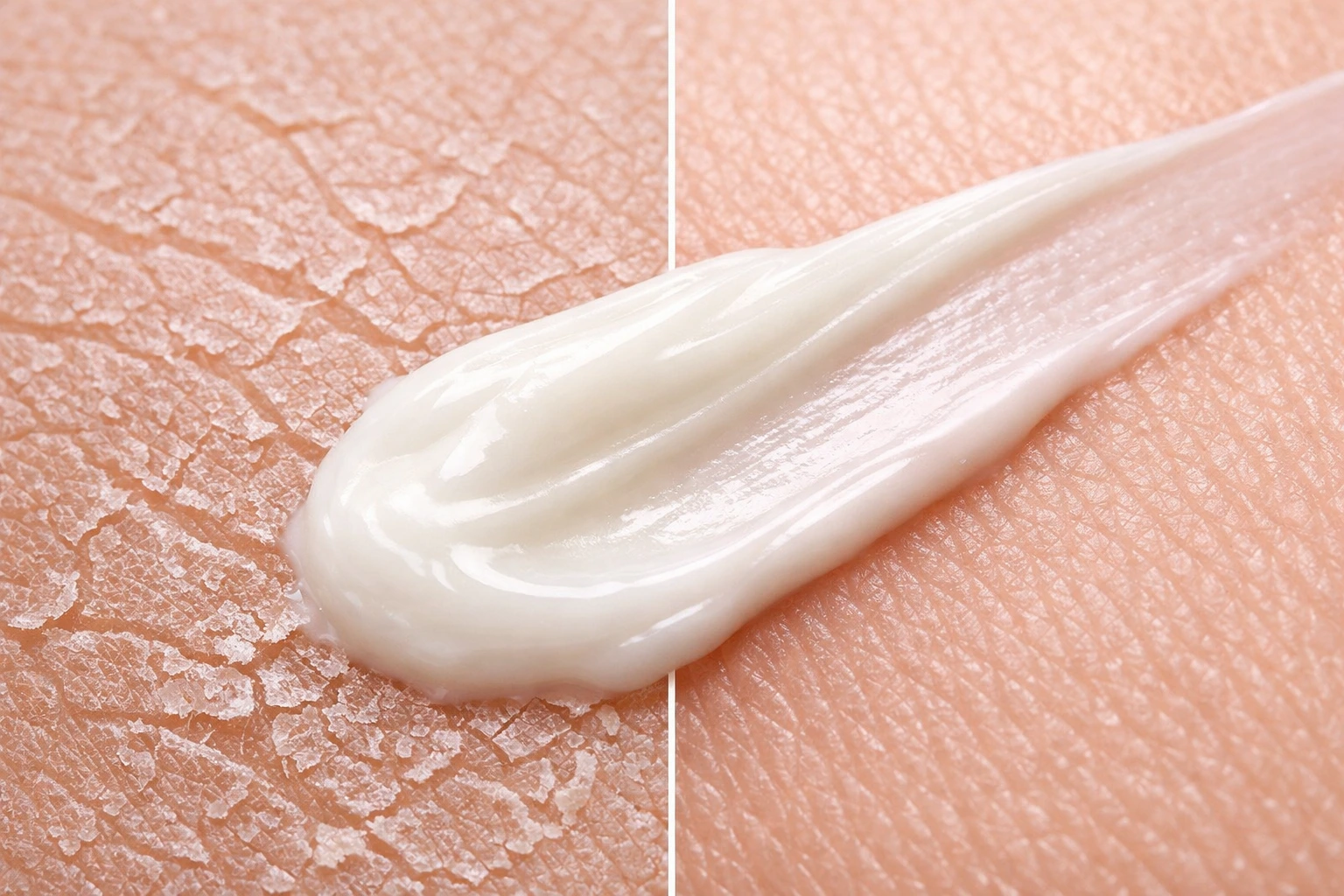
"Ceramides are the literal mortar that keeps our cellular bricks intact. They are absolutely essential for preventing transepidermal water loss during the active repair phase."
How does hyaluronic acid hydrate the skin without heavy oils?
Hyaluronic acid functions as a powerful moisture magnet capable of holding up to one thousand times its own weight in water without clogging pores.
While ceramides provide necessary weight and protection, hyaluronic acid delivers weightless, deep hydration. As a humectant, it does not contain any lipids or oils, making it an exceptionally safe choice for acne-prone skin that is simultaneously dehydrated from harsh breakout treatments.
The water-binding capacity of this molecule is exceptional in cosmetic chemistry. Advanced formulations of hyaluronic acid can bind up to 6 liters of water per single gram of the ingredient. When applied to damp skin, it acts like a sponge, pulling ambient moisture from the environment and anchoring it to the surface of your epidermis.
This mechanism provides immediate volume, smooths out fine dehydration lines, and creates a soothing, water-rich environment that allows cellular repair to take place. Because it is completely oil-free, incorporating a hyaluronic acid serum is the easiest way to boost hydration in humid climates where heavy creams feel suffocating.
Why does skincare sting or burn on a damaged skin barrier?
Skin stings when microscopic cracks in the lipid barrier expose delicate nerve endings to active ingredients or concentrated heavy emulsions.
A very common frustration during the repair process is that the very creams meant to heal the skin end up burning upon application. When the barrier is compromised, its permeability increases dramatically. Ingredients that normally sit harmlessly on the surface now penetrate much deeper, triggering an immediate inflammatory response from unprotected nerve receptors.
Interestingly, the texture and delivery system of the product plays a massive role in this stinging sensation. In a double-blind split-body trial evaluating patients with atopic dermatitis, investigators publishing in the Wiley Online Library discovered that hyaluronic acid-based foams actually outperformed ceramide emulsions in reducing erythema, scaling, and itching (Wiley Online Library, 2026).
The study noted that stinging and burning sensations were significantly lower with the HA-based foams compared to the thicker ceramide emulsions. For highly compromised, actively weeping, or severely inflamed skin, jumping straight into a heavy, complex ceramide paste can sometimes overwhelm the surface. In these acute phases, utilizing lightweight gentle Korean skincare for sensitive skin that relies on soothing, water-based humectants is often the safest initial step before introducing lipid-heavy occlusives.
What is reverse absorption and how does it cause skin tightness?
Reverse absorption occurs when humectants pull hydration from deep within your skin and evaporate it into dry air because ambient humidity is low.
A frequent complaint among skincare users is that applying hyaluronic acid leaves their skin feeling tighter and drier than before. This phenomenon, known as reverse absorption, is a matter of environmental physics. Hyaluronic acid is a magnet for water, but it is entirely unbiased about where it sources that water.
If you apply low-molecular-weight hyaluronic acid in an environment with very low ambient humidity (like an air-conditioned office, an airplane, or during a dry winter), there is no moisture in the air for it to attract. Instead, the humectant will draw moisture up from the deeper dermal layers of your own skin to the surface. Without an occlusive layer to trap it there, that moisture rapidly evaporates into the dry air, leaving the skin chronically dehydrated.
To prevent reverse absorption, hyaluronic acid should never be the final step in your routine. It must be applied to slightly damp skin and immediately sealed in with an occlusive agent—like a ceramide cream—to lock the moisture matrix in place.
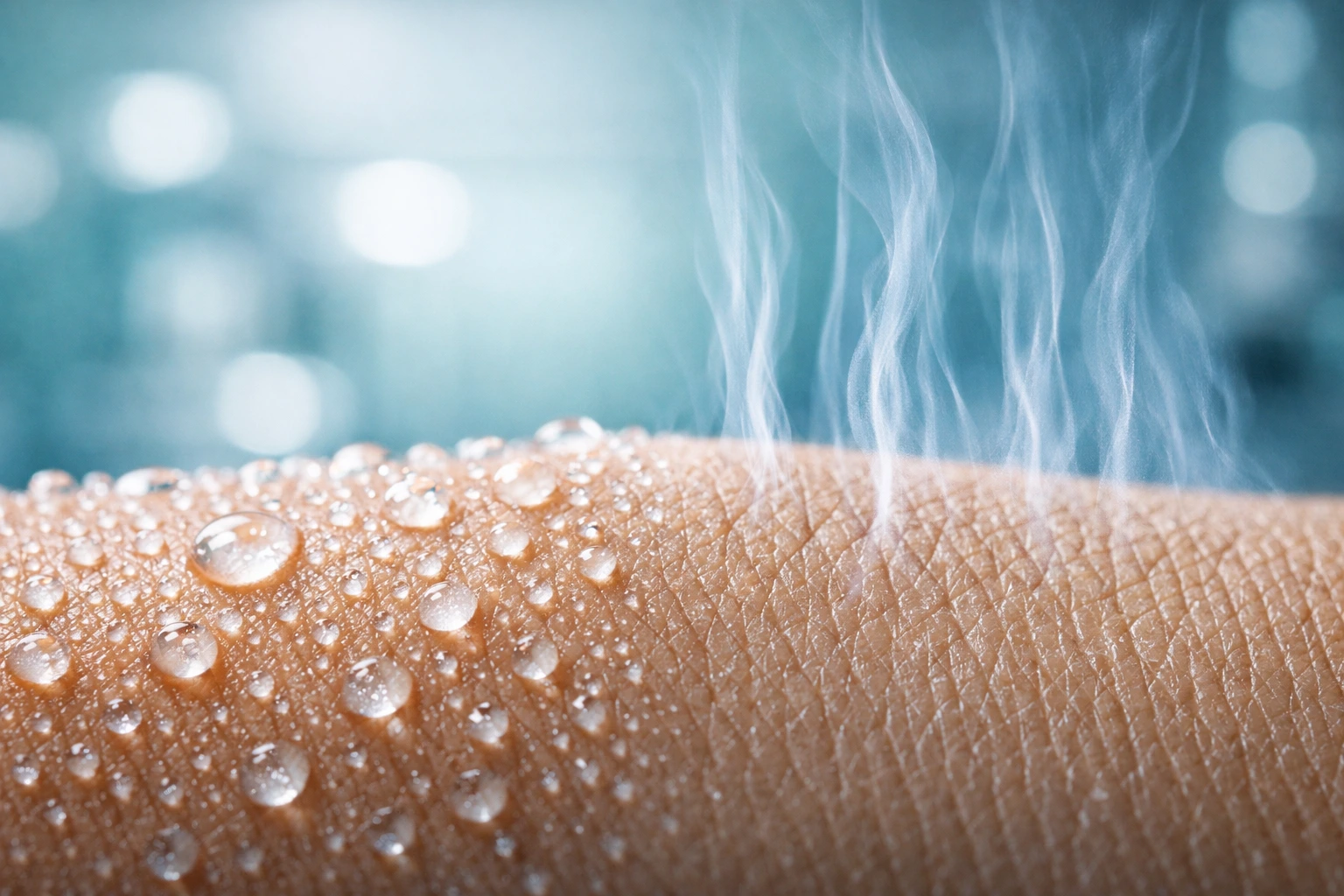
Reverse Absorption
Without an occlusive seal, humectants like HA can pull water from deep within the skin, leading to rapid evaporation and a tight, stinging sensation in dry environments.
What is Kiero's Golden Triangle strategy for skin recovery?
The Golden Triangle strategy combines ceramides, hyaluronic acid, and panthenol to provide external lock-in, internal repair, and basal skin soothing.
Relying on a single ingredient to fix a complex structural problem rarely yields optimal results. Based on guidelines from the American Academy of Dermatology, Kiero recommends a multi-targeted approach to barrier repair that addresses hydration, occlusion, and cellular calming simultaneously.
The foundation of this strategy relies on the correct physiological layering ratio. The most effective barrier repair occurs when ceramides are combined with cholesterol and fatty acids in a specific 1:1:1 (or 3:1:1) ratio. This mirrors the natural lipid composition of a healthy stratum corneum.
When this optimal lipid ratio is paired with the deep hydration of hyaluronic acid and the potent anti-inflammatory properties of panthenol (Vitamin B5), it creates Kiero's "Golden Triangle." According to materials scientists at SA Materials, this trio delivers "external lock-in, internal repair, and basal soothing" better than any isolated ingredient. Panthenol accelerates cellular division and reduces the initial redness, hyaluronic acid plumps the skin with necessary water, and the 1:1:1 ceramide blend seals the system shut to allow uninterrupted healing.
Ceramides vs Hyaluronic Acid: Which ingredient is best for your skin type?
Acne-prone skin responds best to lightweight hyaluronic acid serums, while severely dry or damaged skin requires heavier ceramide-rich barrier creams. Customizing your barrier repair strategy depends heavily on your skin's innate oil production and the severity of the damage.
For individuals with oily, combination, or acne-prone skin, heavy occlusives can feel suffocating and may trigger congestion. In these cases, water-based hyaluronic acid serums are preferred to rebuild hydration without the pore-clogging potential of thick lipid bases. You can seal these humectants with very lightweight gel-creams or lotions that contain micro-doses of ceramides. Conversely, for severely dry, mature, or clinically damaged skin, the barrier requires significant physical reinforcement. Heavier, ceramide-rich creams provide the reliable occlusion strength required for deep repair.
| Feature | Ceramides | Hyaluronic Acid |
|---|---|---|
| Primary Function | Occlusive (Traps moisture, blocks evaporation) | Humectant (Attracts and binds water) |
| Target Phase | Lipid (Fat) phase | Aqueous (Water) phase |
| Best For | Dry, damaged, mature, or eczema-prone skin | Dehydrated, oily, or acne-prone skin |
| Texture Impact | Adds richness, weight, and protective film | Adds lightweight slip, water-like finish |
| Key Benefit | Significantly reduces Transepidermal Water Loss | Plumps skin and provides immediate soothing |
| Risk if Misused | Can feel heavy or congest oily skin | Can cause reverse absorption in dry climates |
How do you build a lightweight skin barrier repair routine?
A successful barrier routine layers lightweight humectants under lipid-rich occlusives to trap moisture and protect skin from environmental stress.
Building a functional skincare routine for beginners with compromised barriers requires discipline. The goal is to maximize hydration and protection while minimizing the number of products that could potentially irritate exposed nerve endings. Kiero recommends the following step-by-step application architecture:
Gentle Preparation
Begin with a non-stripping, low-pH cleanser that respects the skin's acid mantle. Do not completely dry your face—leave it slightly damp.
Water-Phase Hydration
Apply a pure hyaluronic acid serum directly onto the damp skin. The moisture on your face provides the HA molecules with immediate water to bind to, preventing them from pulling reserves from deeper dermal layers.
Soothing Treatment
If your barrier is highly inflamed or stinging, apply a layer of panthenol (Vitamin B5) to immediately calm erythema and reduce the burning sensation.
Lipid-Phase Occlusion
Within 60 seconds of applying your water-based serums, lock everything in with a ceramide-rich moisturizer. This completes the Golden Triangle, sealing the humectants beneath a protective physiological lipid shield.
Frequently Asked Questions
Can I use ceramides and hyaluronic acid together?
Yes. Using them together is the most effective way to repair a damaged barrier. Hyaluronic acid draws water into the skin to hydrate it, while ceramides create a protective seal over the skin to prevent that water from escaping. Applying them sequentially—hyaluronic acid first, followed by ceramides—maximizes both ingredients' benefits.
Why does my face feel tight after using hyaluronic acid?
Your face feels tight due to reverse absorption. If you apply hyaluronic acid to dry skin in a low-humidity environment without following up with a moisturizer, the humectant will draw water out of the deeper layers of your skin and evaporate it into the air. Always apply it to damp skin and seal it with an occlusive cream.
Do ceramides clog pores or cause acne?
Pure ceramides are physiological lipids identical to the ones your body naturally produces, and they are inherently non-comedogenic. However, because ceramides are often formulated into thick, heavy creams with secondary occlusives like shea butter or heavy oils, the formulation may trigger breakouts in acne-prone individuals. Opt for lightweight ceramide gels or lotions if you have oily skin.
How long does it take to repair a damaged skin barrier?
A mildly compromised barrier can show significant improvement in hydration within 12 to 24 hours of applying a ceramide and hyaluronic acid routine. However, for complete cellular turnover and permanent restoration of the lipid matrix, you should expect to maintain a strict barrier-repair protocol for 3 to 4 weeks.