Korean Serum for Oily Acne Skin and Fine Lines
How niacinamide helps oily acne-prone skin, early fine lines, retinol layering, side effects, and humid-weather serum texture.

Key takeaways
- Niacinamide is a strong fit for oily, acne-prone skin because it helps manage sebum, texture, visible pores, and barrier comfort.
- The 5% to 10% range is commonly treated as the practical zone for pore and texture support, although concentrations above 5% can cause irritation in sensitive skin.
- Retinol and niacinamide can share a routine when you apply niacinamide first, wait 60 to 90 seconds, and reduce frequency if the barrier feels stressed.
How does Korean skincare approach oily skin and early fine lines?
Niacinamide is a practical bridge for oily acne-prone skin that also shows early fine lines, texture, and dullness. For oily skin in humid weather, a serum that feels heavy or sticky can make people skip care entirely, making lightweight textures a priority for consistent use.
Niacinamide is used in Korean skincare because it supports sebum regulation and skin longevity (Knok Global). For someone dealing with breakouts, post-acne marks, enlarged-looking pores, and the first signs of firmness loss, it works as a daily support ingredient rather than a harsh reset.
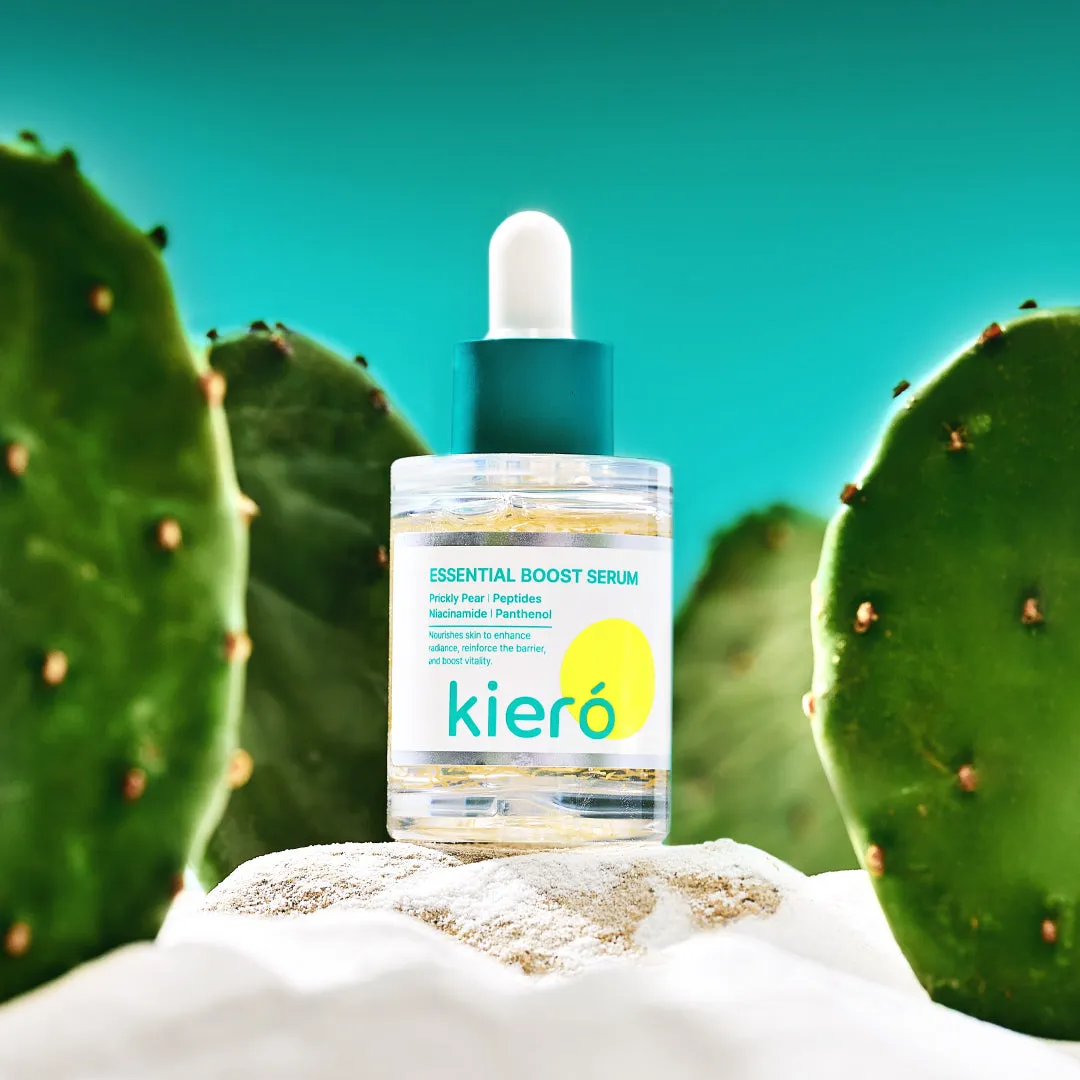
Essential Boost Serum
Sérum ligero con higo chumbo, péptidos, niacinamida y pantenol, que nutre y revitaliza la piel mientras fortalece la barrera cutánea para un rostro más luminoso
What ingredients and concentrations work best for oily acne-prone skin?
The most useful Korean-style serum for oily acne skin combines niacinamide with barrier helpers. Peptides and panthenol add support without making the routine more aggressive.
For niacinamide concentration, the practical target is usually not the highest number on the label. The 5% to 10% range is described as optimal for refining pores and improving skin texture (Knok Global). That range is especially relevant for people who want oil balance and smoother-looking skin but still need a formula they can use consistently.
Higher-strength formulas do exist. COSRX 15% Niacinamide serum, for example, uses Zinc PCA to target sebum reduction in oily skin types (Forbes Vetted, 2026). That kind of product can make sense for resilient oily skin, but it may be too much for skin that flushes, stings, or reacts easily.
Essential Boost Serum combines niacinamide with peptides and panthenol. This formulation targets multi-ingredient synergy, as the combination is essential for "revitalizing" the face while maintaining hydration (Kiero, 2026).
| Niacinamide level | Expected benefit | Irritation risk | Best fit | When to slow down |
|---|---|---|---|---|
| Around 5% | Texture and visible pore support | Lower for many users, but still patch test if reactive | Sensitive acne-prone skin, beginner routines, humid climates | If skin tingles for more than a few minutes or feels hot |
| 5% to 10% | Stronger pore and texture support | Moderate, especially if layered with acids or retinoids | Oily skin with post-acne marks and early uneven texture | If dryness, burning, or peeling appears |
| Around 15% | Targeted sebum-control formulas may include additions such as Zinc PCA | Higher, especially with a stressed barrier | Very oily skin that does not react easily | If breakouts look inflamed or the barrier feels raw |
When should you expect visible results from niacinamide?
Visible improvements in skin tone and collagen support from 10% niacinamide typically appear within four to six weeks.
Niacinamide addresses skin tone and collagen support, which can be useful for individuals whose skincare routines prioritize these concerns.
Industry guidance on 10% niacinamide suggests visible improvements in skin tone and collagen support often appear within four to six weeks (Natural Organic Skincare). That timeline should be treated as a realistic checkpoint, not a guarantee.
A practical way to judge progress is to track four signs every two weeks:
- Midday shine looks easier to manage without adding more drying products.
- Post-acne marks look less intense against your natural skin tone.
- Foundation or sunscreen sits more evenly over pores and texture.
- Fine surface lines look less noticeable when skin is hydrated.
How should you layer niacinamide serum with retinol?
Niacinamide can sit before retinol in a night routine when the skin barrier is calm.
Niacinamide is commonly used as a buffer for retinoid routines because it supports barrier comfort and helps skin better tolerate the drying effects of retinoids (Kiero). The key is not to stack every active every night.
A simple routine for oily acne-prone skin can look like this:
- Cleanse the skin thoroughly to prepare for actives.
- Apply niacinamide serum first and wait 60 to 90 seconds.
- Apply retinol if the skin feels calm and the barrier is stable.
Skincare protocols suggest waiting 60 to 90 seconds between applying niacinamide and applying retinol (Natural Organic Skincare). If your skin is new to retinol, start with alternate nights rather than daily use. If acne treatments are already drying you out, keep niacinamide on the non-retinol nights until your skin feels stable.
What side effects should sensitive acne-prone skin watch for?
Higher percentages of niacinamide can irritate reactive skin. Flushing, burning, and persistent tingling are signs to slow down.
The main mistake with niacinamide is assuming that more is always better. Editorial guidance from InStyle warns that concentrations above 5% may cause flushing or burning in people with highly sensitive or rosacea-prone skin (InStyle). That does not mean every person must avoid stronger formulas. It means sensitive users should patch test and build frequency slowly.
Common side effects to watch for include:
- Flushing in users with rosacea-prone skin (with concentrations higher than 5%).
- Burning rather than mild, short-lived tingling. If irritation occurs, simplify the routine. Stop new actives and reintroduce products one at a time after the skin feels calm.
How do niacinamide serum prices compare in 2026?
Niacinamide serum prices vary widely in 2026, so value depends on formula fit, texture, and skin tolerance. A mid-priced serum can be the smarter daily choice.
The 2026 US niacinamide serum market ranges from budget options around $6 to luxury formulas around $189 (InStyle, 2026). That wide spread can make shopping confusing because price alone does not tell you whether a serum will work for oily acne-prone skin in warm weather.
At MXN 207, about $14 USD, Essential Boost Serum sits in an accessible range (Kiero). For users trying to manage oil, post-acne marks, and early fine lines with one lightweight step, that ingredient mix is more relevant than choosing a product only because it has the highest niacinamide percentage.
Use these buying filters before choosing a serum:
- Choose lightweight texture if you live in humid or warm weather.
- Choose barrier-support ingredients if you use retinol or acne treatments.
- Choose moderate strength if your skin flushes or burns easily.
- Choose a formula you can use consistently for at least four to six weeks.
Build a lighter routine for humid weather
Start with hydration and barrier support before adding more actives. Kiero’s hydration collection is a simple place to compare lightweight options for oily, acne-prone skin.
FAQS