Snail Mucin vs Peptides: Better Value for Early Aging?
Peptides suit persistent fine lines or firmness, snail mucin suits hydration or tight cheeks; compare price per milliliter for the available size.
Quick answer: Choose for the concern, then compare cost per use.
- Pick a peptide serum when persistent fine lines or firmness are your main cosmetic goal and the full formula suits your skin.
- Pick snail mucin when hydration, tight-feeling cheeks, or a comfortable extra layer matter most.
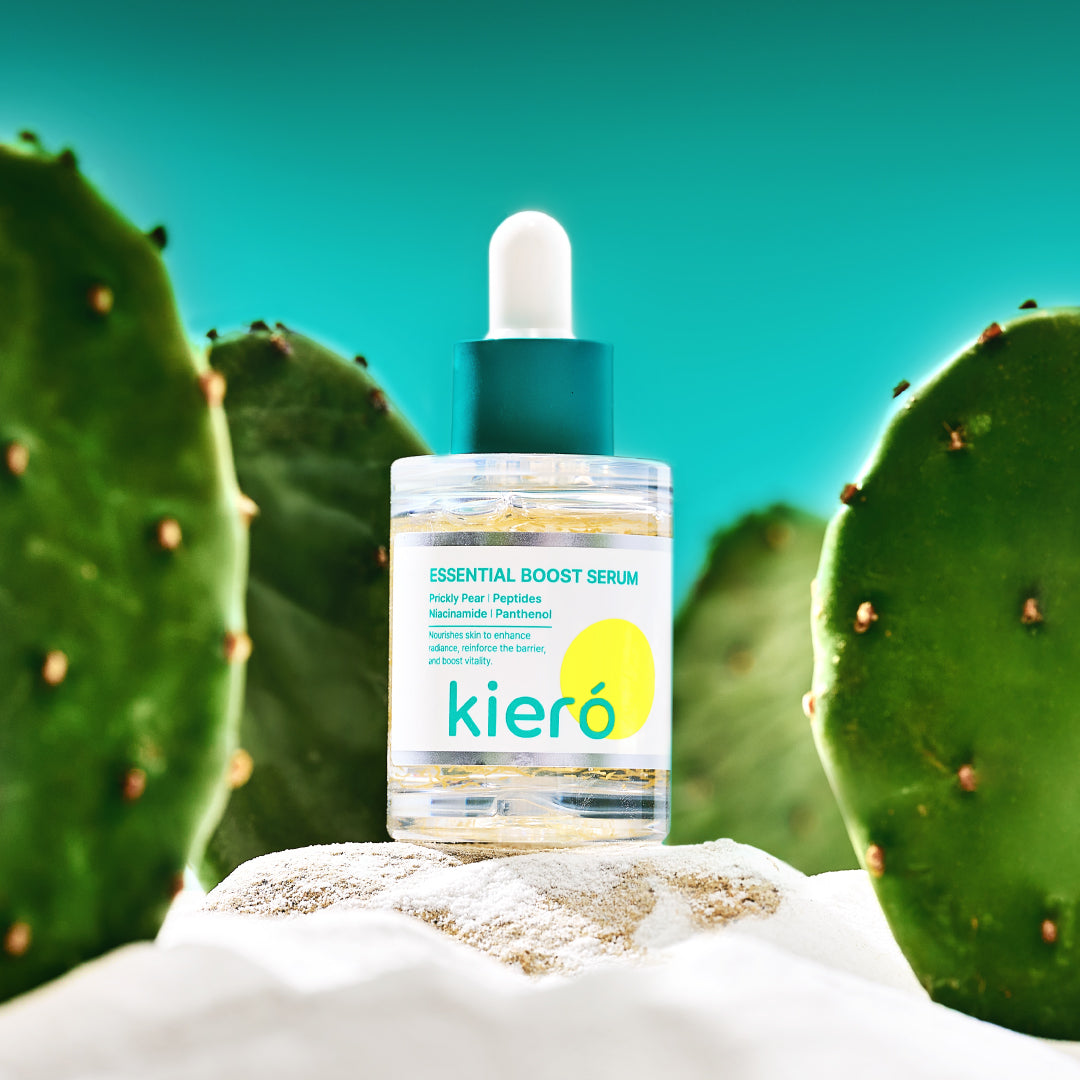
- Kiero Essential Boost Serum is a lightweight peptide-containing option with prickly pear, niacinamide, and panthenol. Compare the listed price per milliliter after choosing which concern matters most.
For one serum, value means paying for a formula that fits the concern you actually want to address, feels good enough to use, and fits your budget over time. A peptide serum is the more directly aligned category when early fine lines or firmness are the reason for buying; snail mucin is the more direct fit when dryness, tightness, and a cushioned hydrated feel lead the decision.
Kiero Essential Boost Serum belongs in the peptide-containing side of that comparison. It is a lightweight formula with prickly pear, peptides, niacinamide, and panthenol, and Kiero describes hydration and firmness among its intended benefits. This comparison uses published research for ingredient-level context and the manufacturers’ product pages for each product’s stated ingredients, texture, and directions; product-page benefits remain manufacturer claims.
Essential Boost Serum
1. What “better value” means when you buy one serum
A serum earns its place when it matches the main job you want it to do. If the priority is persistent early-aging concerns, a peptide-containing formula may fit more closely; if the priority is a softer, less tight feel, a hydrating snail-mucin essence may fit better. Those are different reasons to buy, so a lower bottle price alone cannot settle the choice.
| Your main reason for buying | Better starting fit | What value looks like in practice |
|---|---|---|
| Fine lines or firmness remain the main concern after moisturizing | A peptide-containing serum | A formula with named peptides, clear directions, and a texture you can use consistently |
| Cheeks feel tight or dry, or skin looks less smooth when it feels dry | A snail-mucin essence or another hydrating layer | A comfortable hydration step that works with your moisturizer and does not make the T-zone feel overloaded |
| You want one layer for hydration plus more than one cosmetic concern | A multi-ingredient serum such as Kiero Essential Boost Serum | One lightweight step that includes peptides alongside ingredients Kiero identifies as prickly pear, niacinamide, and panthenol |
| You have not settled on the concern, or sunscreen and moisturizer are not part of your routine | Start with the basic routine first | Put money toward daily sun protection and a moisturizer before adding a treatment serum |
Think of “value” as the intersection of four things: match to your main concern, a formula your skin tolerates, an application texture you will actually use, and a reasonable cost per use. A large bottle can lower the price per milliliter while still being poor value if it stays unused or adds a layer you do not want. A smaller product can be better value if you use it regularly and it replaces a step you would otherwise buy separately.
2. What the evidence says about peptides and snail mucin
Topical peptide findings support considering peptide-containing formulas for persistent fine lines, with the research base weighted toward oral products. The 2026 systematic review and meta-analysis of oral and topical peptides included 19 studies: 17 tested oral peptides and two tested topical peptides. Across routes, the review found a modest pooled effect on wrinkle reduction (mean difference 0.27; 95% CI, 0.01–0.52; p = 0.04). Subgroup analysis found that oral polypeptides drove the significant effect, while the smaller topical-peptide effect was not statistically significant.
A controlled trial offers one formula-specific example. A double-blind, randomized, placebo-controlled trial indexed by PubMed tested a specific Tetrapeptide-68 oil-in-water formula around the eyes in 25 women aged 30 to 65 over 12 weeks. Participants reported positive changes in skin texture and moisture, and the study reported no adverse reactions.
The PubMed trial record reports that researchers measured skin parameters at baseline and weeks 4, 8, and 12; wrinkle changes appeared in skin-roughness measures and 3D imaging. These measurements add an objective wrinkle-related outcome to the participants’ positive reports about texture and moisture.
A systematic review in the Journal of Integrative Dermatology describes seven clinical studies of snail-derived ingredients, including studies reporting changes in hydration, texture, and wrinkles. The review identifies small study samples and limited long-term follow-up as important evidence gaps. A 2009 uncontrolled, open-label trial enrolled 15 women with photoaging and used an 8% snail secretion filtrate emulsion each morning and a 40% liquid each night for three months.
The Journal of Integrative Dermatology review also describes two clinical studies in which creams containing snail-based ingredients significantly reduced transepidermal water loss, a measure of water escaping through the skin. Findings for photoaging were mixed: one study showed no change in Glogau ratings on either the treated or placebo side, while a three-month study reported improvement but had no control group. This makes the reported hydration findings more consistent than the review’s findings for photoaging.
The review also discusses a 2019 open-label study of 120 women with facial-aging complaints. The participants were grouped by skin type and used different snail secretion filtrate formulas twice daily for 90 days; the normal-to-oily group used a lipid-free serum. That group detail is relevant to shoppers with combination skin because it shows that at least one study used a serum format for an oilier skin profile. The review’s account of the 2019 study reports significant improvements in hydration, softness, firmness, wrinkles, elasticity, expression lines, and nasolabial grooves at days 45 and 90; hydration also improved two hours after application.
Choose a peptide-containing serum when persistent fine lines or reduced firmness are your main cosmetic goal. Choose snail mucin when hydration, tightness, or a comfortable extra layer matters most.
3. Is the line a hydration concern or an early-aging goal?
Use how your skin feels and the daily routine you want to improve to choose between hydration-first comfort and a treatment-focused serum. Dryness can make fine lines more noticeable, while age-related and sun-related skin changes can also include fine wrinkles, dryness, and reduced firmness. Use the pattern and your routine, rather than one mirror check, to decide what you want the serum to do.
- Start with hydration if tightness, roughness, or flaking is prominent. The American Academy of Dermatology’s dry-skin guidance lists dryness, itch, and more noticeable fine lines among signs of dehydrated skin. If that description fits, try to make your moisturizer routine comfortable and consistent before spending on a focused anti-aging serum.
- Look for a persistent concern if fine lines or reduced firmness remain your main goal when your skin feels comfortable. The Journal of the American Academy of Dermatology review says intrinsic aging can involve dryness, laxity, and fine wrinkles; photoaging affects sun-exposed areas and can include roughness and pigment changes.
- Give the basics a place in the budget. The AAD’s guide to choosing anti-aging products identifies sunscreen and moisturizer as the two most effective anti-aging products and recommends broad-spectrum, water-resistant SPF 30 or higher. For outdoor time, the AAD recommends reapplying sunscreen every two hours.
- Treat retinoids as a separate option for fine lines. The AAD’s skin-care guidance for people in their 20s says retinoids can treat mild fine lines and wrinkles and improve texture. The AAD advises choosing a retinoid formulated for your skin type and concern.
Moisturizer can make dehydration-related fine lines look less noticeable by supporting skin hydration. In a published study of a moisturizer containing three components of natural skin moisturization, expert assessments reported a 15% mean improvement from baseline in fine-line and wrinkle appearance after eight weeks of twice-daily use. That 15% improvement came from 39 participants who completed eight weeks of twice-daily use of the tested moisturizer. It does show why hydration can be a worthwhile first step when dry-feeling skin is part of the concern.
For a combination-skin shopper, separate the zones in your own routine. If cheeks often feel tight while the forehead, nose, and chin become shiny, start by asking whether the serum is meant to make the cheeks more comfortable or to pursue a persistent line or firmness concern across the face. Your answer can help you pick a layer and apply it where it earns its place, rather than assuming the same amount will feel right on every zone.
4. Korean serum examples: compare the formula, not the headline ingredient
The product name “peptide serum” or “snail mucin” is only the first filter. Formula size, supporting ingredients, how the maker says to apply it, and the skin feel all change how a product fits into a routine. The examples below show three distinct formulas and keep maker descriptions separate from clinical evidence.
| Product | Formula and format | Directions and product positioning | U.S. listing snapshot, October 5, 2026 |
|---|---|---|---|
| Kiero Essential Boost Serum | Lightweight; prickly pear, peptides, niacinamide, and panthenol; 30 ml / 1.01 fl oz | Apply a small amount to a clean face and neck morning and night. Kiero describes deep hydration, improved firmness, and more even-looking tone. | $11.99, about $0.40 per ml; the listing showed sold out. |
| COSRX The 6 Peptide Skin Booster Serum | Six multi-peptides, hyaluronic acid, N-acetylglucosamine, and allantoin; 150 ml / 5.07 fl oz | Apply 2–3 pumps after cleansing and pat gently into skin. COSRX positions it as a toner-like hydration and prep step. | The official COSRX listing showed $25, about $0.17 per ml; its single was backordered. |
| COSRX Advanced Snail 96 Mucin Power Essence | 96% snail secretion filtrate; COSRX describes a silky, rapidly absorbing texture; size choices of 100, 50, and 30 ml | COSRX positions it as a hydration-focused essence and shows it after cleansing in its routine guide. | The page showed $25 alongside the three size choices; match the checkout price to the size selected. |
5. How to compare what you spend
Bottle price tells you the checkout cost for one package. Cost per milliliter helps compare packages of different sizes; cost per use comes closer to the cost of using the product in your routine.
- Compare the same market and date. Use package prices from the store where you would buy and include shipping or discounts only when they apply to your order. The table uses official U.S. listing captures from October 5, 2026.
- Divide price by the net volume for that selection. For example, if the COSRX Snail 96 listing price of $25 applies to its 100 ml option, the illustrative rate is $25 ÷ 100 ml, or $0.25 per ml. Recalculate when you select a different size or the checkout price changes.
- Use cost per application only with a measured dose. The Kiero U.S. listing directs users to apply a small amount, while COSRX gives 2–3 pumps for its peptide booster; those amounts are not stated in milliliters, so they cannot support a fair cost-per-use estimate.
- Add fit to the calculation. Your better purchase also depends on whether the formula matches your goal, feels comfortable, and fills a routine step you want to keep.
The comparison needs both package prices and, for a true cost-per-use estimate, a comparable amount applied each time.
Use the same rule when evaluating sales. Compare the price you can pay today with the volume and directions printed for the formula, then ask whether the product replaces a step you already buy or adds another one. A discounted product you do not finish is a worse purchase than a well-used serum that fits your actual routine.
The dated price snapshot answers two different budget questions. Price per milliliter favors packages with more product, while the checkout total shows what you pay up front; the smallest package can be easier to budget for even when its unit cost is higher. Availability is a separate filter, because the Kiero listing showed sold out and COSRX’s peptide listing showed a backorder for its single at capture time. A lower unit price only helps when the size and listing you want are orderable.
6. How combination skin changes the answer
Combination skin makes finish and placement part of value. A serum can feel welcome on drier cheeks yet feel like one layer too many on an oilier forehead or nose. Choose a texture you can use comfortably across the zones that need it, and apply it where you want its cosmetic benefit rather than forcing equal coverage on every part of the face.
A simple one-serum test can make the choice more relevant to combination skin:
- Decide whether your primary goal is comfortable hydration or a persistent early-aging concern.
- Apply the chosen formula according to its directions to clean skin, then follow with the moisturizer and daytime sun protection already suited to you.
- Notice whether the finish stays comfortable on your cheeks and T-zone through your normal routine.
- Keep the serum in rotation if its feel and place in the routine make regular use realistic.
Combination skin can benefit from using a hydrating layer mainly where tightness occurs, while keeping the rest of the routine lighter on oilier areas. A peptide-containing serum can also be applied to the areas where persistent lines are the reason for choosing it, provided the product’s directions support that use.
Two combination-skin examples
If your cheeks feel tight after cleansing, your forehead becomes shiny during the day, and fine lines look more noticeable when your cheeks are dry, make comfort your first buying goal. A hydrating essence can suit that choice, particularly when you can use it on the drier areas and keep the rest of the routine light. The combination of an oilier T-zone and tight cheeks calls for different placement, not necessarily two separate serums.
If your moisturizer leaves your skin comfortable but persistent fine lines or reduced firmness still lead your decision, a peptide-containing formula is the more direct category fit. In that case, judge the complete serum and routine position, because a multi-step booster may be a poor match for someone who wants just one treatment layer. A shopper who is still establishing daily moisturizer and sun protection gets more value by making those steps consistent before adding either serum.
A third case is a routine that already includes a watery toner or serum. COSRX places its peptide booster after cleansing and before thicker serums or ampoules, which makes it a preparatory layer; consider whether that step would replace or add to your current routine. A reader choosing snail mucin for cheek comfort can also use the product’s hydration-focused role to decide whether it duplicates an existing layer.
In each case, compare the size and price of the formula you can actually order with the place it would occupy in your routine. A serum that replaces a step you already use may suit a one-serum budget better than one added as another layer. The product’s fit and routine role belong beside its price-per-milliliter figure.
7. Which one fits your reason for buying?
Choose by the concern you notice most often and what you want the product to add. If persistent fine lines or firmness are the goal, start with a peptide-containing formula and compare the full product, not just the word “peptides.” If hydration and tight-feeling cheeks lead the decision, start with snail mucin or another hydrating essence, then judge whether the texture is comfortable enough for repeated use.
| Choose | Best fit | Kiero’s place in the choice |
|---|---|---|
| Peptide-containing serum | Persistent fine lines or reduced firmness lead your cosmetic goal, and the formula fits your routine. | Kiero Essential Boost Serum is a lightweight, multi-ingredient peptide-containing option that Kiero positions for hydration and firmness. |
| Snail-mucin essence | Hydration, tightness, or a comfortable extra layer is the main reason to buy. | COSRX Advanced Snail 96 Mucin Power Essence is the 96% snail-filtrate example in this comparison. |
| Neither serum yet | Daily sun protection or a comfortable moisturizer is missing, or the main concern still feels unclear. | Put those basics first, then choose one formula for the concern that remains. |
Choose the formula that matches your main concern, then compare its listed price per milliliter for the size and listing available to you.
FAQ
Is snail mucin or a peptide serum better for early fine lines?
A peptide serum is the more directly aligned category when persistent fine lines or firmness are your main cosmetic goal.
Does snail mucin hydrate combination skin?
Yes, it can be a reasonable hydrating layer when your cheeks feel tight or dry and the essence texture suits you. COSRX describes its Advanced Snail 96 Mucin Power Essence as a silky, fast-absorbing essence with 96% snail secretion filtrate; skin feel still varies by person and routine.
Is Kiero Essential Boost Serum a peptide serum?
Yes, it is a lightweight serum that Kiero says contains peptides, prickly pear, niacinamide, and panthenol. Kiero describes hydration and firmness benefits; its U.S. product listing showed $11.99 and sold out status on October 5, 2026.
How do I compare cost per use for a serum?
Divide the price by the number of applications in the package, using a stated measured amount per use when available. If the directions say “small amount” or give pumps without the pump volume, compare price per milliliter instead and include the product’s fit and routine role in your value decision.
Should I buy a peptide serum before sunscreen?
No, make daily sun protection a priority first. The American Academy of Dermatology recommends broad-spectrum, water-resistant SPF 30 or higher as part of anti-aging skin care, while sunscreen and moisturizer are the two products it identifies as most effective for that purpose.
Essential Boost Serum
See how these criteria hold up on the real thing.