Niacinamide vs Vitamin C for Dark Spots: A Beginner’s Guide
Niacinamide vs vitamin C for dark spots? Kiero’s niacinamide suits post-irritation marks; vitamin C may fit sun-related discoloration; use sunscreen.

Choose your first serum by the mark’s likely cause and your routine.
- Start with niacinamide when dark marks follow breakouts or irritation, especially if you are new to active serums.
- Kiero Essential Boost Serum is a lightweight, 30 mL niacinamide option with prickly pear, peptides, and panthenol.
- COSRX’s official listing specifies 23% pure vitamin C in a 20 g package.
- Daily sunscreen is the first practical step for preventing new dark spots.
Niacinamide vs vitamin C for dark spots: niacinamide is the research-backed route for uneven pigmentation, while vitamin C has been studied for melasma and photodamage; the likely cause of the mark guides the first choice.
Start by identifying what is causing the uneven tone
A skin injury can leave a dark spot or patch as it heals, according to the American Academy of Dermatology’s dark-spot guidance. The AAD recommends identifying the cause first; removing it can allow many spots to fade on their own and help prevent new ones.
The AAD’s dark-spot guidance recommends applying sunscreen to skin clothing will not cover before going outdoors and reapplying every two hours and after swimming or sweating.
Use the mark pattern to choose your first active. If a brown mark appeared where a blemish or irritated area healed, a niacinamide serum is a reasonable starting branch. If discoloration follows sun exposure, vitamin C is an option to consider, while sunscreen remains the daily foundation. A broad or persistent patch, or marks that keep appearing as irritation continues, deserve attention to the underlying cause before adding more brightening products.
Niacinamide serum vs vitamin C: what clinical evidence suggests
Niacinamide has human clinical findings on uneven pigmentation from studies of specific moisturizers and sunscreen routines. A 2002 clinical study included 18 people with hyperpigmentation who used a 5% niacinamide moisturizer and a vehicle moisturizer in a paired comparison; a separate facial-tanning trial included 120 participants and a 2% niacinamide-plus-sunscreen product. Across the clinical studies, niacinamide significantly reduced hyperpigmentation and increased skin lightness versus vehicle after four weeks.
A 12-week randomized, double-blind split-face study compared a moisturizer with 5% niacinamide against the same moisturizer without niacinamide in 50 Caucasian women aged 40 to 60. In that trial, the 5% niacinamide moisturizer was well tolerated and significantly improved hyperpigmented spots, fine lines, texture, and redness versus the control moisturizer.
Topical vitamin C has clinical evidence for sun-related pigmentation, with outcomes that varied across studies. A 2023 systematic review included seven publications involving 139 volunteers and assessed randomized trials of topical vitamin C for melasma or photodamage. Objective measurements found significant lightening in areas treated with ascorbic acid, while clinical and self-assessments favored vitamin C over placebo for hyperpigmentation reversal in only one of five studies reporting that outcome. One study paired vitamin C with Q-switched laser pretreatment, so its outcome cannot be attributed to the serum alone.
The review called for more trials to confirm the results and identify an ideal topical vitamin C concentration. A clinical study discussion of a specific facial serum notes that high vitamin C concentrations can irritate skin, making a niacinamide-first choice reasonable for someone new to active serums.
| Decision point | Niacinamide | Vitamin C |
|---|---|---|
| A useful first fit | Marks left after irritation or injury; a manageable first active choice | Sun-related discoloration when the user is already comfortable with active serums |
| Clinical evidence relevant to tone | Human studies tested 5% niacinamide moisturizer and 2% niacinamide with sunscreen; clinical trials reported reduced pigmentation | A systematic review found objective lightening for melasma and sun-related lentigines; patient and clinician assessments were less consistent |
| Listed product strength | Kiero’s description names niacinamide without a percentage and pairs it with prickly pear, peptides, and panthenol | COSRX lists 23% pure vitamin C alongside Super Vitamin E, glutathione, niacinamide, panthenol, and hyaluronic acid |
| Practical irritation point | The finished formula and skin response guide use | High concentrations can irritate; COSRX’s 23% formula suits a reader already comfortable with active serums |
Which budget Korean serum should a beginner start with?
For marks left after blemishes or irritation, Kiero Essential Boost Serum is our practical first pick from these two examples. It is a lightweight 30 mL serum with prickly pear, peptides, niacinamide, and panthenol. Its ingredient combination gives a beginner a niacinamide-centered option in one product, rather than requiring a separate niacinamide serum plus several add-ons.
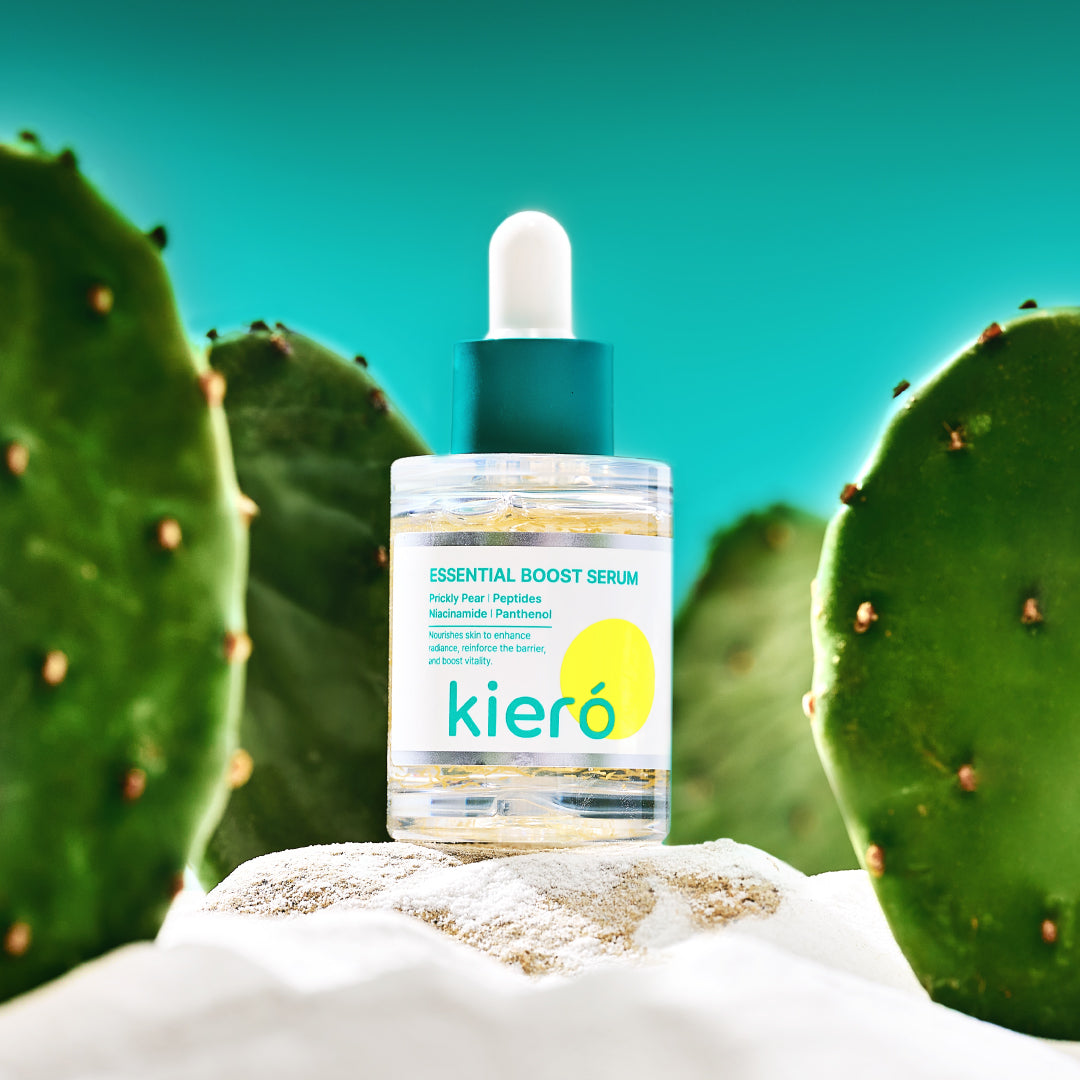
Essential Boost Serum
For a reader already comfortable with active skincare who wants a vitamin C formula, COSRX fits that preference. COSRX’s official product listing specifies a 20 g package with 23% pure vitamin C, Super Vitamin E, glutathione, niacinamide, panthenol, and hyaluronic acid.
The available listing details support an ingredient-fit recommendation rather than a price-based winner for these two products.
Can you use both ingredients, or should you start with one?
Start with one serum for the first few weeks. That makes it easier to tell which product feels comfortable and which change belongs to your routine. COSRX’s Advanced The Vitamin C 23 Serum listing includes both vitamin C and niacinamide in one formula; that product-specific example does not establish a general rule for combining separate serums.
Use the chosen serum on clean skin as directed, follow with moisturizer if your routine uses one, and apply sunscreen during the day. Kiero’s product directions say to use a small amount on the face and neck daily, morning and night. COSRX directs users to apply two to three drops after cleansing and toning, followed by moisturizer and daytime SPF.
The AAD’s dark-spot recommendations emphasize gentle products and stopping a product that burns or stings.
What to check on a budget Korean serum label
A listed concentration connects a product to the amount tested in a study, while the complete formula determines what the product contains alongside that active.
A paper on topical vitamin C formulations explains that L-ascorbic acid is unstable in aqueous solutions, especially with oxygen and metal ions; oxidation is associated with yellowing and loss of biochemical properties. Formulation approaches described in the paper include reducing water, adding antioxidants, encapsulation, using more stable derivatives, and multiple-phase emulsions.
Before buying, use this short checklist:
- Match the active to the mark pattern. Consider niacinamide for marks after irritation or injury, and vitamin C for sun-related uneven tone.
- Read the active and percentage. The niacinamide studies cited here tested 2% or 5% formulas; COSRX’s product listing specifies 23% pure vitamin C, while Kiero’s description names niacinamide without a percentage.
- Compare the named ingredients. Kiero Essential Boost Serum pairs niacinamide with prickly pear, peptides, and panthenol; COSRX pairs vitamin C with vitamin E, glutathione, niacinamide, panthenol, and hyaluronic acid.
For this decision, a focused one-serum start gives more value than paying for two brightening products before you know which formula suits your skin. Begin with the ingredient branch that matches the marks, keep sun protection consistent, and make the next purchase only when your routine gives you a clear reason.
FAQS
FAQ
Is vitamin C or niacinamide better for brightening?
Niacinamide is a practical first choice for marks following irritation or injury, supported by controlled studies of 2% and 5% formulas; vitamin C is an option for sun-related pigmentation, although patient and clinician assessments varied across the reviewed trials.
Which two serums cannot be used together?
COSRX Advanced The Vitamin C 23 Serum lists both niacinamide and vitamin C in one formula; for a beginner, start with one new serum at a time and follow its product directions.
What happens if I use niacinamide daily?
Kiero Essential Boost Serum’s directions specify daily morning-and-night application to the face and neck. A separate 12-week trial found that a 5% niacinamide moisturizer was well tolerated and improved hyperpigmented spots among the 50 women studied.
Should I use vitamin C if I have hyperpigmentation?
Yes, it can be one option, especially for sun-related discoloration. A systematic review found objective lightening in some melasma and sun-related lentigo studies, and the AAD places sunscreen at the start of dark-spot care.
Essential Boost Serum
See how these criteria hold up on the real thing.