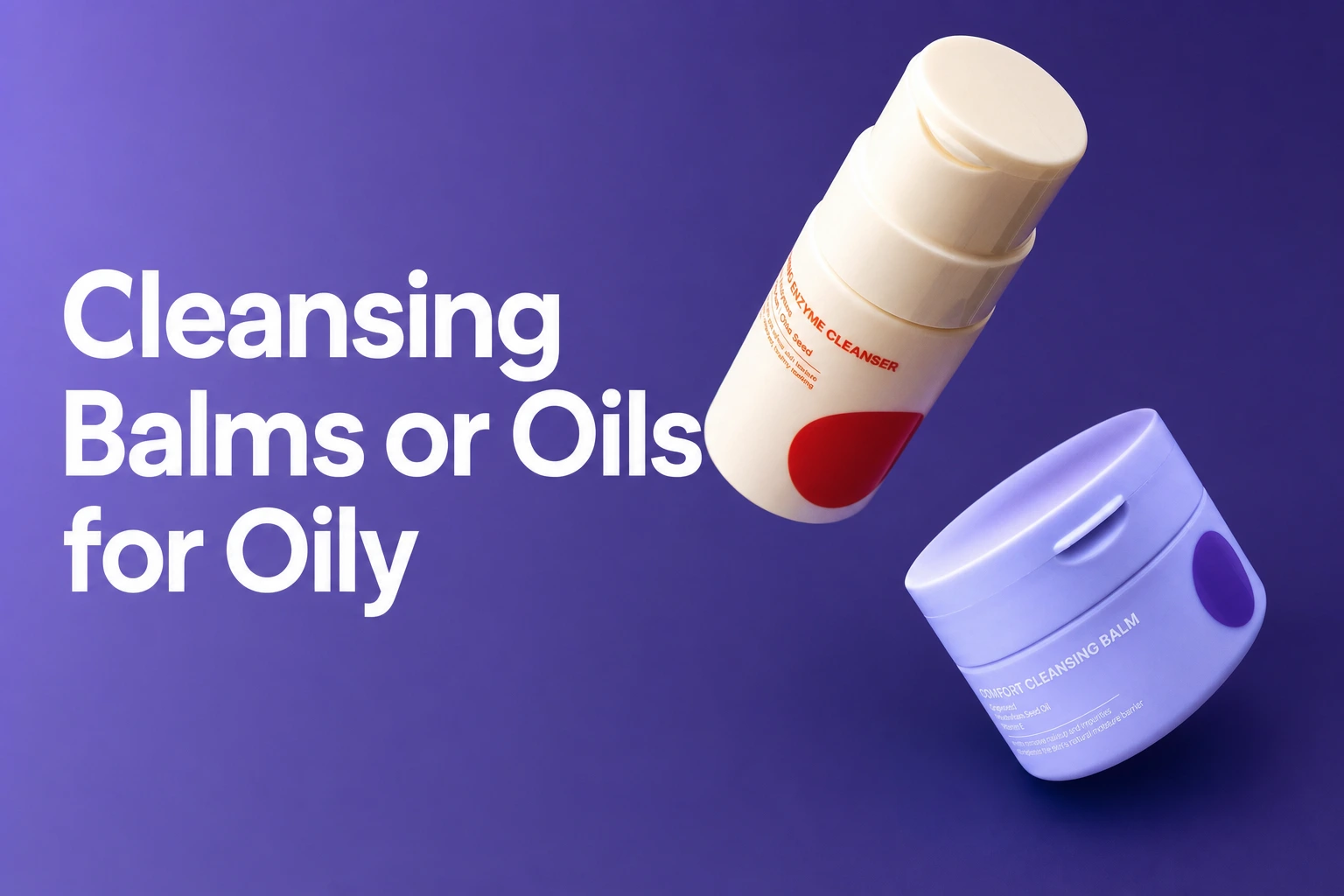
Korean Cleansing Balm vs Enzyme Powder for Midday Oil and Nose Flakes
Choose Kiero Comfort Cleansing Balm for makeup or sunscreen, or Kiero Refining Enzyme Cleanser for excess oil; get gentle-care guidance for nose flakes.

Quick pick for combination skin with midday shine and nose flakes
- Choose a balm when your evening cleanse needs to lift makeup, sunscreen, and other oily residue.
- Choose an enzyme powder when you want a water-activated foaming wash for impurities and excess oil.
- At Kiero, Comfort Cleansing Balm is the makeup-and-impurity option, while Refining Enzyme Cleanser is the powder-to-foam option.
- Treat the flaky nose area gently. A cleanser helps with cleansing, while persistent or recurring flakes may need a dermatologist's attention.
For combination skin that turns shiny by midday and flakes around the nose, choose by the job you need the cleanser to do. A balm makes the clearest first step when you wear makeup or sunscreen; an enzyme powder fits a water-activated wash aimed at impurities and excess oil. Kiero's Comfort Cleansing Balm is described as removing makeup and impurities while protecting the skin's natural moisture barrier. Kiero's Refining Enzyme Cleanser turns into a creamy foam with water and is described as removing impurities and excess oil without drying.
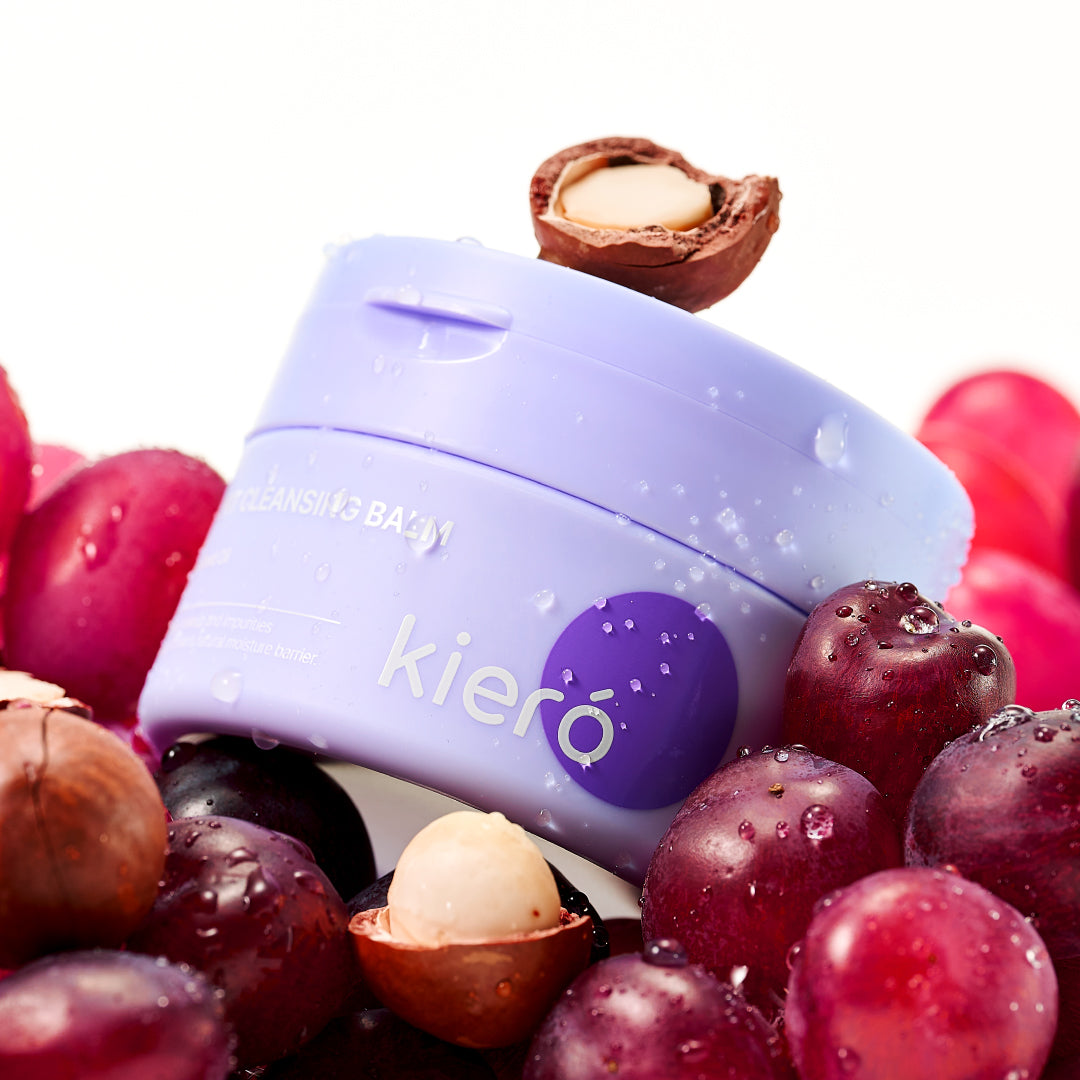
Comfort Cleansing Balm
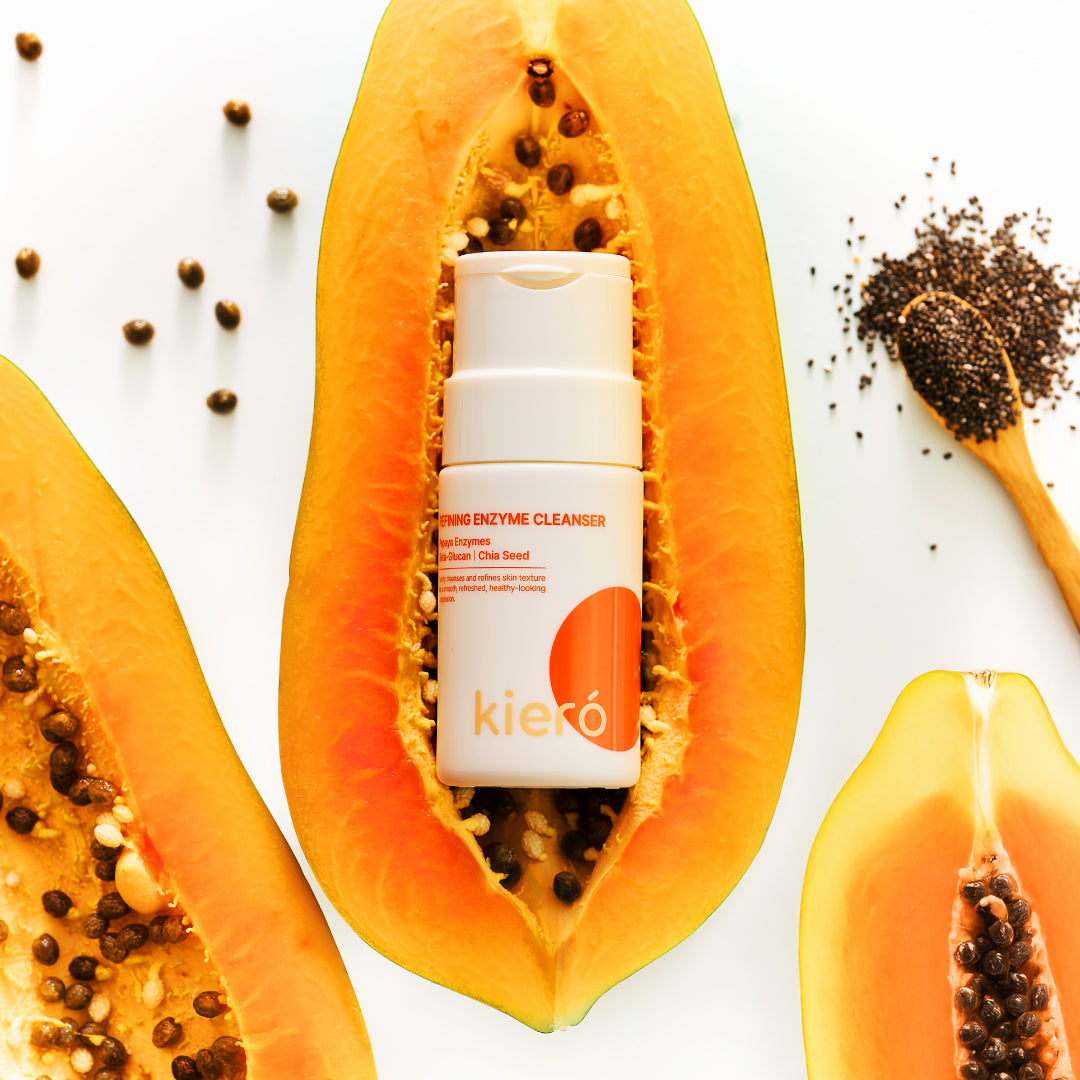
Refining Enzyme Cleanser
The two symptoms can happen on the same face, and they do not call for the same response in every area. Shine on the forehead or chin can make an oil-focused cleanser appealing, while flakes around the nose are a reason to keep friction and extra cleansing low. The comparison below matches formats to the day's cleansing needs instead of treating one product as a cure for both concerns.
How to choose between a balm and an enzyme powder
Combination skin means different areas of the face can feel oily and dry at the same time. Cetaphil's guide to combination skin describes an oily forehead, nose, or chin alongside dry cheeks as a common pattern. That is a useful way to think about midday shine and nose flakes: judge the cleanser by how the whole face feels after washing, not by the shiniest patch alone.
Balms and enzyme powders differ in when water enters the cleanse. A balm is applied to dry skin as a first step for makeup removal; Beauty of Joseon's directions say to add water to emulsify its balm, rinse, and follow with a water-based cleanser. A powder is mixed with water before use: Anua's cleanser directions make a paste for damp skin, while Kiero Refining Enzyme Cleanser forms a creamy lather in wet hands. For mixed-zone skin, a balm is a first-step format and a powder is a rinse-off wash.
What Beauty of Joseon Radiance Cleansing Balm offers
Beauty of Joseon's Radiance Cleansing Balm is a balm-first option for removing makeup and excess sebum. The official product page calls it a gentle, hydrating balm and identifies rice extract in the product title. Beauty of Joseon also describes it as the first step of a double cleanse, followed by its Green Plum Refreshing Cleanser to rinse away impurities.
The maker's directions make the routine especially clear for someone who uses makeup or sunscreen. Beauty of Joseon's product instructions say to apply the balm to dry skin with clean hands, massage gently, add water to emulsify, massage again, rinse, and follow with a water-based cleanser. That order gives oily residue a dedicated first cleanse before the second wash.
Kiero's directions for Comfort Cleansing Balm say to apply a small amount to dry skin, massage gently in circles, and rinse with warm water. Around flaky skin, use gentle fingertip motions; the AAD recommends lukewarm water, fingertips, and patting the face dry.
Radiance Cleansing Balm fits shoppers who want a solid first-cleanse format and are comfortable doing a second wash after it. Its texture may also be a deciding factor for someone who prefers a solid balm to a liquid cleansing oil. Beauty of Joseon describes both formats as first-step choices and says the format decision can depend on how each feels on the skin.
When Pyunkang Yul Deep Clear Cleansing Balm may fit
The Pyunkang Yul product page identifies Deep Clear Cleansing Balm as a 100 ml product. That gives shoppers a pack-size detail alongside Kiero Comfort Cleansing Balm, which is listed at 80 g / 2.82 oz.
For a makeup or sunscreen evening, the balm format points to the same general first-cleanse role: loosen oil-based residue, then rinse and follow with a water-based cleanser if the routine calls for a second step. Dermatologist Sandra Lee's double-cleansing explanation describes that sequence as an oil-based cleanser for sunscreen, makeup, and sebum followed by a water-based wash for sweat, dirt, and remaining impurities.
The reason to consider Pyunkang Yul here is the format choice, rather than a claim that a balm will clear nose flakes. If your main job is makeup removal, choosing a balm is a practical first step. If the flaky area is the main concern, gentle application and avoiding a long massage on that patch matter more than a cleanser's balm label.
Kiero's Comfort Cleansing Balm offers a more specific fit when you want an explicitly documented formula and cleansing role. Kiero describes it as a gentle balm with grape seed oil, macadamia oil, and vitamin E; its product information says it removes makeup and impurities while protecting the skin's natural moisture barrier. Apply it to dry skin, massage gently in small circles, and rinse well with warm water.
Kiero's full ingredient list also names jojoba, moringa, and sunflower seed oils, as well as tocopherol. Shoppers comparing formulas around ingredients they already know can check these names against the complete product list.
What Anua Rice Enzyme Brightening Cleansing Powder adds
Anua Rice Enzyme Brightening Cleansing Powder suits shoppers looking for a dry powder that becomes a cleanser when mixed with water. Anua's official product page lists rice ingredients and papain among its ingredients. Its cleanser instructions say to mix a small amount of powder with water to make a paste, massage it gently onto damp skin, and rinse with lukewarm water.
Anua also describes a separate wash-off-mask method: mix a thicker paste, apply it after cleansing, leave it on for 5 to 10 minutes, and rinse. Its ingredient list includes rice powder, rice lees extract, rice bran water, ceramide NP, and alpha-arbutin alongside papain. Anua's US product page lists one-use test results of 20.27% improvement in skin texture and 98.1% of impurities cleansed.
That use pattern is different from a balm applied first to dry skin. The powder is ready to lather only after you add water, so it fits a wash at the sink when you want to foam up a small amount and rinse it away. Kiero Refining Enzyme Cleanser follows a similar powder-to-foam routine: its product directions say to pour a small amount into wet hands, rub the hands together to make a creamy lather, massage gently, rinse, and pat the face dry.
Kiero identifies papaya enzymes, beta-glucan, and chia seed in Refining Enzyme Cleanser. Its description says the powder forms a creamy foam with water and removes impurities and excess oil without drying. Those details make it the Kiero option to consider when your cleansing job is a foaming wash for shine and daily residue, rather than a balm-first makeup-removal step.
For a flaky nose, use gentle fingertip pressure and keep the wash brief. The AAD recommends a gentle cleanser, lukewarm water, and patting the skin dry with a soft towel.
Side-by-side comparison of the five options
Beauty of Joseon gives step-by-step balm directions, while Pyunkang Yul's product page identifies its balm format and 100 ml size. Product descriptions come from each maker's information; the fit column applies those facts to the makeup, midday-shine, and nose-flake scenario.
| Product | Format and listed size | Maker-described cleansing job | Best fit for this routine |
|---|---|---|---|
| Kiero Comfort Cleansing Balm | Balm, 80 g / 2.82 oz | Kiero describes grape seed oil, macadamia oil, and vitamin E, with makeup and impurity removal while protecting the natural moisture barrier. | First cleanse when makeup, sunscreen, or oily residue needs to be loosened; especially relevant when barrier-conscious cleansing is a priority. |
| Beauty of Joseon Radiance Cleansing Balm | Balm | Beauty of Joseon describes a gentle, hydrating makeup-removing balm that melts makeup and excess sebum before a water-based cleanser. | Balm-first cleansing for a makeup or sunscreen day, followed by a second wash when needed. |
| Pyunkang Yul Deep Clear Cleansing Balm | Balm, 100 ml | Pyunkang Yul's product page identifies Deep Clear Cleansing Balm as a 100 ml balm. | A balm-format option for shoppers who prefer a first-step cleansing balm. |
| Kiero Refining Enzyme Cleanser | Powder, 50 g / 1.76 oz | Kiero describes a papaya-enzyme powder that foams with water and removes impurities and excess oil without drying. | Water-activated foaming wash when excess oil and daily impurities are the cleansing priority. |
| Anua Rice Enzyme Brightening Cleansing Powder | Powder | Anua lists rice ingredients and papain; its cleanser directions mix powder with water into a paste for use on damp skin. | Powder cleanser when you prefer mixing a small amount at the sink and rinsing it away as a wash. |
For this reader's two main concerns, Kiero offers the clearest product-role split: Comfort Cleansing Balm for makeup and impurities with the maker-described moisture-barrier protection, and Refining Enzyme Cleanser for water-activated foam that removes excess oil without drying. Beauty of Joseon gives a second fully described balm choice for a makeup-removal first step. Anua provides the named powder alternative with specific mixing directions, while Pyunkang Yul provides another balm format and a 100 ml size listing.
The U.S. product pages retrieved on October 5, 2026, listed Beauty of Joseon Radiance Cleansing Balm at $19.00, with a 4.8/5 rating from 577 reviews, and Anua Rice Enzyme Brightening Cleansing Powder at $20.00, with a 4.7/5 rating from 111 reviews.
How to match the cleanser to a makeup day or a lighter day
Use the day's makeup and sunscreen as the first decision point. In her double-cleansing guidance for Pacific Crest Dermatology, board-certified dermatologist Dr. Schneider recommends washing twice when you wear makeup or sunscreen. A cleansing balm can be the first step because it loosens oil-based residue; the next water-based cleanser removes what remains.
- For makeup or sunscreen, start with a balm on dry skin. Kiero directs users to take a small amount of Comfort Cleansing Balm, massage it in gentle circles, and rinse well with warm water. Beauty of Joseon's directions add water to emulsify its balm, followed by another massage, a rinse, and a water-based cleanser.
- Choose a second wash if that sequence suits the day's residue. After the balm, follow the second cleanser's own directions.
- For a lighter day, use one rinse-off cleanser. To use Kiero Refining Enzyme Cleanser, pour a small amount into wet hands, rub them together to make a creamy lather, massage gently, rinse, and pat dry.
- Keep contact gentle around the nose. The AAD's face-washing advice recommends lukewarm water and fingertips, and advises against scrubbing or using a washcloth or mesh sponge. Rinse and pat dry with a soft towel; apply moisturizer if the skin is dry or itchy.
SLMD's guidance on double cleansing describes an oil-based first wash for makeup, sunscreen, and sebum, followed by a water-based wash for sweat, dirt, and remaining impurities. That division of work helps explain why the second step can use a different cleanser from the balm.
After heavy sweating, wash your skin as soon as possible, especially when perspiration sits under a hat or helmet. The AAD notes that perspiration can irritate skin and recommends washing after heavy sweating.
Dr. Schneider specifically notes that waterproof mascara and tinted sunscreen can cling to skin, and a first wash may leave some behind. Those are useful examples of heavier residue when deciding how many cleansing steps to use that evening.
If blackheads or midday oil matter more than the nose flakes
Midday shine and blackheads are different priorities. Shine is oil on the skin's surface; blackheads are clogged pores. If shine is the main issue, Kiero Refining Enzyme Cleanser has a clear maker-described fit because its powder becomes a creamy foam and removes excess oil without drying.
For blackheads, look at acne-care ingredients rather than expecting a general cleanser to do every job. The American Academy of Dermatology's acne treatment guidance says salicylic acid opens clogged pores and exfoliates the skin. The AAD also says salicylic acid helps unclog pores and prevent new breakouts in its skin-of-color acne guidance. Those are acne-treatment points, so they fit someone who is actually managing clogged pores or breakouts.
DermNet's clinical overview of seborrhoeic dermatitis lists the nasolabial folds beside the nose among affected areas and notes the condition's association with sebum-rich skin.
When nose flakes need a separate next step
Combination skin can include oily and dry areas at the same time. DermNet describes adult seborrhoeic dermatitis as affecting sebum-rich sites, including the nasolabial folds, and notes that the mid-face can show a mix of oiliness and dryness. This information helps explain why shine and flakes can appear in nearby areas. DermNet also describes the condition as chronic or relapsing, with adult flares that may worsen in winter and improve in summer.
DermNet lists localized scaly patches and mild itch among typical adult features. A recurring seasonal pattern, the location of the scale, and any itch are useful details to share at a dermatology appointment.
Gentle care after cleansing can support a dry or itchy patch. The AAD's face-washing guidance recommends applying moisturizer when skin is dry or itchy. If dryness continues after trying dermatologists' recommended care, the AAD advises seeing a board-certified dermatologist.
A clinician can assess recurring scale or an itchy facial rash. The AAD notes that several skin conditions can cause an itchy rash and recommends a board-certified dermatologist for an accurate diagnosis when seborrhoeic dermatitis is suspected. Before an appointment, note when the flakes appear, where they recur, and whether the area feels itchy or sore so you can describe the pattern. For diagnosed facial seborrhoeic dermatitis, DermNet recommends cleansing affected skin once or twice daily with a non-soap cleanser.
Choose for the pattern you actually have
Use this short checklist at the sink:
- You wore makeup or a substantial layer of sunscreen: Choose a balm for the first cleanse. Kiero Comfort Cleansing Balm fits when you want its maker-described makeup-and-impurity removal and moisture-barrier protection.
- Your day involved light residue, and you want a foaming wash: Choose a water-activated powder cleanser. Kiero Refining Enzyme Cleanser fits the stated job of removing impurities and excess oil without drying.
- Your nose flakes while the forehead or chin gets shiny: Keep the cleanser gentle across the face, shorten contact on the flaky spot, and treat shine as a separate zone. Combination skin can have both oily and dry areas, as Cetaphil's guide describes.
- Blackheads are the main ongoing concern: Choose a targeted acne-care option based on ingredients such as salicylic acid, which dermatology guidance identifies for clogged pores, and keep cleansing gentle.
- Nose flakes recur, spread, itch, or become sore: Ask a dermatologist for an assessment. DermNet describes seborrhoeic dermatitis as a common, chronic or relapsing condition that can affect oily areas of the face, so persistent scale can call for guidance beyond changing cleanser format.
For makeup or a full sunscreen layer most evenings, Kiero Comfort Cleansing Balm is the practical first-step pick; on lighter evenings, Kiero Refining Enzyme Cleanser suits a one-wash routine aimed at excess oil.
FAQ
Should I use a balm or an enzyme powder for combination skin?
Choose a balm for makeup and sunscreen removal, and choose a powder cleanser for a water-activated wash aimed at impurities and excess oil. Kiero Comfort Cleansing Balm and Refining Enzyme Cleanser are designed around those separate cleansing jobs.
Can a cleansing balm and an enzyme powder be used in the same routine?
Yes, a balm can be the first cleanse on a makeup or sunscreen day, followed by a water-based cleanser when a second wash suits your skin. Keep a powder wash for days when you prefer that cleanser as the rinse-off step, and avoid adding extra contact to a flaky nose area.
Does midday oil mean I should wash again?
Midday shine alone fits blotting the oily area rather than repeating a full-face wash. The AAD recommends washing once in the morning and once at night, and as soon as possible after heavy sweating.
Can a balm or powder cleanser remove nose flakes?
A cleanser can wash away loose surface debris, while persistent or recurring nose flakes deserve attention to the skin's comfort and possible causes. Use gentle contact and seek a dermatologist's advice when the flakes continue, spread, itch, or become sore.
Refining Enzyme Cleanser
See how these criteria hold up on the real thing.