Should You Switch from CeraVe? Compare Korean Ceramide Creams for Red, Hot Cheeks
Find out when to keep CeraVe or compare Korean ceramide creams, how Kiero’s non-heavy formula fits, and when recurring hot cheeks call for a dermatologist.

Quick answer: red, hot cheeks call for two decisions.
- Keep using CeraVe if the exact formula feels comfortable and your cheeks do not worsen after applying it.
- Compare another cream if CeraVe stings, burns, or leaves your skin more uncomfortable.
- Frequent facial warmth and product-triggered stinging can be signs of rosacea, so get the symptom assessed separately from your moisturizer choice.
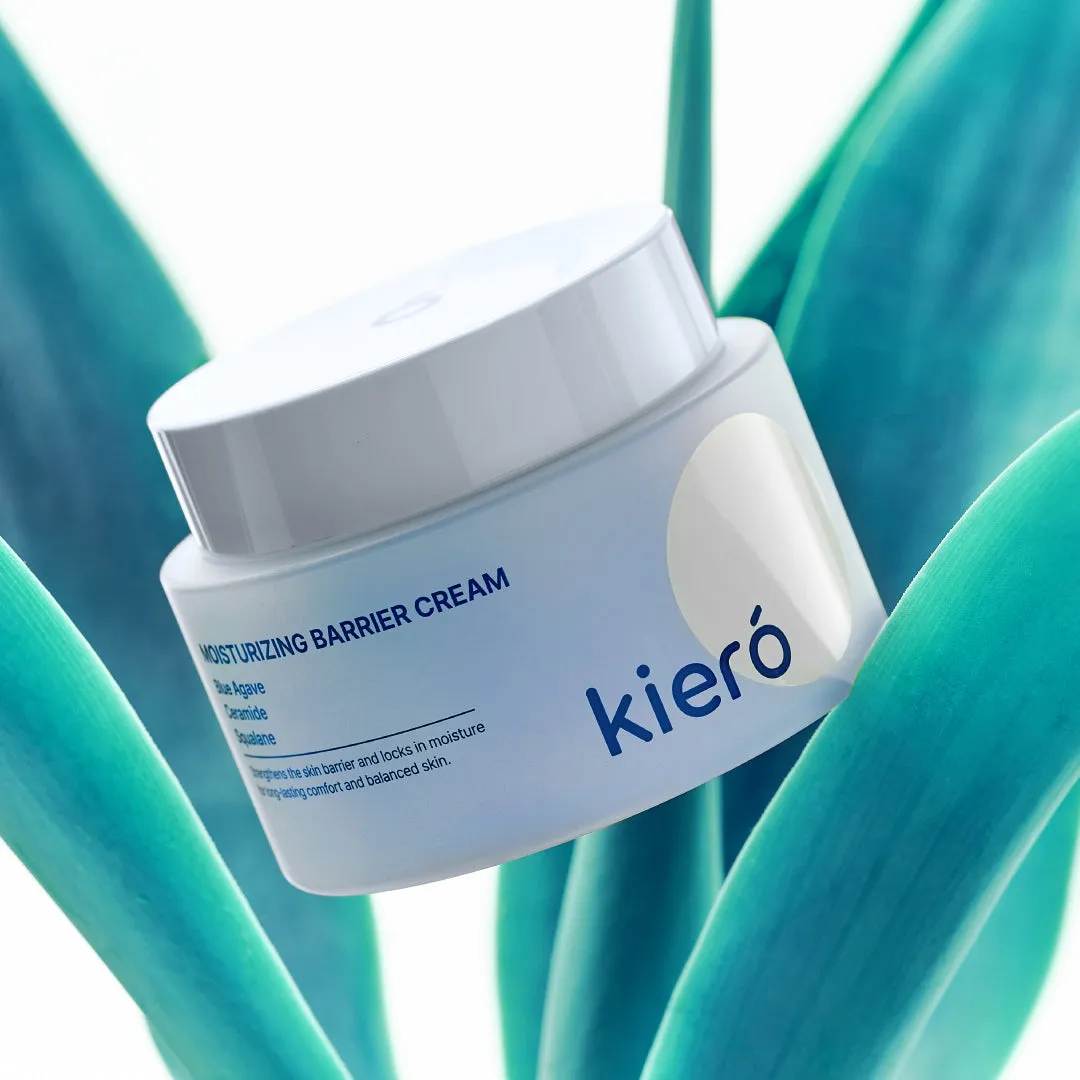
- For a Korean cream described as light rather than heavy, Kiero Moisturizing Barrier Cream combines blue agave, ceramides, and squalane.
Let the way CeraVe feels on your skin guide the moisturizer choice. If CeraVe feels comfortable, it can remain your moisturizer while you look at other possible reasons for the warmth; if the cream itself stings or seems to make your face less comfortable, a different formula is a reasonable comparison. When a Korean cream's listed ingredients or texture better match your preferences, it belongs on the shortlist.
The key distinction is between choosing a moisturizer and understanding a recurring symptom. The American Academy of Dermatology (AAD) says frequent facial warmth and stinging or burning after applying skin-care products can be clues that a person might have rosacea. That is a reason to ask a dermatologist about recurring red, hot cheeks, rather than expecting a new moisturizer to identify or resolve the cause.
Among the Korean options described here, Kiero Moisturizing Barrier Cream is the closest match to a reader who wants ceramides in a cream the product description characterizes as non-heavy. COSRX offers ceramides alongside cholesterol, fatty acids, panthenol, and several forms of hyaluronic acid; Innisfree describes a breathable cream with ceramides and colloidal oatmeal; Aestura highlights encapsulated ceramides and other skin lipids. Illiyoon gives shoppers a large 500 ml product listing to compare.
Moisturizing Barrier Cream
Let the warmth guide the symptom decision
A face that feels warm often and stings when products go on deserves attention beyond a brand swap. The AAD's rosacea overview names frequent facial warmth and stinging or burning after some skin-care products as signs that might indicate rosacea. The AAD recommends seeing a board-certified dermatologist to find out what is causing recurring facial symptoms like these.
The broader pattern can help make that conversation more useful. The AAD's list of rosacea signs includes easy flushing, color change in the center of the face, persistent acne-like cheek breakouts, and visible facial blood vessels. On lighter skin, central redness may be visible; on darker skin, the color may look brown or violet. A reader with warmth plus one or more of these patterns has a stronger reason to describe the full picture to a dermatologist.
The National Rosacea Society explains that some moisturizers are formulated to soothe rosacea-prone skin and that moisturizers may help with irritation and burning or stinging. Its moisturizer guidance also identifies ceramides and hyaluronic acid among ingredients that may benefit rosacea-prone skin. That makes ceramides a reasonable feature to compare, while the individual's comfort and the wider symptom pattern still decide what to do next.
Pay attention to timing and triggers when you describe the symptom. Note whether the warmth is present before applying products, starts after a particular product, appears after flushing, or changes when you simplify the routine. Write down the affected areas and the products used that day. These observations help separate a possible product reaction from a pattern that calls for a medical assessment.
Track how long each episode lasts
The AAD's rosacea overview distinguishes a brief flush from redness associated with rosacea by duration. Flushing from embarrassment, overheating, alcohol, or outdoor cold and wind usually clears within a few hours, while rosacea-related redness or violet color can last longer and become more noticeable after triggers such as certain skin-care products or red wine.
The AAD says frequent flushing or color or warmth that lasts longer over time can be a reason to ask a board-certified dermatologist what is causing it. Record an episode's start and end, the areas affected, and any exposure or product used beforehand. For example, your notes can separate a flush after a cold, windy walk from burning after moisturizer application. If darker skin makes color change less visible, record cheek warmth and discomfort as well as what you see.
Identify the exact CeraVe and the routine around it
Your exact CeraVe formula determines which ingredient and texture details apply. The CeraVe Moisturizing Cream page describes a rich face-and-body cream with three essential ceramides, hyaluronic acid, dimethicone, and petrolatum. CeraVe's PM Facial Moisturizing Lotion page describes an oil-free night lotion with niacinamide, hyaluronic acid, and three essential ceramides. Which label is in your hand matters more than the brand name alone.
Before comparing replacements, record four details. Write down its exact product name and the date you began using it, then compare that label with the two CeraVe profiles below. Record when the cheeks became red or warm and whether discomfort begins soon after the moisturizer goes on. Finally, list the other products that changed around the same time, including cleansers, exfoliants, serums, sunscreen, and makeup.
Use this short routine inventory to make the comparison concrete:
- Current moisturizer: exact product name, time of day, and whether it feels comfortable, stings, burns, or leaves a sensation you dislike.
- Symptom timing: when the redness and warmth began, how often they return, and whether the cheeks feel warm before or after applying products.
- Other recent changes: any new cleanser, active ingredient, sunscreen, makeup, or change in how often you use a product.
- Your texture preference: rich cream, light lotion, or a breathable cream; include whether a finish that feels heavy is a deal-breaker.
- Label priorities: ingredients you prefer, ingredients you already know bother your skin, and whether fragrance-free labeling is important for your comparison.
A routine inventory prevents an easy mistake: changing several products at once and then having no clear way to connect a change in comfort with one item. The National Rosacea Society advises keeping product choices focused because adding more products raises the number of possible irritants. Its skin-care and cosmetics guidance recommends testing a product on a small peripheral area and letting your own response guide future choices.
CeraVe's Moisturizing Cream is the more directly documented choice for someone who wants a rich face-and-body moisturizer with petrolatum and dimethicone as well as ceramides. If the cream you own is comfortable, a switch to another product with ceramides may change texture or other ingredients without changing the symptom pattern.
Compare the cream by its published formula and feel
Compare makers’ formula and texture descriptions alongside the AAD’s guidance for rosacea-prone skin.
| Product | Maker-listed formula or package detail | Texture or format stated | Reader who may prefer it |
|---|---|---|---|
| CeraVe Moisturizing Cream | Three essential ceramides, hyaluronic acid, dimethicone and petrolatum | Rich face-and-body cream, described as absorbing quickly without a greasy feel | Keep it in the comparison if you already own it and it feels comfortable, or want the documented rich-cream format |
| CeraVe PM Facial Moisturizing Lotion | Three essential ceramides, hyaluronic acid and niacinamide | Oil-free night lotion | Compare when you want CeraVe's specified niacinamide and lotion format |
| Kiero Moisturizing Barrier Cream | Blue agave, ceramides and squalane | Described as protecting skin and retaining moisture without a heavy feel | Compare if you prefer a Korean cream described as non-heavy and want squalane in the formula |
| COSRX The Ceramide Skin Barrier Moisturizer | Ceramides, cholesterol, fatty acids, panthenol and five types of hyaluronic acid | COSRX describes a lightweight formula and soft cream texture | Compare when you want a light-feeling product with several named ingredients |
| Innisfree Green Tea Ceramide Cream | Seven types of ceramides and colloidal oatmeal | Described as breathable, with lightweight and long-lasting moisture | Compare when a breathable cream and its ceramide-and-oatmeal profile appeal to you |
| Aestura Atobarrier 365 Cream | Ceramides, cholesterol and fatty acids stabilized in capsules; 45 ml and 80 ml listed | Cream | Compare when you want a capsule formula featuring three skin-lipid components and a choice of listed size |
| illiyoon ceramide ato cream 500ml | The direct store listing names a 500 ml product | Cream, 500 ml listing | Compare when package size is a priority and the listing's product name matches your choice |
Kiero: ceramides and squalane in a non-heavy profile
Kiero’s Moisturizing Barrier Cream page names blue agave, ceramides and squalane in the formula. Its description says the cream retains moisture and protects skin without leaving a heavy sensation.
Kiero's official FAQ says all Kiero products are manufactured in South Korea and distributed by EOEO Mexico. That origin statement covers Kiero products generally, including this cream. It is useful if you are specifically choosing Korean-made skin care, while the formula and your individual comfort remain the details that distinguish one moisturizer from another.
For the United States, Kiero's Moisturizing Barrier Cream product page displayed a price of $12.99 and a “Sold out” label on September 28, 2026. Kiero fits a shopper prioritizing a non-heavy texture with ceramides and squalane.
If your current cream feels heavy but does not sting, Kiero’s stated texture makes it a relevant sensory alternative.
COSRX: several named barrier ingredients in a lighter cream
COSRX The Ceramide Skin Barrier Moisturizer gives the comparison a different ingredient profile from CeraVe Moisturizing Cream. COSRX's official product page lists ceramides, cholesterol, fatty acids, panthenol, and five types of hyaluronic acid in its product description. It describes the formula as lightweight and the cream as soft, and positions it for sensitive and dry skin.
The useful comparison is the full named profile: this COSRX product adds cholesterol, fatty acids, and panthenol to a multi-form hyaluronic-acid description, whereas CeraVe Moisturizing Cream specifically names dimethicone and petrolatum.
COSRX's official page also positions the cream for sensitive and dry skin and describes its suitability for all ages based on a clinical safety assessment in infants and young children. COSRX fits a reader seeking a lightweight cream with ceramides plus cholesterol, fatty acids and panthenol.
Innisfree: breathable cream with ceramides and colloidal oatmeal
Innisfree Green Tea Ceramide Cream is a candidate for someone who wants the maker's stated breathable feel and sensitive-skin positioning. The Innisfree US product page describes it as a daily breathable cream and names seven types of ceramides and colloidal oatmeal. The page also describes lightweight, long-lasting moisture and positions the product for dry, sensitive, or eczema-prone skin.
That profile offers a different way to narrow the choice: compare the breathable cream's stated ingredients and intended skin types with what you already know about your own skin. The page also describes the formula as including hyaluronic acid, ectoin, and its Green Tea Ceramide complex. Innisfree describes the cream as helping improve visible redness and labels the finding an instrumental result in 31 women, one week after physical stimulation.
Innisfree also says the cream is fast-absorbing and non-sticky, creating a smooth base under makeup.
If you react to a particular ingredient or product, compare the full label and use a small-area test before applying a new formula across your cheeks. Innisfree is worth comparing when the breathable texture description and its named ceramide-and-oatmeal profile match the priorities you wrote down.
Aestura: a richer cream with three skin-lipid components
Aestura Atobarrier 365 Cream is a useful comparison when you prioritize a formula built around multiple skin lipids. Aestura's official product page says the formula contains ceramides, cholesterol and fatty acids stabilized within capsules. The page lists the cream in 45 ml and 80 ml sizes.
Aestura lists the cream for compromised skin barriers, dry or very dry skin, eczema-prone skin, sensitive or itchy skin, and rough, flaky or distressed skin. Aestura says it evaluated skin irritation for four weeks in healthy adults who self-identified as sensitive; separately, a 20-adult, four-week assessment measured acne lesions and sebum in adults with acne-prone or troubled sensitive skin. These published skin-positioning and testing details add criteria for shoppers comparing capsule ingredients and package sizes.
Aestura's official ingredient note states that the formula contains less than one percent synthetic fragrance.
The central comparison with Kiero is texture and named formula details. Kiero's product description emphasizes blue agave, ceramides, squalane, and a non-heavy feel; Aestura emphasizes a richer cream with encapsulated ceramides plus cholesterol and fatty acids. Choose between those descriptions according to whether you value a lighter stated feel or a richer texture and the specific lipid combination.
Illiyoon: a size-first option to compare
The Illiyoon direct store listing names “illiyoon ceramide ato cream 500ml.” Its 500 ml size makes the listing a bulk-format option for shoppers who prioritize package quantity.
A large package suits someone who already knows the formula agrees with them and wants to compare a generous amount per package. It is a less cautious first experiment for someone who has recurring sensitivity and has never tried the product, because it commits to more cream before the reader knows how their skin responds. In that situation, a smaller available size of a selected product, when offered by the retailer, makes a more measured comparison.
Etude: a size-based option to compare
The Etude Global Official Website lists Soonjung 2x Barrier Intensive Cream 60ml. At 60 ml, its listed package sits between Aestura's listed 45 ml and 80 ml sizes. That gives size-focused shoppers another concrete package amount to compare alongside the formula-based choices.
Choose by the problem you want the next product to solve
Keep CeraVe when the exact formula feels comfortable and its texture works for you. Use the matching CeraVe entry in the table to compare your current ingredient profile with another cream. Record warmth or flushing alongside how the cream feels after application, and bring recurring symptoms to a dermatologist.
If CeraVe itself stings or burns, compare another cream by its formula and texture. Make one moisturizer change at a time while holding your cleanser, sunscreen and other products steady. For a non-heavy formula compare Kiero; for a lightweight formula compare COSRX; for a breathable ceramide-and-oatmeal cream compare Innisfree; for encapsulated lipids compare Aestura.
When fragrance is a concern, make a fragrance-free label a selection criterion. The AAD's rosacea skin-care recommendations recommend fragrance-free products rather than “unscented” products to reduce the likelihood of irritation.
The AAD also lists ingredients that may irritate sensitive skin, including fragrance, alcohol, menthol, glycolic acid, lactic acid, and sodium lauryl sulfate. Use your own known triggers and the current product's ingredient list to narrow choices, rather than rejecting every product that contains an unfamiliar ingredient. The National Rosacea Society's ingredient guidance also notes that individual reactions vary, which is why your own product history matters alongside general guidance.
The National Rosacea Society's skin-care guidance reports survey responses from people with rosacea who cited alcohol (66%), witch hazel and fragrance (30% each), menthol (21%), peppermint (14%) and eucalyptus oil (13%) as irritation triggers. These figures describe survey responses, and your own history remains the most useful guide to ingredients that may affect you. If an ingredient appears in more than one product associated with discomfort, use that history to narrow the shortlist before testing a new cream.
If sunscreen or makeup also brings burning or stinging, note those products alongside your moisturizer. The AAD says sunscreen and makeup can irritate skin affected by rosacea, and some people feel burning or stinging when they flush. Include those products and their timing in the notes you bring to a dermatologist.
Introduce one change at a time
The AAD's skin-care product test guidance recommends applying a quarter-sized amount to a spot such as the underside of the arm or elbow twice daily for seven to 10 days, using the normal amount and thickness. If a reaction occurs, stop the test and avoid putting that cream on your face.
The National Rosacea Society's guidance offers a separate approach for rosacea-prone skin: apply a small amount to a peripheral area such as the neck or jawline and wait at least a few hours. If a reaction occurs, avoid that product and record its ingredients. Choose one of these distinct approaches: the AAD's twice-daily arm test over seven to 10 days, or the National Rosacea Society's small-area check with at least a few hours' wait.
When you do bring a new cream into your routine, use it as the only new product for that trial period. Keep the cleanser, sunscreen, and other products the same, and note whether the moisturizer itself stings, whether the skin feels more comfortable, and whether redness or warmth changes over time. Bring your dated notes and ingredient list to a dermatologist appointment.
Keep cleansing gentle while your cheeks feel reactive. The AAD advises a mild cleanser applied gently with fingertips, rinsed with warm water, and patted dry with a clean towel. It also recommends daily gentle broad-spectrum sunscreen with SPF 30 or higher. If sunscreen or another routine product stings, record that response as well; the moisturizer is one part of a routine, not the only product that touches the cheeks.
A useful trial result has three parts: whether the product caused immediate discomfort, how the skin felt with regular use, and whether the daily routine was simple enough for you to follow. If it feels comfortable but the cheeks keep feeling hot, carry on with symptom assessment rather than cycling through more creams for an answer a jar cannot provide.
FAQS
FAQ
Should I stop CeraVe today?
Stop using it if it stings or burns when applied, or if you notice that it makes your skin feel more uncomfortable. If it feels comfortable, you can keep it while you arrange an assessment for recurring warmth and compare products only if you have a texture or ingredient reason to switch.
Do ceramides mean a cream will calm red cheeks?
No. Ceramides are a useful ingredient feature to compare, and the National Rosacea Society includes them among ingredients that may benefit rosacea-prone skin.
Which Korean cream has the lightest stated feel?
Kiero Moisturizing Barrier Cream is described as protecting and retaining moisture without a heavy feel. COSRX calls The Ceramide Skin Barrier Moisturizer lightweight, while Innisfree describes Green Tea Ceramide Cream as breathable; choose among those descriptions based on the texture you prefer and how your skin responds.
What should I write down before a dermatology visit?
Record when the warmth began, how often it happens, whether products trigger stinging or burning, which areas are involved, and any other routine changes. Bring the exact product names or ingredient labels so the clinician can consider the skin-care context with the symptom pattern.
Moisturizing Barrier Cream
See how these criteria hold up on the real thing.