Barrier Cream vs Moisturizer: A Winter Guide for Combination Skin
Barrier cream vs moisturizer depends on the area: use a daily moisturizer as your base and richer cream on dry patches, comparing cost per gram and use.
Use an everyday moisturizer as your base and reserve richer cream for dry patches
- Track how often you use each product to compare how long each package lasts.
- Compare how much you apply to dry patches with the amount used across the rest of your face.
- Use package price and net weight to calculate cost per gram.
For barrier cream vs moisturizer, choose an everyday moisturizer that suits most of your face and reserve a richer barrier cream for winter-dry patches. If your forehead, nose, or chin feels oily while your cheeks feel tight or rough, match a lighter texture to the oily-feeling areas and a cream to the dry patches.
What is the difference between a barrier cream and a ceramide moisturizer?
“Barrier cream” describes a product’s protective role; ceramides are a type of lipid ingredient found in the skin’s outer layer.
Moisturizers combine emollients, occlusives, and humectants, as outlined in DermNet’s guide to emollients and moisturizers. Emollients soften and smooth the skin’s outer layer, and DermNet calls its most occlusive emollients “protectives or barriers.” An occlusive ingredient helps form a protective layer at the surface, so the formula’s feel and richness can matter as much as the product name.
Ceramides are lipids found in the outer layer of skin. A 2024 review in the International Journal of Cosmetic Science explains that ceramides work alongside cholesterol and fatty acids in the spaces between skin cells, where these lipids help form a barrier that limits water evaporation. That is why ceramides can make sense in a daily moisturizer as well as in a product sold as a barrier cream.
| Label or feature | What it tells you | How to use it in your choice |
|---|---|---|
| Moisturizer | The product is meant to moisturize skin. Its texture can range from light gel or lotion to richer cream. | Choose a texture that feels comfortable on the areas where you will apply it. |
| Barrier cream | DermNet’s emollient guide lists dimethicone as a component of many barrier creams. | Choose it when that stated protective role fits the area you plan to moisturize. |
| Ceramides | The formula includes ceramides, lipids found in the skin’s outer layer. | Compare the finished formula’s texture and intended use with the areas you plan to moisturize. |
| Ceramide barrier cream | The name and ingredient point to overlapping features. | Compare the full formula, texture, amount, and price for the areas you plan to moisturize. |
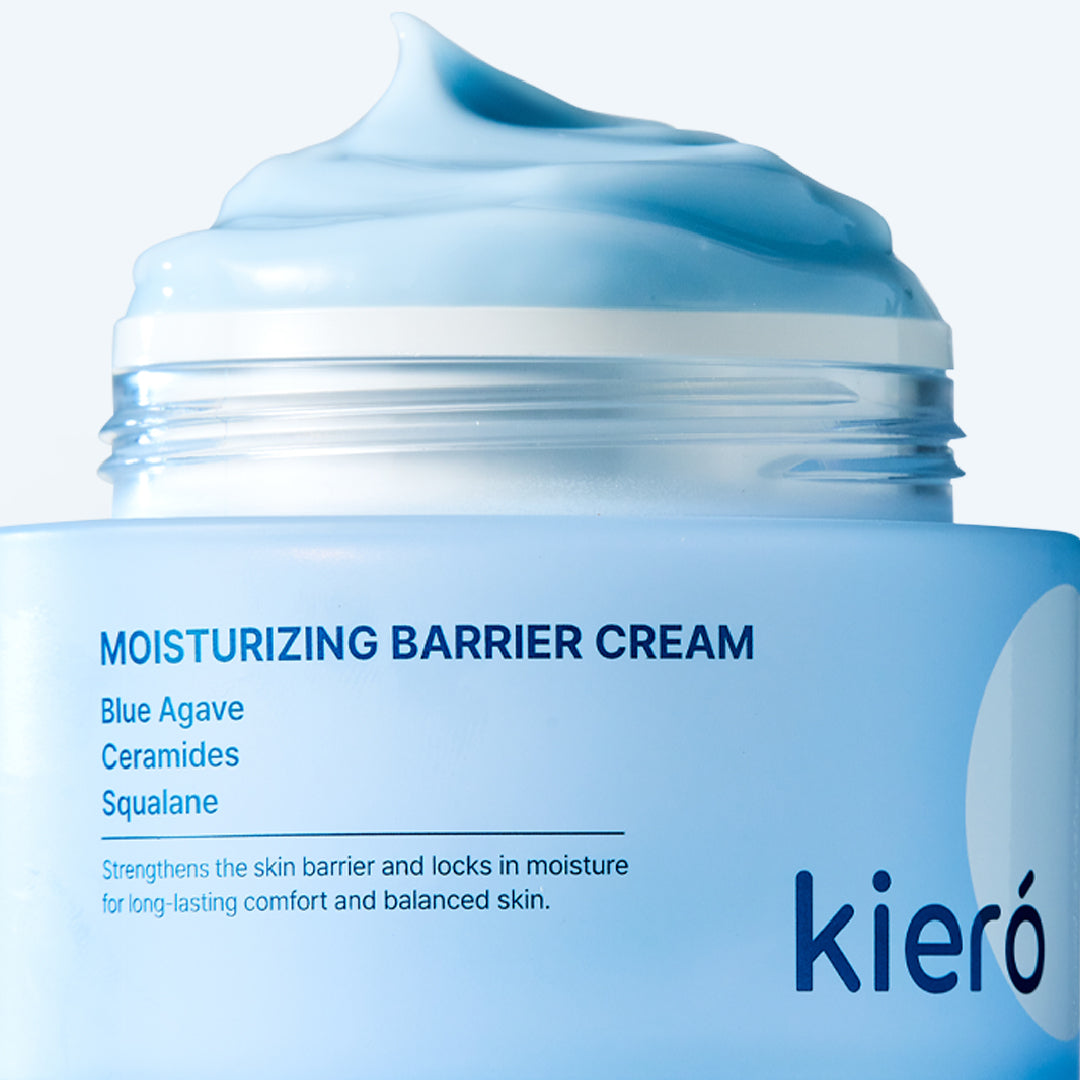
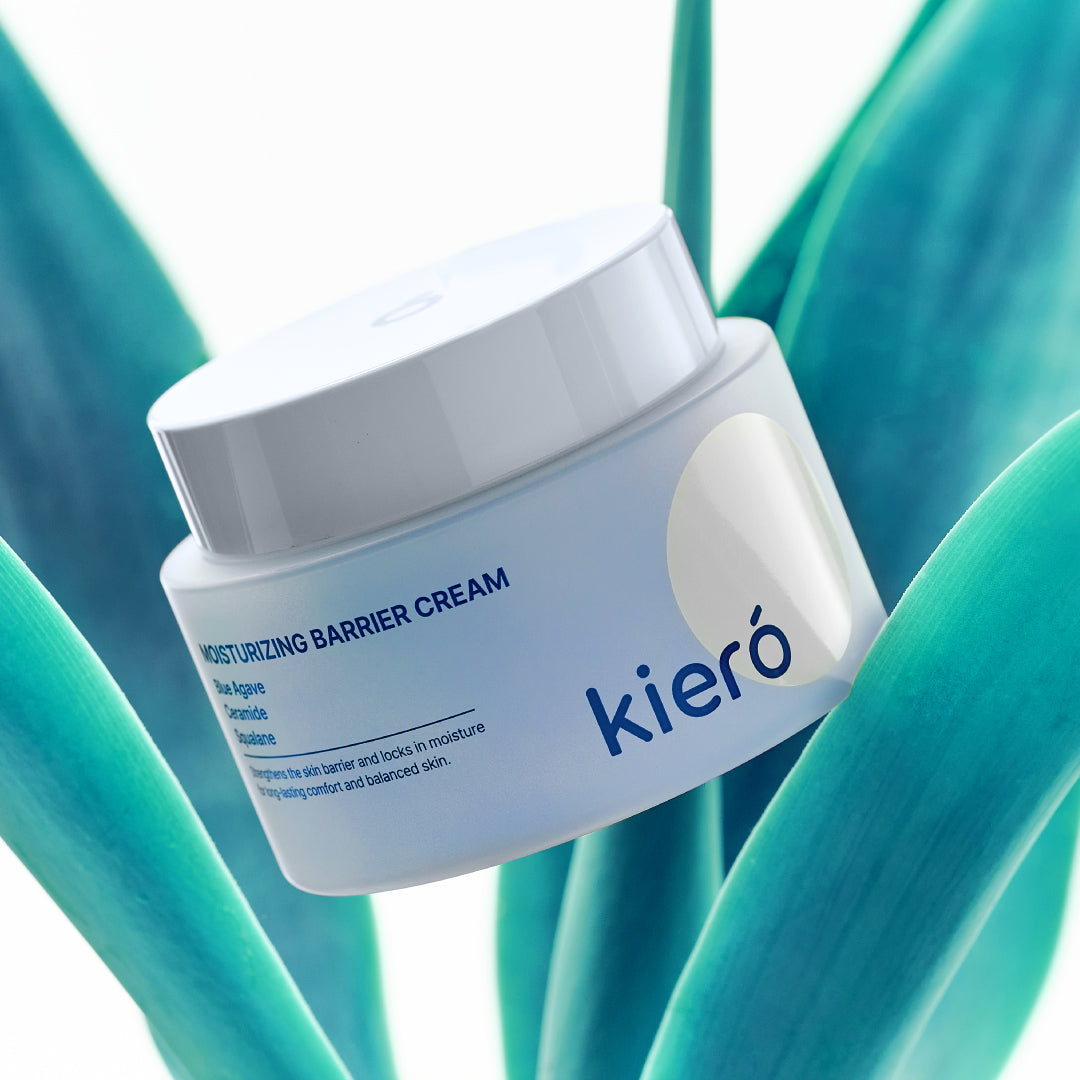
Kiero Moisturizing Barrier Cream illustrates this overlap. Its ingredient list includes blue agave, ceramides, and squalane. Its listed net content is 50 g / 1.76 oz, so you can compare its package size with other creams.
Moisturizing Barrier Cream
How should I choose a winter moisturizer for combination skin?
Start with what each area feels like after cleansing and through the day. In winter, lower humidity, cold temperatures, and indoor heating can all contribute to dry skin; a UW Medicine winter skin guide explains that colder, drier air increases water loss through the skin’s outer layer.
Match texture to the zone. The American Academy of Dermatology’s moisturizer guide describes gels as generally lighter than lotions, creams as thicker and more hydrating, and ointments as the thickest option. For a combination face, that supports a practical approach: use a comfortable lighter moisturizer where the T-zone already feels oily, then add a cream to cheeks or other spots that become tight or flaky.
Use this simple routine as a starting point:
- Cleanse gently, then leave skin slightly damp. Apply moisturizer soon after washing, while the skin still feels damp. The AAD explains that creams and ointments spread more easily on damp skin and help trap water.
- Apply the everyday moisturizer where you want regular coverage. Use the amount that spreads in a thin, comfortable layer over the areas that need it. If the forehead and nose feel greasy with that amount, apply less there or choose a lighter texture for those zones.
- Add cream only where winter dryness calls for it. Smooth a small amount over dry cheeks or rough patches. Start with a thin layer and add more only if the patch still feels dry.
- Adjust from the result you can see and feel. Less tightness and flaking with comfortable wear suggest the amount and texture are working for that zone. Persistent shine or a heavy feel on the T-zone points to using less there or choosing a lighter product for that area.
For excessively dry skin, dermatologists may select moisturizers with ingredients such as ceramides, urea, lactic acid, or glycerol, per the American Academy of Dermatology’s treatment guidance.
For winter basics, the American Academy of Dermatology’s dry-skin tips recommend warm, five-to-ten-minute baths or showers and a humidifier to raise indoor humidity. For a portable humidifier, the AAD recommends running it in the bedroom overnight and cleaning it regularly to prevent mold.
Which option gives better value for everyday use versus dry patches?
Neither label wins on value by itself. A moisturizer used over most of the face every day may be the better everyday purchase, while a richer cream used only on dry patches can last longer and serve a narrower job.
Compare price and use in two passes:
- Compare package cost per gram. Divide the price by the net weight. This shows how much each gram costs, which makes packages of different sizes easier to compare.
- Estimate cost per application. Multiply the cost per gram by roughly how much you apply each time. A product you use over the full face twice a day will be used up differently from a cream applied only to two dry cheek patches.
- Compare the area and frequency the product serves. A less expensive jar can be poor value if you use more of it to feel comfortable, while a higher-priced cream can make sense when you use a small amount only where dryness appears.
- Use the actual package and price you are considering. Kiero Moisturizing Barrier Cream has a listed size of 50 g / 1.76 oz.
For example, assume one moisturizer costs $20 for 50 g and you use 0.5 g per application. That is $0.40 per gram and about $0.20 per application. If a targeted cream costs $24 for 50 g and you use 0.1 g on dry patches, it is $0.48 per gram but about $0.05 per application.
Should I use barrier cream after moisturizer?
Use both only when the dry areas benefit from a second layer. Apply the lighter everyday moisturizer first, then smooth barrier cream over the patches that still feel tight; this follows the practical order of moving from a lighter layer to a more occlusive one. DermNet’s description of barrier-type emollients as the most occlusive supports reserving that layer for the areas where its protective feel is useful.
Use winter dryness as a cue to adjust the routine, not to stack more product automatically. When worsening itch or an uncomfortable rash develops, UW Medicine advises contacting a doctor, because that calls for more than a texture change.
FAQS
FAQ
Should I use barrier cream after moisturizer?
Yes, if dry patches need an added layer: apply the everyday moisturizer first, then use barrier cream on those specific areas. If one moisturizer keeps all zones comfortable, the second layer is unnecessary.
Can a ceramide moisturizer also be a barrier cream?
Yes. Yes. Ceramides are an ingredient, and barrier cream describes a product’s protective role, so one product can have both features.
Which is better for combination skin in dry winter air?
Use a comfortable everyday moisturizer as the base and add richer cream only to the dry zones.
How do I compare the value of a moisturizer and a barrier cream?
Compare price per gram and the amount you use per application. A full-face daily moisturizer and a targeted dry-patch cream serve different areas, so cost per use gives a more relevant comparison than jar price alone.
Moisturizing Barrier Cream
See how these criteria hold up on the real thing.