
Double Cleansing Meaning: Why It Became a K-Beauty Staple
Discover what double cleansing means, why it became a Korean skincare staple, and how to optimize your routine with low-pH cleansers for a healthy barrier.
CLEANSER
TL;DR
Double cleansing is a two-step method using an oil-based cleanser followed by a water-based wash, proven to remove 95% of waterproof sunscreen and 90% of pollution particles. While the practice originated in 14th-century Asia, it has evolved into a global K-beauty standard. Research indicates that double cleansing twice daily can reduce skin hydration levels by as much as 50%.
What is the exact meaning of double cleansing?
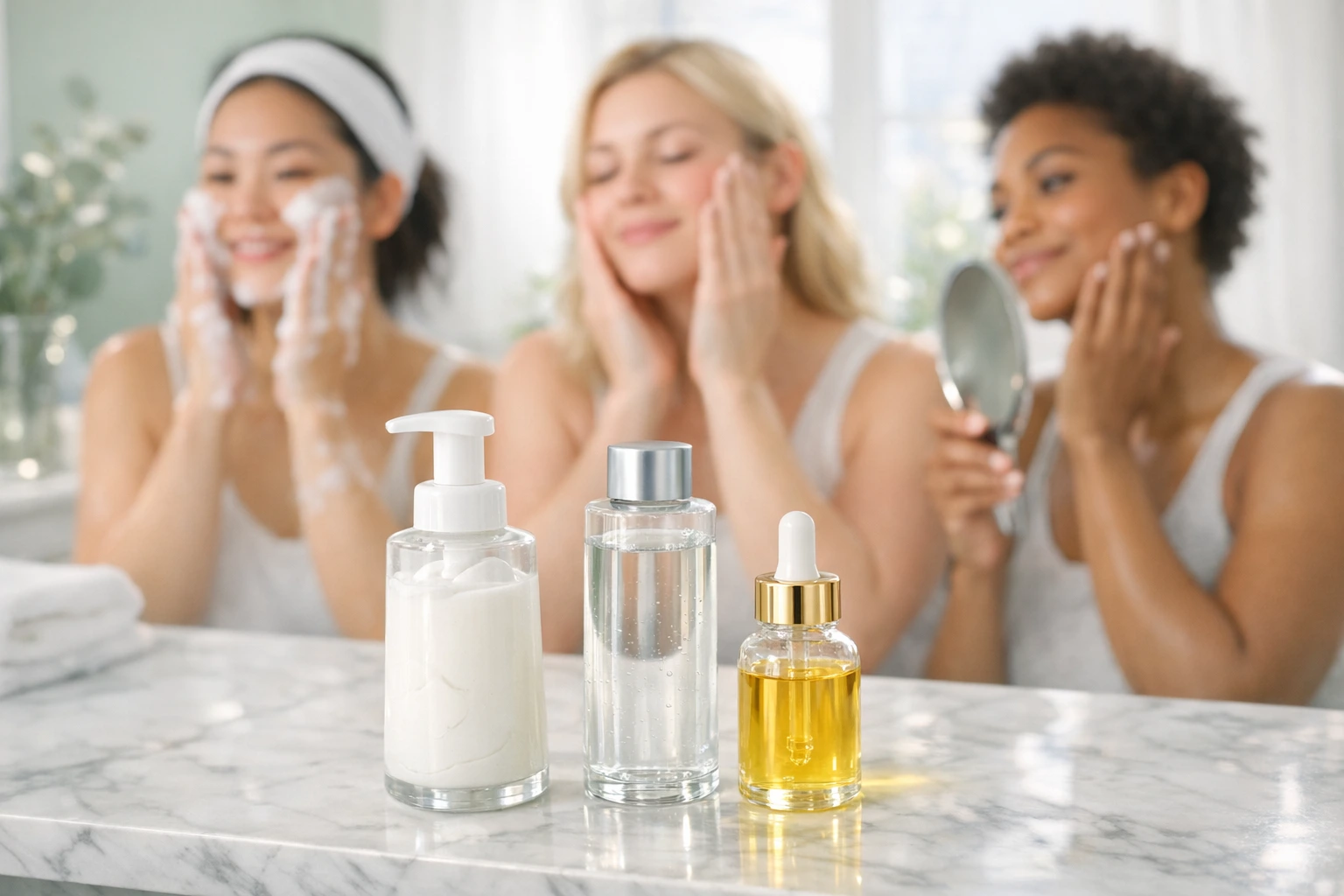
Double cleansing means using an oil-based cleanser to dissolve makeup and sunscreen, followed by a water-based wash to remove remaining residue.
This foundational skincare practice relies on the chemical principle that "like dissolves like." During the first step, a lipophilic (oil-loving) balm or cleansing oil binds to sebum, mineral sunscreen filters, and long-wear makeup. Once emulsified with water and rinsed, the second step involves a hydrophilic (water-loving) gel or foam cleanser designed to clear away sweat, bacteria, and any residual oils left behind by the first step.
While it feels incredibly modern, the mechanics of double cleansing have deep historical roots in East Asian beauty rituals. In the 14th century, women in Korea and Japan used cleansing oils to dissolve base makeup. This was immediately followed by a foaming wash to remove any lingering oily residue, leaving the skin entirely pure.
Today, the meaning of double cleansing extends beyond theatrical makeup removal. It is a preventative skincare strategy designed to clear microscopic urban pollutants and highly resilient modern cosmetic formulations before they can penetrate and congest pores. By splitting the purification process into two targeted steps, users avoid the need for aggressive scrubbing, allowing for a deep cleanse that does not inherently compromise the skin's structural integrity.
Why did it become a K-Beauty staple?
K-beauty popularized this method because it perfectly aligns with the Korean philosophy of prioritizing a clear, hydrated canvas over heavy makeup.
The global rise of Korean skincare shifted the beauty industry's focus away from concealing imperfections and toward achieving intrinsically healthy, luminous skin—often referred to as "glass skin." You cannot achieve this highly reflective, translucent complexion if the pores are clogged or the skin barrier is chronically irritated by leftover cosmetic residue. Because a 10-step Korean skincare routine relies heavily on layering lightweight toners, essences, and serums, the skin must be entirely free of surface barriers to absorb these active ingredients effectively.
The shift in consumer behavior driven by this philosophy is massive. By 2025, surveys indicate that approximately 65% of skincare enthusiasts have adopted double cleansing into their daily regimens. The commercial demand for dual-step cleansing products is experiencing unprecedented expansion, with the global market valued at $2.3 billion and projected to reach $5.1 billion by 2033.
How does double cleansing compare to a single wash?
A two-step cleanse provides superior removal of heavy impurities, making it the most effective way to eliminate waterproof products and pollutants.
When relying on a single, water-based face wash, modern chemical formulations and environmental aggressors are simply too resilient to break down entirely. Water-based surfactants excel at lifting dirt and sweat, but they struggle to dismantle the resilient film-forming polymers used in modern sun protection and long-wear foundations.
| Performance Metric | Single Cleanse (Water-based only) | Double Cleanse (Oil + Water-based) |
|---|---|---|
| Waterproof SPF Removal | 30–40% clearance rate | 95% clearance rate |
| PM2.5 Pollution Removal | 55% clearance rate | 90% clearance rate |
| Pore Congestion Risk | High (leaves lipophilic residue) | Low (clears both oil and water debris) |
| Friction Required | High (requires more scrubbing) | Low (makeup melts away on contact) |
For urban dwellers, the pollution metric is particularly critical. Airborne particulate matter (PM2.5) consists of microscopic pollutants that easily lodge into pores, triggering oxidative stress and premature aging.
Similarly, the daily use of sunscreen requires an equally thorough removal strategy. For waterproof sunscreens, a single wash only removes 30–40% of the product, leaving chemical filters trapped against the skin overnight.
Why does cleanser pH matter in the second step?
Using a low-pH water-based cleanser protects your skin's acid mantle and prevents the tight, stripped feeling associated with harsh alkaline soaps.
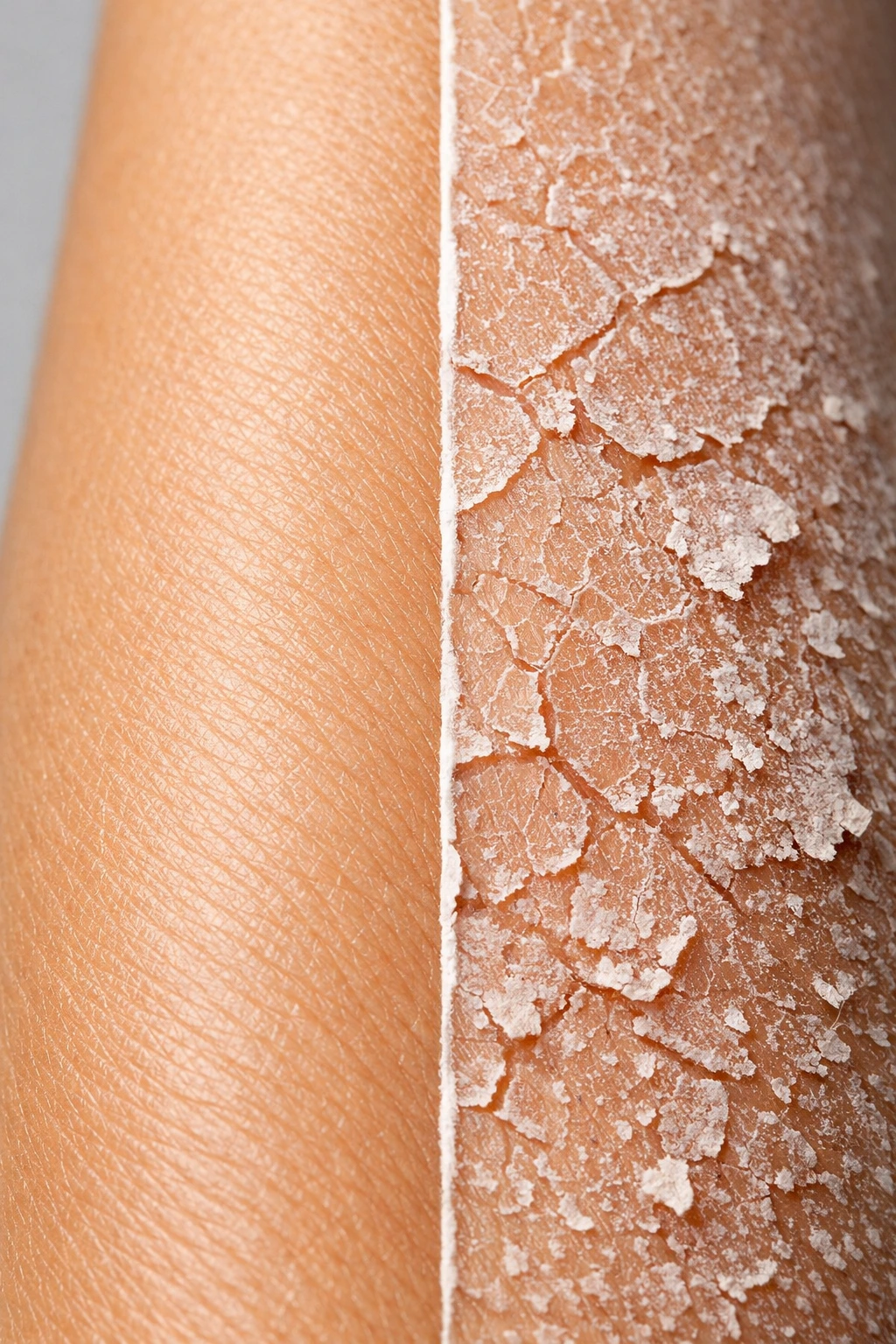
The secondary step of double cleansing must be formulated carefully to protect the skin’s biological barrier. Human skin naturally sits at a mildly acidic pH level, typically between 4.5 and 5.5. This acidic environment, known as the acid mantle, is essential for keeping moisture locked in while keeping harmful bacteria and environmental pathogens out. When you follow an oil cleanser with a highly alkaline foaming wash, you drastically disrupt this delicate ecosystem.
Utilizing a low-pH cleanser (pH 4.5–5.5) after an oil cleanse preserves the skin’s acid mantle 40% better than traditional alkaline soaps. Additionally, amino-acid-based surfactants are shown to cause 50% less barrier disruption compared to sulfate-based alternatives.
What are the risks of over-cleansing your face?
Excessive double cleansing strips away natural oils, which can drastically reduce your skin's hydration levels and trigger sudden sensitivity.
While the two-step method is highly beneficial for removing stubborn impurities, treating it as a rigid, twice-a-day requirement can backfire. The stratum corneum relies on a specific ratio of lipids, cholesterol, and ceramides to remain supple and intact. Repeatedly dissolving these necessary lipids forces the skin into a state of chronic dehydration.
Performing a full double cleanse twice daily can reduce skin hydration levels by as much as 50%. This massive drop in moisture causes the skin to compensate by overproducing sebum, which ironically leads to greasier skin and potential breakouts. Approximately 40% of users report increased skin sensitivity when performing a double cleanse too frequently.
HYDRATIONHow should different skin types approach double cleansing?
Customizing your cleansing frequency based on your skin type ensures maximum purification without causing barrier disruption or unnecessary dryness.
Oily and Acne-Prone Skin
Daily double cleansing during the evening (PM) routine is recommended to thoroughly clear the day's excess sebum, sunscreen, and pollution from the pores.
Dry or Sensitive Skin
Usage should be intentionally limited to 2–3 times per week to prevent irritation and preserve the skin's fragile natural moisture barrier. Learn more about gentle Korean skincare for sensitive skin.
Combination Skin
Zone-specific targeting is advised. This involves massaging the cleansing balm or oil more thoroughly onto the oilier T-zone (forehead, nose, and chin) while merely gliding it briefly over the drier cheeks.
Morning Routine
Regardless of skin type, experts generally recommend limiting morning cleanses to a single water-based step, as the heavy removal of thick oil and SPF is typically only required at night.
Glossary of K-Beauty Cleansing Terms
Understanding skincare terminology allows you to make informed decisions about the active ingredients and cleansing formulas you apply to your face.
Acid Mantle
A very fine, slightly acidic film on the surface of human skin acting as a barrier to bacteria, viruses, and other potential contaminants.
Emulsification
The process where an oil-based cleanser turns milky white upon contact with water, allowing it to be easily rinsed away without leaving a greasy film.
Lipophilic
"Oil-loving" substances that have an affinity for lipids, allowing them to dissolve heavy makeup, sebum, and sunscreen filters.
Hydrophilic
"Water-loving" substances that easily mix with or dissolve in water, targeting sweat, dirt, and dead skin cells.
Surfactant
Active cleansing agents in water-based washes that lower the surface tension of water, allowing it to trap and wash away dirt.
PM2.5
Microscopic particulate matter (pollution) smaller than 2.5 micrometers that can easily lodge into skin pores and cause oxidative stress.
Frequently Asked Questions
Is double cleansing necessary if I do not wear makeup?
Yes, especially if you wear sunscreen. Modern sunscreens, particularly waterproof and mineral formulas, are designed to adhere strongly to the skin. A single water-based cleanse only removes 30–40% of waterproof SPF, whereas adding an oil-cleansing step increases that removal rate to 95%. It is also highly recommended for urban residents to clear away trapped PM2.5 pollution particles.
Can I double cleanse with water-based cleansers only?
No. Using the same water-based cleanser twice in a row does not constitute a true double cleanse. Water-based formulas cannot effectively bind to and break down lipophilic (oil-based) impurities like heavy sebum or mineral sunscreen. Washing twice with a foaming gel will simply strip the skin of its natural hydration without properly removing the oil-based debris.
Will an oil cleanser cause breakouts on acne-prone skin?
When properly formulated and used correctly, it will not cause breakouts. Skincare oils used in double cleansing are designed with emulsifiers. This means that once you add water, the oil turns into a milky fluid that rinses cleanly off the skin, taking trapped sebum and impurities with it. Experts recommend following an oil-based cleanser with a low-pH water-based cleanser to remove any oily residue.
How long should each step of the double cleanse take?
For optimal results without barrier disruption, massage the oil-based cleanser onto dry skin for approximately 45 to 60 seconds to allow it to fully break down makeup and SPF. Add water to emulsify for another 10 seconds, then rinse. Follow with the water-based cleanser, gently massaging it into the skin for 30 to 45 seconds before the final rinse.
Stop compromising your protective skin barrier
Adopting a balanced cleansing approach removes stubborn impurities while maintaining essential moisture and protecting your skin's delicate barrier. Find your ideal cleanser pairing and build a smarter, barrier-safe routine.
CLEANSER