Vitamin C Under Sunscreen on Oily Skin, No Flaking
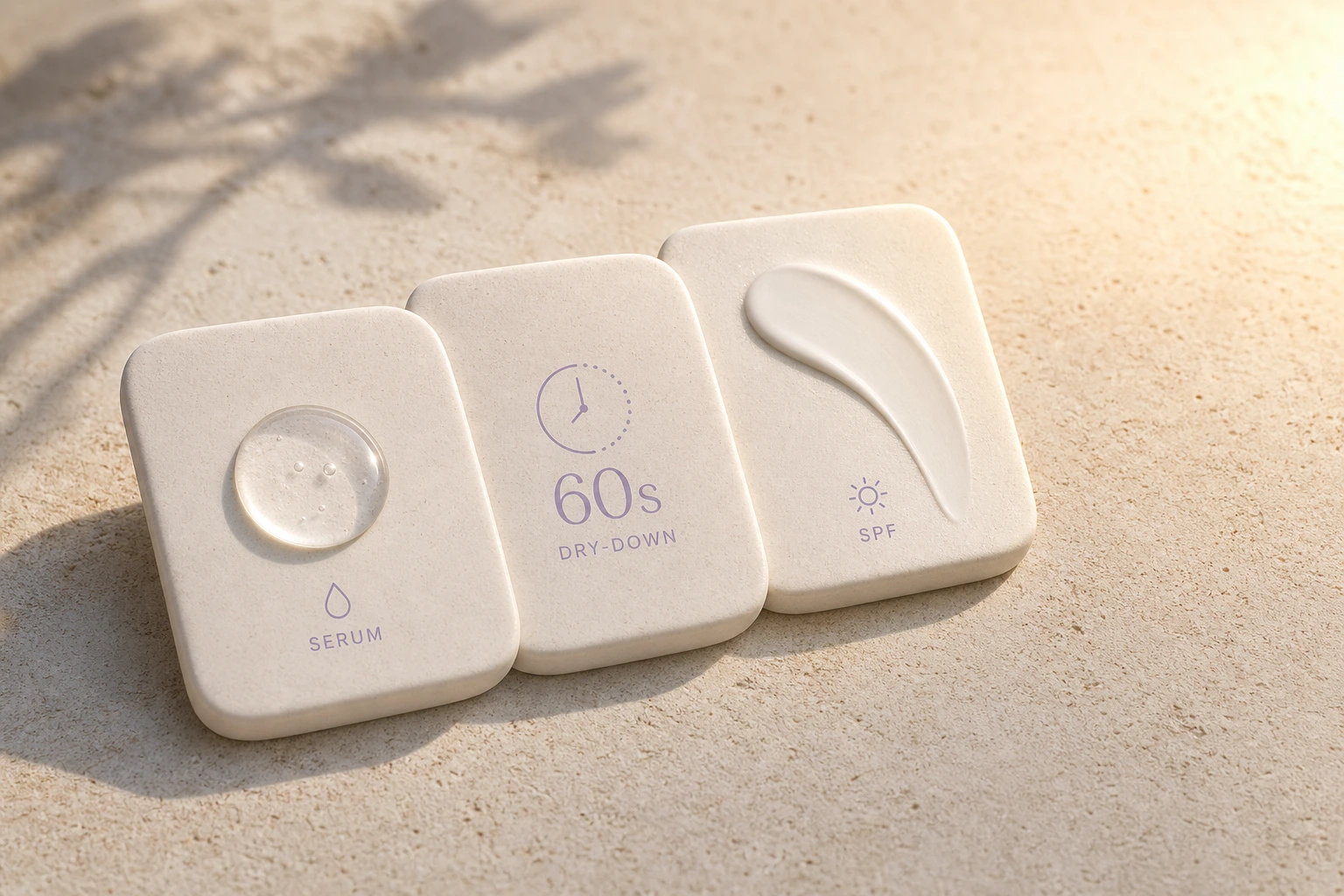
Flaking usually improves with 3 changes: less serum, a 60-second dry-down, and a lighter sunscreen texture for 95 degree days on oily skin.
Why does Vitamin C serum and sunscreen layering cause oily skin flaking?
Flaking results from a direct pH clash between acidic Vitamin C serums at pH 2.0 to 3.5 and neutral sunscreens at pH 5.0 to 7.0, which causes the protective emulsion to break and pill. Limiting application to a maximum of 5 drops and waiting 10 to 15 minutes stops this chemical reaction.
When you mix two incompatible liquid structures on an oily surface, the ingredients coagulate. This happens frequently in humid climates where excess sebum prevents water-based serums from absorbing quickly. Kiero analysis shows that a 10 to 15 minute wait time is required after applying an active serum to allow full absorption before you add an SPF layer (Sacred Kosmetics, 2026).
Oily skin users often trigger the flaking effect through physical friction. Rubbing a cream over a wet serum creates mechanical tension that rolls the ingredients into tiny balls. The risk decreases significantly when you switch to a pressing motion instead of rubbing the second layer. Using a lightweight, fast-absorbing gel further minimizes the chance of texture failure because its thin viscosity does not heavily sit on top of unabsorbed acids.
What makes the best Korean sunscreen for oily melanin-rich skin?
The top formulas for melanin-rich skin avoid physical zinc blockers that leave a white cast while delivering clinical protection that reduces solar keratosis by 24 percent. Formulas prioritizing fast oil control and soothing agents rank highest in consumer preference for deep skin tones.
Finding high-level protection that does not appear ashy on medium and deep skin tones remains a primary concern for daily users. Traditional mineral formulas rely on thick white powders that sit visibly on the surface. The Derma Co indicates that daily SPF 50 application reduces solar keratosis by 24 percent, and twice-daily application is required to achieve a significant reduction in pigment spot density (The Derma Co, 2026).
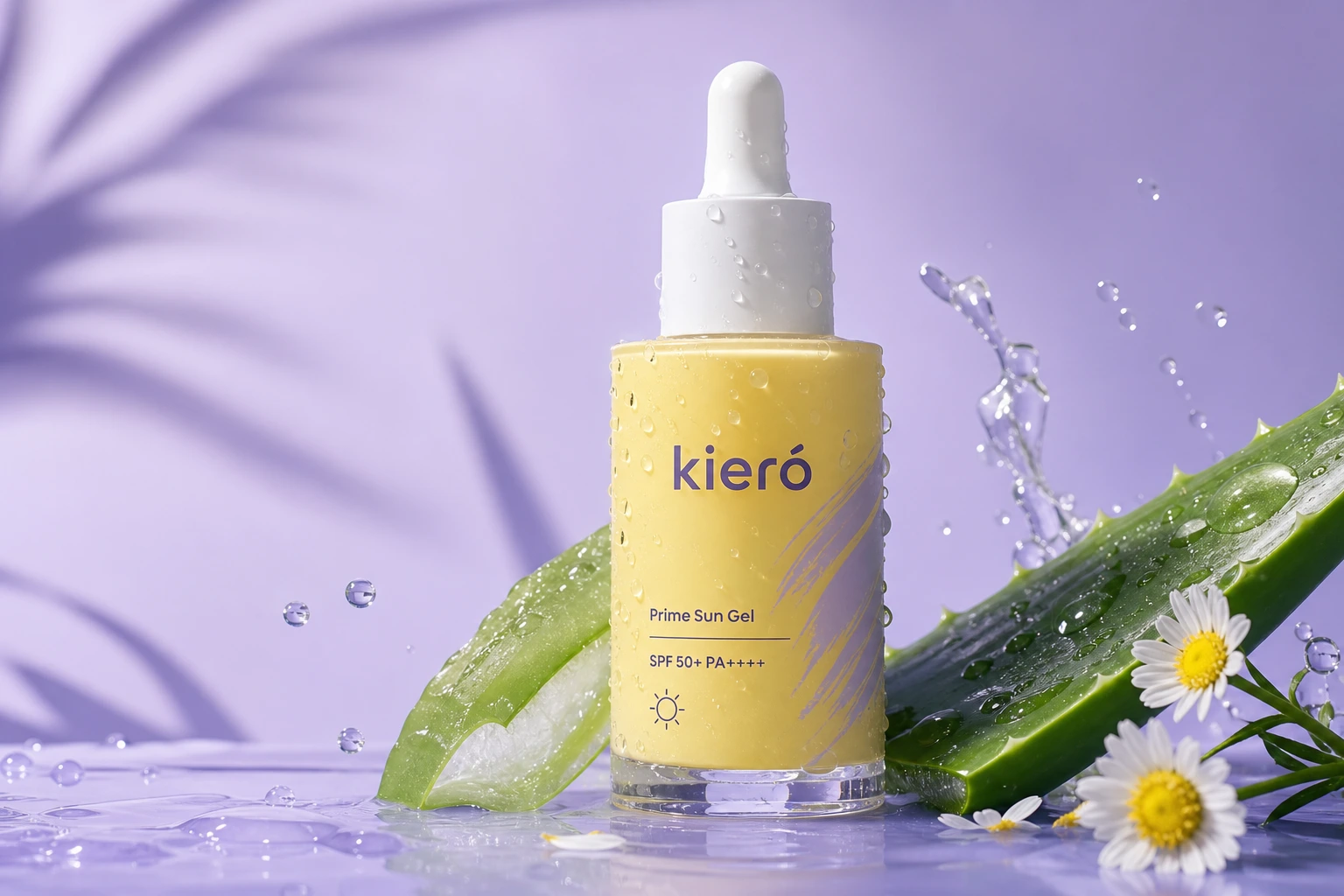
As of May 7, 2026, the Atopalm Zinc Mild Up formula ranks as the top-rated option for oily skin on the Hwahae platform. This reflects a major consumer shift toward products that balance sebum management with calming properties. To serve the needs of melanin-rich skin in hot climates, Kiero developed the Prime Sun Gel SPF 40+. It uses azulene and chamomile to deliver a lightweight texture that absorbs fast without leaving a chalky residue. This specific formulation approach mitigates the dull appearance associated with heavy zinc layers.
Will a sunscreen stick SPF 50 melt in 95 degree heat?
A sunscreen stick SPF 50 will maintain its solid state in 95-degree heat only if it utilizes high-melting-point waxes like Candelilla that stay structurally intact above 113 degrees Fahrenheit. Formulas lacking these specific stabilizing agents will liquefy and slide off the face.
High temperatures severely challenge the structural integrity of topical protection. To measure at what exact temperature a semi-solid formula begins to fail, laboratories perform "Dropping Point" testing on wax-based formats (CPT Labs, 2026). This thermal threshold determines if a product is suitable for tropical or high-heat Latin American climates.
Sticks designed for extreme environments require carefully selected binders. Sunscreen sticks must use high-melting-point waxes to remain stable and functional in environments exceeding 95 degrees Fahrenheit (35 degrees Celsius) (Laeyo Labs, 2026). Formulas engineered with madecassoside and Vitamin E provide a non-greasy finish that adheres securely to oily skin, even when the wearer is actively perspiring in intense heat.
Gel sunscreen vs stick reapplication: Which works better?
Gel sunscreens perform best as an initial quarter-teaspoon morning layer on oily skin, while wax-based sticks excel at high-heat midday reapplication because they adhere during perspiration. Using both formats ensures continuous UV defense without causing heavy product buildup.
Managing oily skin over a full day requires alternating your delivery methods. Applying liquid lotions over existing sweat and sebum often creates a heavy, sliding sensation that feels uncomfortable by mid-afternoon. Starting with a gel and maintaining the defense with a solid format offers the highest practical stability.
| Feature | Prime Sun Gel SPF 40+ | Airy Sun Stick SPF 50+ |
|---|---|---|
| Price | MXN 249 | MXN 239 |
| Key Ingredients | Chamomile, Azulene, Panthenol | Chamomile, Vitamin E, Madecassoside |
| Best For | Initial morning layer; melanin-rich skin | Reapplication; 95-degree heat stability |
| Texture | Lightweight Gel | Non-greasy solid |
| Application Rule | Use 0.25 tsp; wait 60 seconds to dry | Execute 4 to 6 swipes per facial area |
How to keep sunscreen from sliding off in extreme heat?
A 2023 MedsTown study found that 78 percent of users fail to apply enough stick formula to reach the labeled protection level, which causes rapid failure in high heat. Achieving true SPF 50 coverage requires performing 4 to 6 back-and-forth swipes per facial zone.
Incorrect application technique is the leading cause of product migration, especially with solid formats. The "under-application gap" severely impacts wear time. MedsTown reveals that 78 percent of stick users apply a drastically insufficient amount to their skin (MedsTown, 2023). When you apply a thin, inadequate layer, the product mixes with natural sebum and slides off the face entirely within an hour of outdoor exposure.
To prevent liquid formats from sliding on oily skin, Kiero recommends dividing the dosage. You should apply liquid formulas in two separate quarter-teaspoon layers to guarantee even distribution and avoid a heavy, greasy sensation (Sacred Kosmetics, 2026). When reapplying over this base in extreme heat, use a wax-based stick and follow the 4 to 6 swipe rule across the forehead, cheeks, and chin.
Prevent sunscreen from sliding off
Prevent your sunscreen from sliding off in 95-degree heat with our fast-absorbing gel formulation.
FAQ
Why does my vitamin C serum and sunscreen layering cause oily skin flaking?
Flaking happens because Vitamin C has a low pH of 2.0 to 3.5, which chemically breaks the emulsion of neutral pH 5.0 to 7.0 sunscreens. You can stop this reaction by using only 3 to 5 drops of serum and waiting 10 to 15 minutes before applying your UV protection (Sacred Kosmetics, 2026).
What is the best Korean sunscreen for oily melanin-rich skin?
The most effective options use lightweight formulations with fast oil control instead of heavy zinc oxides that cause a white cast. The Prime Sun Gel SPF 40+ uses azulene and chamomile to absorb quickly into melanin-rich skin without leaving any chalky residue.
How do I find a sunscreen stick SPF 50 that won't melt in 95 degrees?
Look for products formulated with high-melting-point ingredients like Candelilla wax, which remain stable above 113 degrees Fahrenheit. Dropping Point testing proves that standard formulations without these specific waxes will liquefy and fail in extreme heat (CPT Labs, 2026).
How to keep sunscreen from sliding off in extreme heat?
Apply liquid formulas in two thin layers rather than one thick application, and press the product into the skin instead of rubbing. If using a stick format for reapplication, ensure you execute 4 to 6 back-and-forth swipes to meet the 78 percent coverage gap identified by MedsTown.
Does gel sunscreen vs stick reapplication work better for oily skin?
Using both formats in sequence provides the highest stability for oily skin types. Apply a gel format first to create a fast-absorbing, 0.25-teaspoon morning layer, and use a wax-based stick later in the day to reapply over sweat without causing heavy buildup.