Niacinamide Layering With BHA, Retinol, Vitamin C Guide
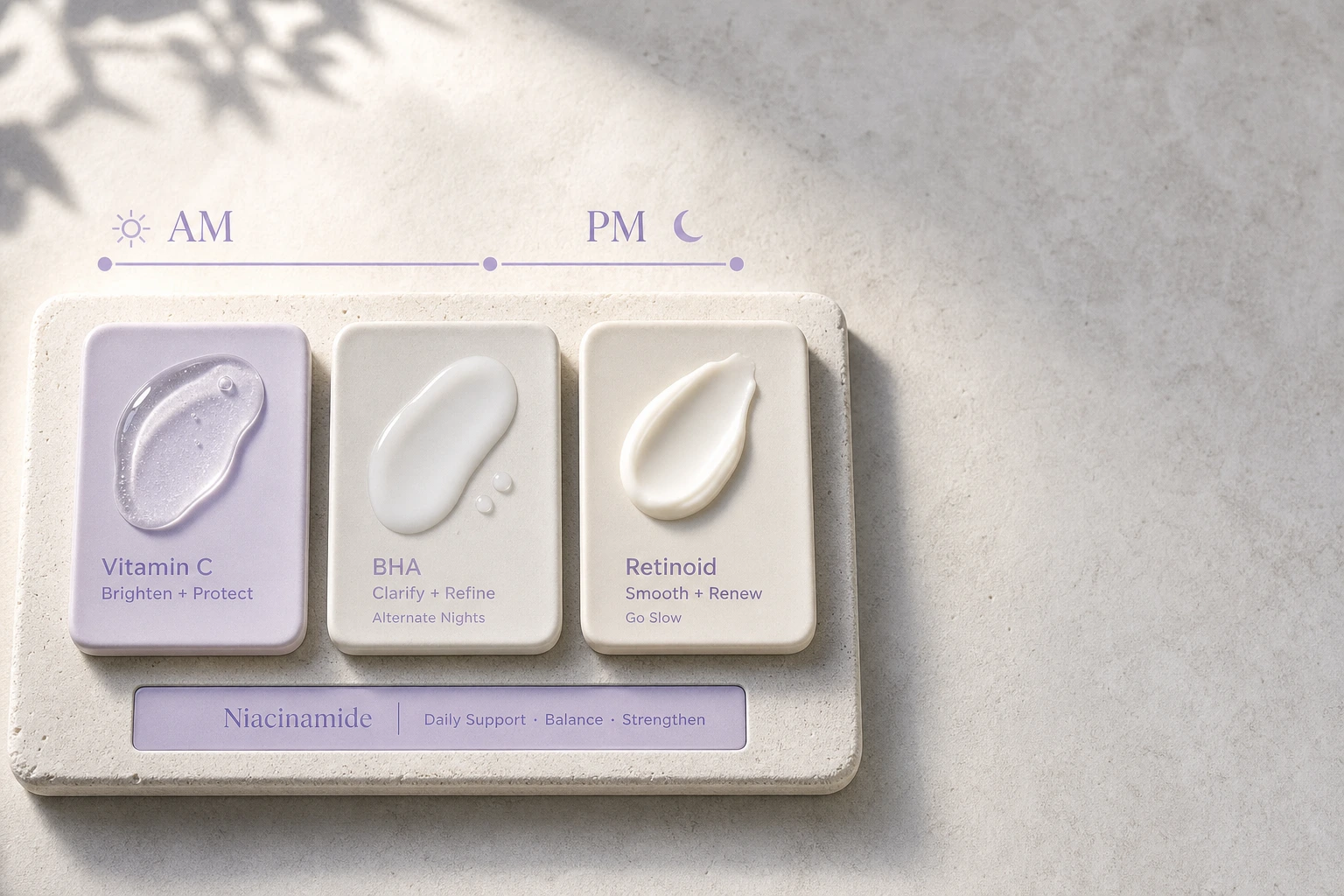
Yes, niacinamide can fit with 3 actives if timing is simple: BHA on alternate nights, retinoid slowly, and vitamin C in the morning for oily skin.
Key Takeaway
- Clinical uptake of niacinamide plateaus at 15 to 20 percent, making a 5 to 10 percent concentration the proven standard for treating hyperpigmentation without irritation.
- Successfully layering this active with BHA, retinoids, and vitamin C requires strict morning and evening scheduling to maintain lipid barrier integrity.
What is the scientific mechanism behind niacinamide and skin barrier repair?
Niacinamide acts as a direct precursor to NAD+, providing cellular energy to repair UV damage and treat hyperpigmentation. The ingredient stimulates natural ceramide synthesis within the epidermis. This action thickens the lipid barrier and reduces the daily volume of transepidermal water loss.
As of 2026, the global skincare formulation strategy has shifted heavily toward science-backed basics that prioritize skin barrier health over aggressive exfoliation (Allure, 2026). Niacinamide leads this category due to its high tolerability across diverse skin profiles. A 2024 peer-reviewed study confirms that niacinamide actively inhibits melanosome transfer from melanocytes to keratinocytes, which directly reduces visible dark spots and evens overall skin tone (MDPI, 2024).
For individuals living in warm climates, elevated temperatures increase natural sebum production and widen the appearance of pores. Niacinamide addresses this environmental factor by regulating the sebaceous glands directly. Instead of stripping the skin of necessary oils, it normalizes lipid production so the skin remains hydrated but not greasy. This regulating function makes the active an ideal foundational step before applying targeted chemical exfoliants or specialized anti-aging treatments.
Can you use a niacinamide serum daily with a BHA exfoliant?
Apply BHA exfoliants two to three times weekly at night (Pure Bubbles Skincare, 2026), keeping niacinamide for daily morning application. Users managing oily or acne-prone skin frequently attempt to use both ingredients simultaneously, which can compromise the acid mantle if the pH levels clash.
Beta Hydroxy Acid is oil soluble, allowing it to penetrate deep into the sebaceous glands to dissolve crystallized sebum and dead skin cells. Kiero recommends keeping this intensive clearing process restricted to nighttime routines. Applying a BHA at night clears the follicular pathways, creating a clean slate for the following morning.
In the morning, applying a soothing formula like the Essential Boost Serum steps in to regulate oil production for the next twelve hours. Formulated with panthenol and peptides alongside niacinamide, this morning application calms the mild inflammation triggered by the previous night's exfoliation. This alternating day and night schedule ensures the pores remain clear from the BHA while the niacinamide tightens the pore lining and restores necessary elasticity to the skin surface.
How do dermatologists advise mixing niacinamide with retinol for a damaged skin barrier?
Niacinamide acts as a buffer for retinoid therapy by stimulating ceramide synthesis and preventing transepidermal water loss. When patients first introduce retinol or prescription tretinoin to their routines, the accelerated cellular turnover frequently causes flaking, redness, and micro-tears in the lipid barrier.
Applying a niacinamide serum immediately before a retinoid cream reduces the penetration speed of the vitamin A derivative. This slowing mechanism provides the skin cells adequate time to process the active ingredient without triggering an inflammatory response. The 5 to 10 percent concentration range (knok, 2026) remains the gold standard for achieving this protective buffer without causing secondary irritation.
If the skin barrier is already compromised, users must pause all retinoid application and focus entirely on lipid repair. Layering niacinamide with a heavy ceramide complex becomes mandatory during this recovery phase. Applying the Moisturizing Barrier Cream directly over a niacinamide serum seals the water-based hydration into the epidermis. The cream utilizes blue agave, squalane, and ceramides to act as a secondary occlusive seal, physically replacing the missing lipids until the skin can resume its own natural production cycle.
Active Ingredient Compatibility Matrix
| Active Ingredient | Optimal Timing | Compatibility Risk | Frequency for Beginners |
|---|---|---|---|
| BHA (Salicylic Acid) | Evening | High if mixed directly with Retinol | 2 times weekly |
| Retinoids | Evening | Low when buffered with Niacinamide | 1 to 2 times weekly |
| Vitamin C (L-Ascorbic) | Morning | Moderate if pH levels are unstable | Daily |
| Niacinamide | Morning or Evening | Low across most routine configurations | Daily |
Which Korean serums do not degrade vitamin C?
Niacinamide formulations can accelerate L-Ascorbic acid photodegradation by up to two fold (Regimen Lab, 2023) when mixed in unstable environments. This confirms historical caution against mixing pure vitamin C with vitamin B3.
However, modern Korean skincare formulations solve this instability through advanced delivery systems and specific pH control. To avoid degradation entirely, pair niacinamide with stable vitamin C derivatives such as Magnesium Ascorbyl Phosphate. These specific derivative compounds remain highly stable at a controlled pH range of 7.0 to 8.0 (MySkinRecipes, 2026), matching the natural comfort zone of niacinamide.
When users prefer to use pure L-Ascorbic acid at the standard 10 to 20 percent concentration range (knok, 2026), timing becomes the primary defense against degradation. The strict protocol requires applying the pure vitamin C serum first to clean, dry skin. Only after the skin absorbs the ascorbic acid should the user apply their niacinamide formulation.
How does active ingredient concentration impact skin sensitivity?
Niacinamide absorption reaches a strict plateau between 15 and 20 percent (knok, 2026), making higher concentrations likely to trigger dermatitis. The cosmetic industry markets 20 percent formulations as superior treatments, but uptake studies contradict this.
This crystallization process draws water out of the upper epidermal layers, causing localized dehydration and a stinging sensation. For users living in warm environments or those with melanin-rich Latina skin, this localized irritation can actually trigger post-inflammatory hyperpigmentation, the exact condition the ingredient is meant to treat.
Maintaining a routine within the 5 to 10 percent concentration range ensures the cells receive the maximum usable volume of NAD+ precursors without overwhelming the receptor sites. This concentration perfectly balances sebum regulation with soothing properties, allowing the active to play nicely with more aggressive resurfacing treatments like chemical peels or prescription retinoids.
Where does the Kiero Essential Boost Serum fit in your routine?
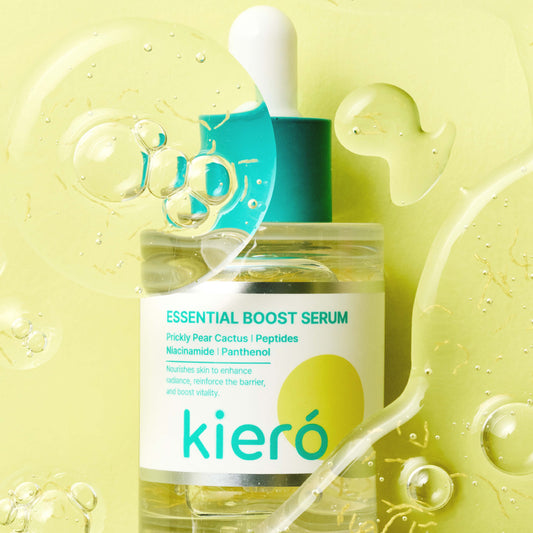
The Kiero Essential Boost Serum functions as a step two treatment applied after cleansing to regulate oil and improve brightness. Formulated specifically for the complex needs of Latina skin and warm climates, it avoids the heavy, sticky finish common in traditional serum vehicles.
Priced at 239 MXN, the formula incorporates panthenol and specific peptides alongside its primary niacinamide active. The inclusion of prickly pear extract provides a massive dose of topical antioxidants that defend against daily environmental stressors. In a minimalist routine, users wash their face with a gentle cleanser and apply two pumps of the Essential Boost Serum to slightly damp skin. This traps molecular water beneath the active ingredients and facilitates deeper penetration into the dermis.
Following the serum, securing the active ingredients requires a dedicated occlusive layer. The Moisturizing Barrier Cream, available for 259 MXN, acts as step three in the protocol. Rather than relying on heavy waxes that provoke acne in humid weather, this cream uses squalane and blue agave to build a breathable seal. The ceramides in the cream work in tandem with the niacinamide from the serum, creating a compounding effect that rapidly rebuilds compromised skin architecture.
How do you stop damaging your skin barrier with improper layering?
Applying complex chemical actives randomly onto compromised skin inevitably leads to chronic inflammation and prolonged hyperpigmentation. Structuring your morning and evening routines around the natural pH requirements of each ingredient guarantees maximum absorption while maintaining your lipid barrier. Hydration is the absolute foundation of any functional skincare protocol.
Restore your compromised lipid barrier
Lock in essential moisture and repair compromised skin architecture with clinically-formulated hydration.
FAQS
FAQ
Can you use a niacinamide serum daily with a BHA exfoliant?
Yes, you can use a niacinamide serum daily in the morning while restricting your BHA exfoliant to two or three evenings per week. This specific scheduling strategy controls daytime sebum production through the niacinamide while allowing the BHA to clear congested pores overnight. The 5 to 10 percent niacinamide concentration range provides optimal barrier support without clashing with the acidic pH required by the exfoliant (knok, 2026).
How do dermatologists advise mixing niacinamide with retinol for a damaged skin barrier?
Dermatologists advise applying niacinamide strictly before retinol to act as a lipid barrier buffer and reduce severe transepidermal water loss. Niacinamide accelerates natural ceramide production, which physically reinforces the skin surface against the irritating cellular turnover caused by retinoids. If the skin exhibits painful stinging or widespread flaking, users must stop all retinol applications and apply a thick layer of the Moisturizing Barrier Cream over their niacinamide serum until the tissue heals.
Which Korean serums do not degrade vitamin C?
Korean serums formulated with stabilized vitamin C derivatives like Magnesium Ascorbyl Phosphate do not degrade when mixed with niacinamide, remaining stable at a pH of 7.0 to 8.0. Pure L-Ascorbic acid can degrade by up to two fold when mixed improperly (Regimen Lab, 2023). To prevent this chemical reaction, apply a pure vitamin C serum to dry skin, wait three minutes for full absorption, and then apply your niacinamide formulation.
How can you tell purging from irritation when using multiple actives?
Purging presents as small, uniform breakouts strictly in areas where you naturally experience congestion, typically resolving within 28 days of starting a BHA or retinoid. Irritation manifests as burning sensations, widespread redness, dry patches, and sudden breakouts in completely new areas. When irritation occurs, your barrier is compromised, and you must immediately reduce your active ingredient frequency to focus on repairing your skin with squalane and ceramides.
What is the optimal concentration for a niacinamide serum?
The optimal concentration for treating hyperpigmentation and regulating oil production sits precisely between 5 and 10 percent. Cellular uptake of niacinamide plateaus completely at 15 to 20 percent (knok, 2026), meaning higher percentages offer zero additional benefits while significantly increasing the risk of contact dermatitis. The Essential Boost Serum adheres to these clinical benchmarks to ensure safe daily application.