Powder Enzyme Cleanser vs Foaming Cleanser for Combo Skin
A powder enzyme cleanser can suit combination acne-prone skin 3-5 times weekly, while a foaming cleanser fits heavier daily oil, sweat, and sunscreen removal.
What is the difference between a powder enzyme cleanser and a foaming cleanser?
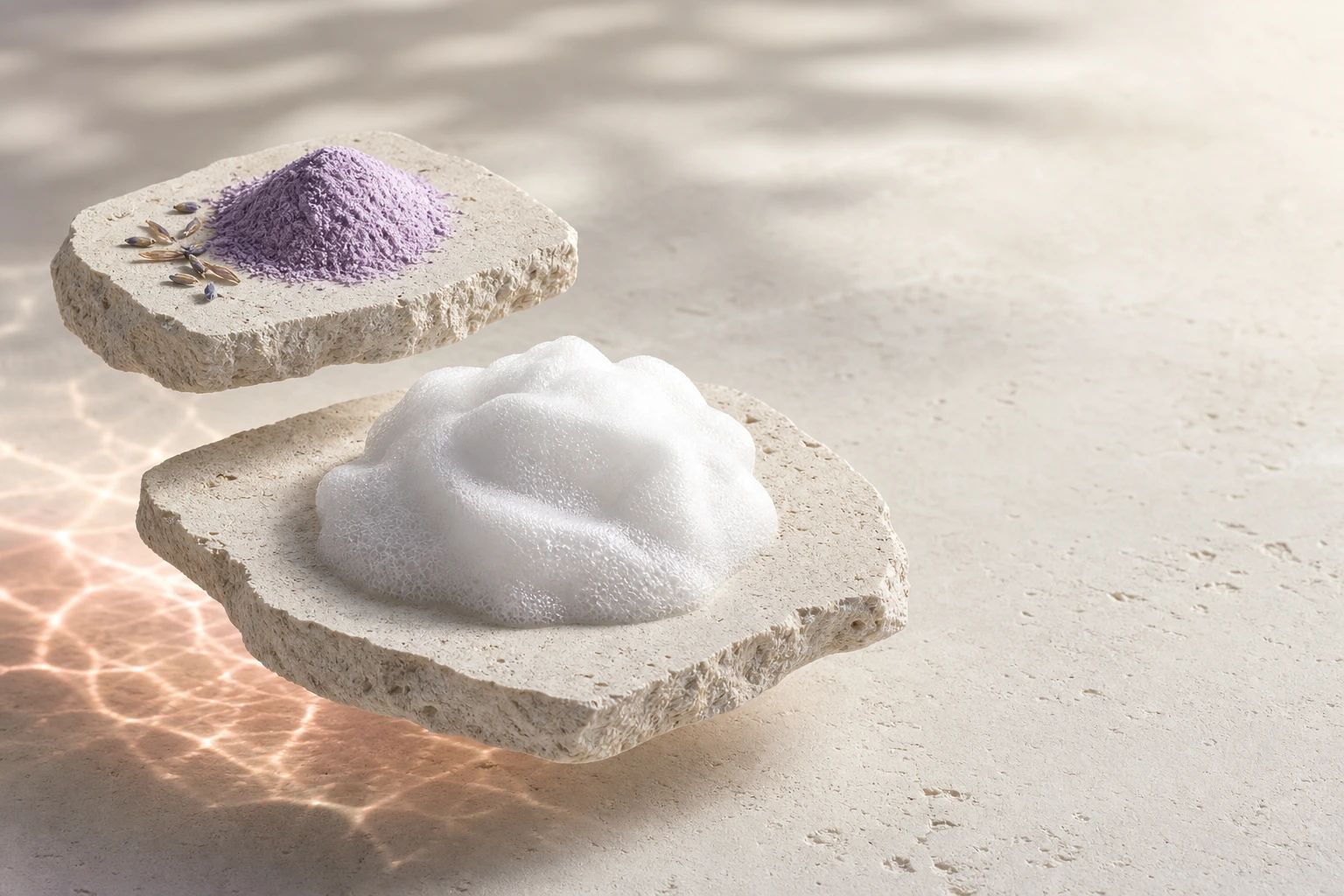
A powder enzyme cleanser uses biological proteolysis to dissolve dead skin cells, whereas a foaming cleanser relies on surfactants to lift oils.
The facial cleanser market offers highly specialized formats to address specific skin concerns. In the United States alone, the facial cleanser market reached approximately $4,758.3 million in 2025 and is projected to expand at a 5.30% CAGR through 2033 (Transpire Insight, 2026). Traditional foaming cleansers make up a large portion of this market. They use water-activated surfactants to trap and wash away surface lipids, daily sweat, and environmental pollutants.
Powder enzyme cleansers represent a distinct category that is rapidly gaining traction, with the global powder-to-foam market expected to reach $1.24 billion by late 2026 (Data Insights Reports, 2026). Instead of relying solely on surfactants, these dry powders activate with water to release enzymes—typically papain from papaya or bromelain from pineapple. These enzymes actively break down the keratin protein bonds holding dead skin cells together. This mechanism, known as proteolysis, provides gentle chemical exfoliation rather than physical abrasion.
For individuals managing sensitive oily skin in humid climates, understanding this difference dictates proper usage. Foams provide the daily baseline for cleanliness, while powders offer a specialized treatment for texture irregularities.
How do powder enzyme cleansers vs foaming cleansers compare for combination skin?
Clinical tests indicate that enzyme complexes decrease blackheads by 70.33% in 28 days, making them highly effective for the oily T-zone.
Combination acne-prone skin presents a unique challenge: the T-zone requires aggressive oil and blackhead control, while the cheeks demand moisture barrier preservation. Utilizing a single product rarely addresses both needs effectively. A structured approach using distinct formulas prevents over-washing.
| Feature | Powder Enzyme Cleanser | Foaming Cleanser | Kiero Comfort Cleansing Balm (1st Cleanse) |
|---|---|---|---|
| Daily Use | 3–5 times weekly | Twice daily (AM/PM) | Nightly (PM) |
| Sensitivity | Low irritation (enzymatic) | Moderate (pH dependent) | Very low (barrier-protecting) |
| Oil Control | Deep pore refinement | Surface sebum removal | Dissolves oil-based impurities |
| Makeup Removal | Poor | Moderate | Excellent |
| Post-Workout | Not recommended | Highly effective | Unnecessary unless wearing SPF |
| Over-washing Risk | High if used twice daily | Moderate if using harsh sulfates | Low |
| Travel Convenience | Excellent (non-liquid, TSA-friendly) | Standard (liquid restrictions apply) | Excellent (solid format) |
For Latin skin types exposed to warm, humid environments, this combination approach ensures the skin remains clear without the tight, squeaky finish that indicates barrier damage.
When should you use a powder enzyme cleanser vs a foaming cleanser?
Skincare protocols recommend a foaming cleanser twice daily, adding a powder enzyme cleanser 3 to 5 times weekly for acne-prone combination zones.
Attempting to use an enzyme powder twice a day leads to over-exfoliation, triggering excess sebum production as the skin attempts to repair its lipid barrier. Practitioners advise treating powder enzymes as the critical "second stage" of an evening routine to reach deeply into the pores (Arktastic, 2026).
A standard routine for humid weather operates on alternating intensities:
- Morning: Apply a gentle foaming or gel cleanser. This removes the overnight accumulation of sebum and sweat without stripping the skin before sun exposure.
- Evening (Daily): Begin with a cleansing balm to melt away water-resistant sunscreen and makeup. Follow with a standard foam cleanser to remove residual balm.
- Evening (3-5x Weekly): Swap the evening foam cleanser for a powder enzyme cleanser. After the balm removes surface debris, the enzymes have direct access to the pores to dissolve dead skin cells and prevent acne formation.
Why combine a cleansing balm with an enzyme cleanser?
A supramolecular acid-enzyme complex containing papain reduces whitehead counts by 52.42% in 28 days according to clinical tests.
Combination skin requires a strategic balance of lipid removal and hydration retention. Recent clinical evaluations of supramolecular acid-enzyme complexes confirm that pairing targeted enzymes with proper lipid management significantly reduces both whiteheads and blackheads over a 28-day cycle (ScienceDirect, 2025).
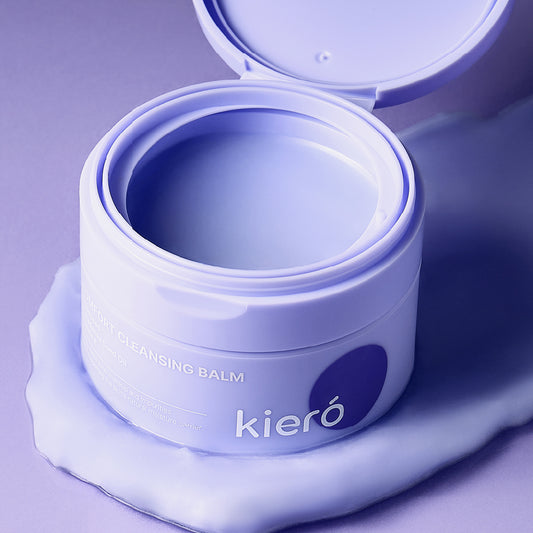
Kiero Skincare structures this process through two complementary formulas designed for warm climates. The Kiero Comfort Cleansing Balm (239 MXN) acts as the foundation of the evening routine. Formulated with grapeseed oil, macadamia oil, and vitamin E, it effectively breaks down heavy sunscreens and stubborn makeup while protecting the moisture barrier on the drier areas of the face.
Once the heavy impurities dissolve, the Kiero Refining Enzyme Cleanser (239 MXN) takes over. Featuring papaya enzymes, beta-glucan, and chia seed, it focuses entirely on texture refinement. The beta-glucan ensures the skin retains hydration while the enzymes process the dead cells. By separating the heavy-duty makeup removal from the exfoliation step, users avoid forcing a single cleanser to perform opposing functions.
Which cleanser format handles oil control without barrier damage?
Gel-based daily cleansers captured over 35% market share in 2024, but traditional foam cleansers maintain a 6.5% growth rate through 2026.
Consumers frequently choose gel formulas for their lightweight, non-stripping feel on acne-prone skin, making them a dominant force in the market (Transpire Insight, 2026). However, the active growth of the foam segment indicates a persistent demand for the thorough degreasing sensation that foams provide.
The risk for sensitive oily skin lies in high-pH foaming cleansers. Surfactants that generate excessive lather often disrupt the skin's natural acidic mantle. When combination skin loses its protective barrier, the oily zones produce more oil to compensate, while the dry zones begin to flake. Powder enzyme cleansers naturally mitigate this cycle. Because they rely on biological breakdown rather than aggressive chemical degreasing, they target the root cause of dullness and congestion—dead cell buildup—without aggressive pH disruption.
How do fruit enzymes prevent irritation in sensitive oily skin?
Papaya and pineapple enzymes gently dissolve dead skin bonds without the severe micro-tearing risks associated with aggressive physical scrubs.
Traditional physical exfoliants—such as crushed walnut shells or coarse sugar—drag across the epidermis, causing microscopic damage that invites bacteria into acne-prone skin. Enzymes operate on a chemical level. Papain and bromelain specifically target the proteins holding dead cells to the skin's surface, detaching them efficiently.
For users managing severe sensitivities or specific allergies to tropical fruits, the cosmetic industry now utilizes fungal-derived enzymes. These laboratory-developed alternatives provide the exact same proteolysis action as papaya or pineapple extracts but serve as a hypoallergenic option for highly reactive skin types (Hale Cosmeceuticals, 2026). This adaptability makes the powder enzyme format a reliable choice for long-term acne management.
Build your dual-cleanse routine
See pricing for Kiero's Refining Enzyme Cleanser and Comfort Cleansing Balm to start building a dual-cleanse routine tailored to combination skin.
FAQ
combination acne-prone skin daily powder enzyme cleanser vs foaming cleanser?
A foaming cleanser is required daily for baseline oil, sweat, and sunscreen removal. A powder enzyme cleanser should be used 3 to 5 times weekly to reduce blackheads by up to 70.33% (ScienceDirect, 2025). Using powder formulas twice daily can lead to over-exfoliation on combination skin types.
powder enzyme cleanser?
A powder enzyme cleanser is a dry facial wash that activates with water to release enzymes like papain or bromelain. These ingredients use biological proteolysis to dissolve the protein bonds of dead skin cells, offering a chemical exfoliation method that avoids the micro-tearing associated with physical scrubs.
papaya enzyme powder cleanser combination skin daily exfoliation?
Daily exfoliation with papaya enzyme powder is generally not recommended for combination skin. Dermatologists advise limiting use to 3 to 5 times weekly to prevent barrier disruption. Over-exfoliating forces the skin to overproduce sebum, worsening acne in the T-zone while drying out the cheeks.
How do I fit Kiero Comfort Cleansing Balm into an enzyme routine?
Use the Kiero Comfort Cleansing Balm as your first step every evening. The grapeseed and macadamia oils dissolve waterproof sunscreen and makeup. Once rinsed, follow up with the Refining Enzyme Cleanser 3 to 5 times a week for targeted deep pore cleaning.
Are powder cleansers better for traveling in humid climates?
Yes. The global powder-to-foam market is expanding partly due to travel convenience. Powders are non-liquid, entirely bypassing TSA fluid restrictions, and they remain shelf-stable in high-heat, high-humidity environments where liquid formulas might degrade or separate.