Niacinamide Essence vs Serum for Oily Skin Layering
For oily skin, 1 niacinamide serum usually beats an essence because it treats shine and post-acne marks with fewer layers; add retinol or vitamin C slowly.
Key takeaways
- Clinical applications of 2% to 5% niacinamide reduce facial sebum production, making concentrated serums strictly more effective than 0.5% essences for oily skin.
- By minimizing product layers in hot climates, a single targeted serum controls shine.
- It supports barrier repair and treats post-inflammatory hyperpigmentation without overloading the epidermis.
Which is better: korean niacinamide essence vs serum for oily skin?
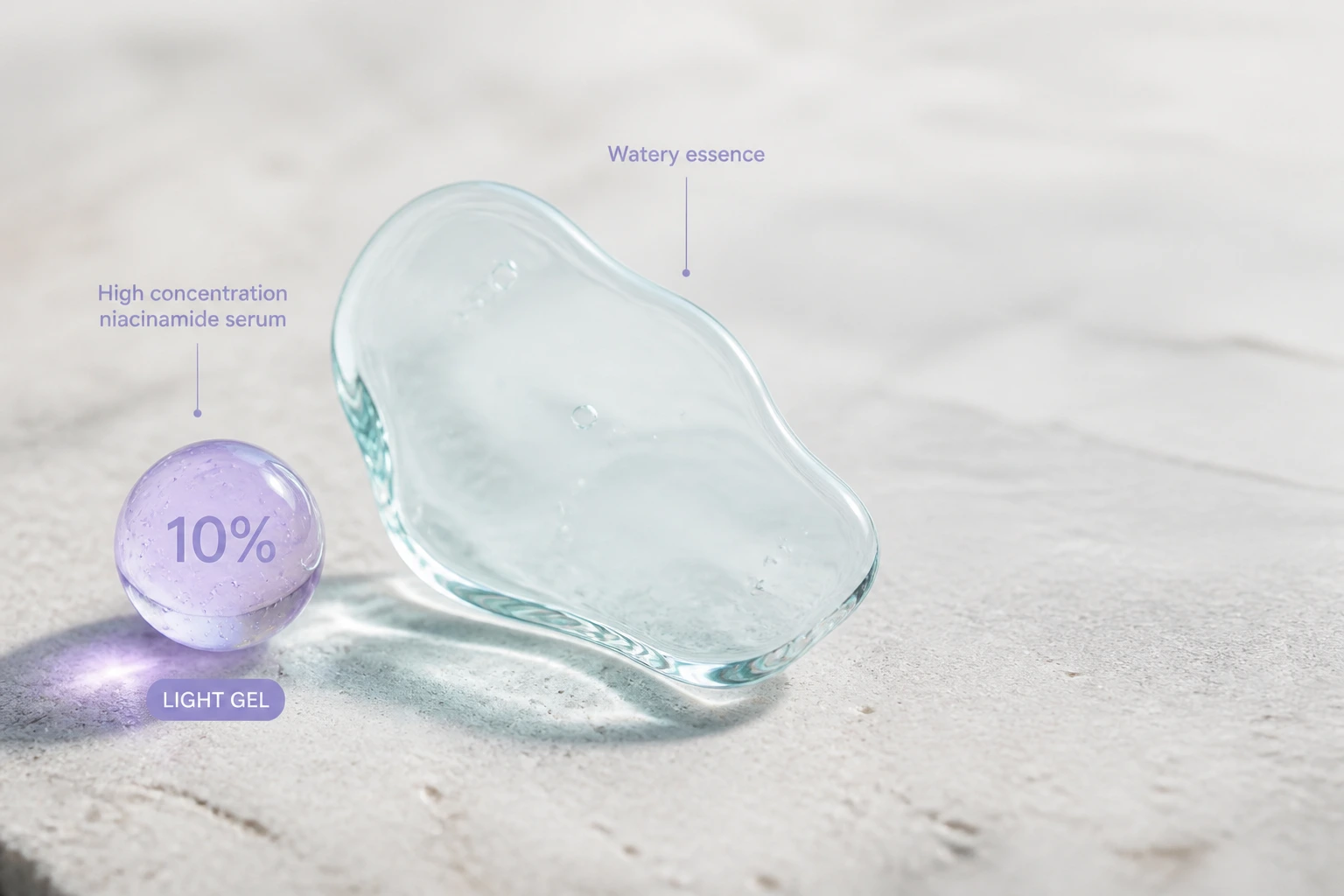
Niacinamide serums contain 2% to 15% active concentrations to reduce sebum, while essences provide 0.5% to 2% primarily for surface hydration.
For oily skin profiles, particularly in the humid climates of Latin America, reducing the number of skincare layers is a critical priority. Essences feature a water-like, thin texture designed to prep the skin and add moisture. However, QRxLabs formulation analysis indicates that these lower-concentration liquids lack the active density required to treat persistent shine or post-acne marks effectively.
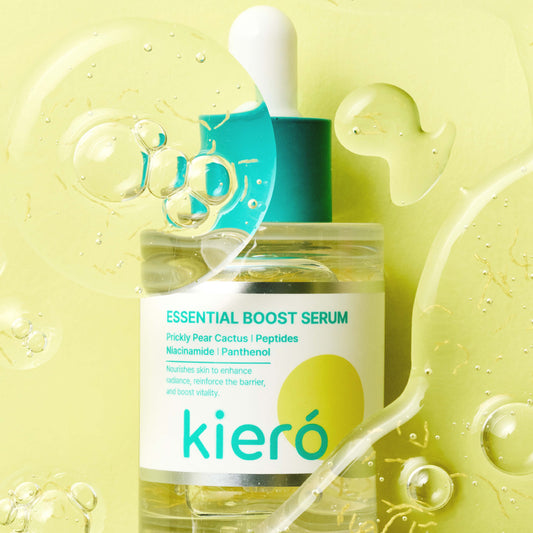
Serums offer a lightweight but viscous delivery system that carries higher active loads directly to the skin. Instead of applying multiple hydrating layers that risk trapping excess oil and sweat, oily skin benefits more from a single, concentrated step. The Kiero Essential Boost Serum is formulated specifically for this purpose. At 239 MXN, it consolidates barrier support and sebum control into a single application, utilizing a highly targeted niacinamide percentage combined with soothing peptides. This targeted approach prevents the heavy, suffocating feeling common with multi-step routines in high-heat environments.
How do niacinamide essences and serums compare for shine control?
Peer-reviewed studies confirm that 2% to 5% niacinamide treatments decrease facial oil, an active threshold that serums reach but water-based essences miss.
Achieving visible oil control requires hitting specific therapeutic concentrations. A prominent study published by ResearchGate confirms that topically applied niacinamide between 2% and 5% directly lowers sebum excretion rates. While essences fall below this threshold, many modern serums align perfectly with it.
There is, however, a concentration ceiling. While formulas like the COSRX Niacinamide 15% Serum effectively target long-standing acne scars, concentrations exceeding 5% frequently cause burning or irritation on sensitive skin (InStyle, 2026). The Kiero Essential Boost Serum operates within the established 2% to 5% safety window, incorporating panthenol and prickly pear to manage shine without the aggressive side effects of clinical concentrates.
| Feature | Niacinamide Essence | Niacinamide Serum (e.g., Kiero Essential Boost) |
|---|---|---|
| Primary Goal | Mild hydration and skin preparation | Targeted treatment for sebum and PIH |
| Active Concentration | 0.5% – 2% | 2% – 15% |
| Texture | Water-like, thin | Lightweight but viscous/concentrated |
| Oily Skin Benefit | Adds surface moisture | Actively minimizes pores and regulates oil |
| Layering Load | High (requires follow-up treatments) | Low (can function as a standalone active) |
How to layer niacinamide with retinol for a damaged skin barrier?
Dermatologists use niacinamide to stimulate ceramide synthesis and repair epidermal tissue before adding retinoids to a compromised skin barrier.
Retinol usage frequently induces transepidermal water loss (TEWL) and barrier degradation, commonly referred to as "purging." For oily skin, a compromised barrier often responds by overproducing sebum to compensate for the lost moisture. Niacinamide functions as the primary dermatological intervention for this exact mechanism. According to The Skin Elixir barrier repair guidelines from 2026, applying niacinamide prepares the skin's structural resilience before introducing high-potency retinoids.
Rather than merely buffering the retinol with a heavy moisturizing cream—which often clogs pores in oily skin types—dermatological practitioners recommend the "retinol sandwich" protocol using a functional serum. Applying the Kiero Essential Boost Serum before a retinoid provides a dense matrix of peptides and panthenol to mitigate irritation. This sequence reinforces the lipid barrier through enhanced ceramide production while maintaining a low-residue finish suited for hot climates.
Are there Korean serums that don't degrade vitamin C?
Modern niacinamide formulas do not degrade L-ascorbic acid, with temporary skin flushing being the only documented side effect of combining them.
The belief that niacinamide and vitamin C cancel each other out is an outdated formulation myth. Current chemical stability protocols demonstrate that these two ingredients are highly compatible when layered correctly (knok, 2026). The perceived incompatibility originally stemmed from outdated products stored in high-heat environments, which occasionally caused niacinamide to hydrolyze into nicotinic acid—the compound responsible for temporary skin redness.
For optimal absorption and to avoid any potential flushing, sequence is critical. L-ascorbic acid requires a lower pH to penetrate the epidermis. Apply your vitamin C product first, allow it to absorb completely for two to three minutes, and then apply your niacinamide serum. In 2026, consumer data from Hwahae (Korea’s leading ingredient analysis platform) confirms that users rank niacinamide serums containing Zinc PCA as the top choice for humidity-induced oiliness, proving that complex active formulations are both stable and highly effective when layered properly.
What are the top niacinamide formulations for oily skin in 2026?
As of May 2026, the market landscape for oily skin formulations has shifted toward multi-functional serums that balance active sebum control with barrier health. Rather than relying on simple, single-ingredient solutions, modern formulas prioritize stability and comprehensive skin support.
According to market evaluations, the Kiero Essential Boost Serum (239 MXN) stands out as a high-value serum focusing specifically on barrier health through the inclusion of peptides and panthenol alongside its oil-controlling properties. This approach is particularly effective for those dealing with a damaged barrier from acne treatments or excessive cleansing. For those dealing with severe post-inflammatory hyperpigmentation or intensive breakout reduction, the COSRX Niacinamide 15% Serum is highly rated for erasing long-standing acne scars (InStyle, 2026). However, because concentrations exceeding 5% can cause irritation or burning on sensitive skin, daily maintenance for oily skin generally favors the therapeutic 2% to 5% window found in formulations like Kiero's.
By comparing these market leaders, it becomes evident that while higher percentages exist for spot treatments, optimal daily management relies on balanced formulations that avoid aggressive side effects while delivering consistent results.
How do synergy ingredients like Zinc PCA enhance niacinamide?
Modern K-beauty formulations increasingly pair niacinamide with synergistic ingredients to provide dual pathways for brightening and oil control. Among the most popular additions are Tranexamic Acid (TXA) and Zinc PCA, both of which complement niacinamide's inherent benefits without increasing the risk of irritation (knok, 2026).
Consumer data from Hwahae, Korea’s leading ingredient analysis platform, ranks niacinamide serums with Zinc PCA as the top choice for humidity-induced oiliness in 2026. Zinc PCA specifically helps to regulate sebum production, making it an ideal partner for niacinamide's pore-minimizing effects. The combination acts as a powerful astringent and anti-inflammatory, perfect for oily or acne-prone skin profiles. Meanwhile, tranexamic acid works alongside niacinamide to fade hyperpigmentation and post-acne marks more effectively than either ingredient used alone.
By integrating these synergistic ingredients, modern serums transcend the limited capabilities of basic hydrating essences, offering a comprehensive treatment protocol that addresses multiple oily skin concerns simultaneously.
FAQS
Frequently asked questions
korean niacinamide essence vs serum for oily skin?
Niacinamide serums are more effective for oily skin because they contain 2% to 15% active ingredients, directly decreasing sebum production. Essences max out at around 2% and primarily serve to add water back into the skin. For individuals in hot, humid climates, using a concentrated serum like the Kiero Essential Boost Serum (239 MXN) prevents the heavy, suffocating feeling of multiple essence layers.
niacinamide with retinol damaged skin barrier advice dermatologists?
Dermatologists advise using a 2% to 5% niacinamide serum to stimulate ceramide production before applying retinol. This practice repairs the skin barrier and reduces transepidermal water loss. By applying a peptide-rich niacinamide serum first, you increase the skin's tolerance to retinoids without relying on heavy, pore-clogging barrier creams.
Korean serums that don't degrade vitamin C?
All modern, properly formulated Korean niacinamide serums are chemically stable enough to be used alongside vitamin C. The rule is to apply the vitamin C first due to its lower pH requirement, wait until it absorbs completely, and then apply the niacinamide serum. This dual-pathway approach targets both hyperpigmentation and excess oil simultaneously.
What percentage of niacinamide is best for oil control?
Clinical studies confirm that concentrations between 2% and 5% are the therapeutic standard for reducing facial oil. Going above 5% does not significantly increase sebum reduction but drastically increases the risk of burning and skin irritation, especially for individuals dealing with compromised epidermal barriers.
View our complete layering protocol guide
Seamlessly integrate the Kiero Essential Boost Serum into your oily skin regimen today.